
“It’s only a matter of time before they arrive,” says Daniel Treplin, Chairman of the Pilsensee-Wörthsee Fishermen’s Association. Just this past Thursday, representatives from the district office, lakeside municipalities, the owner of the two bodies of water, and fishermen had met, and the discovery was already making the rounds. The highly invasive quagga mussel has been found in Lake Starnberg. Now, prevention and public awareness are crucial, as even stand-up paddleboarders can transmit the mussel larvae: “A five-lakes-in-one-day tour is a really bad idea now,” says Treplin. Strictly speaking, the mussel can even be transferred in a damp surfboard bag.
As part of investigations for “Pollutant Monitoring in Mussels,” scientists from the Bavarian State Office for the Environment recently conducted genetic analyses on mussels in Lake Starnberg. In the process, they determined that quagga mussels were among the examined specimens. “The invasive mussel species originally comes from the estuary areas of rivers flowing into the Black Sea. However, it is now found worldwide and also colonizes lakes in Austria, Switzerland, and Germany, such as Lake Constance or Lake Chiemsee,” the district administration reported in a press release.
Authorities currently assume that the spread in Lake Starnberg is in its initial stages. However, in the long term, the small mussel “can lead to significant problems, for example by overgrowing ship hulls and buoys, clogging water and wastewater pipes, destroying fishing nets, or disabling boat engine cooling systems,” according to the district authority. The sharp-edged little mussel also makes beaches impassable for bare feet.
At Lake Constance, the mussel also threatens the drinking water sourced from it: The larvae can enter drinking water reservoirs and settle there as mussels. While this is not a health concern, it is indeed a problem for filtration systems. The maintenance effort is enormous. Because the quagga mussel also displaces native species, Lake Constance is said to be at the beginning of a massive ecological transformation.
“The task now is to coordinate with experts and derive the right conclusions and measures for Lake Starnberg from the experiences of already affected regions,” the district administration stated. The Lower Nature Conservation Authority is already in dialogue with stakeholders. The primary focus is to prevent transmission to other bodies of water. The mussel has not yet been detected in Pilsensee and Wörthsee.
“I don’t think we can prevent the transmission,” Daniel Treplin said in a conversation with Merkur on Friday. “But perhaps we can still delay it for some time.” However, comprehensive public awareness is necessary for this. The quagga mussel likely found its way from the Black Sea to Lake Constance via a boat hull or a damp surfboard, perhaps even via a wet water wing.
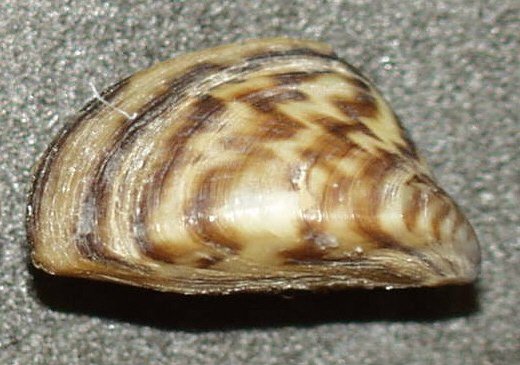
The small triangular mussel, with a shell length of up to three centimeters, attaches primarily to hard surfaces like stones, concrete walls, buoys, and ship hulls. It can survive for up to four days out of water. Its larvae can survive for several hours in moisture, for example in a damp bag.
“We need to ensure that people are informed when they move from one lake to another or return home from vacation,” says Treplin. It’s important to clean equipment and boats and dry them thoroughly, preferably in the sun. In Steinebach, for instance, at the Lago Mio sailing school, boats or SUPs can be rinsed with hot water. The mussels cannot survive temperatures above 60 degrees Celsius. “It might be good to offer something similar at the Rossschwemme as well,” Treplin considers. Back in February, they had appealed to their own members to clean boats thoroughly; regatta sailors are also explicitly asked to do so. “But of course, it only takes one boat that has mussels or larvae on it.”
The only natural predator of the quagga mussel currently is the roach, a small fish. Otherwise, no solution has yet been found to counter the mussel from the Black Sea.