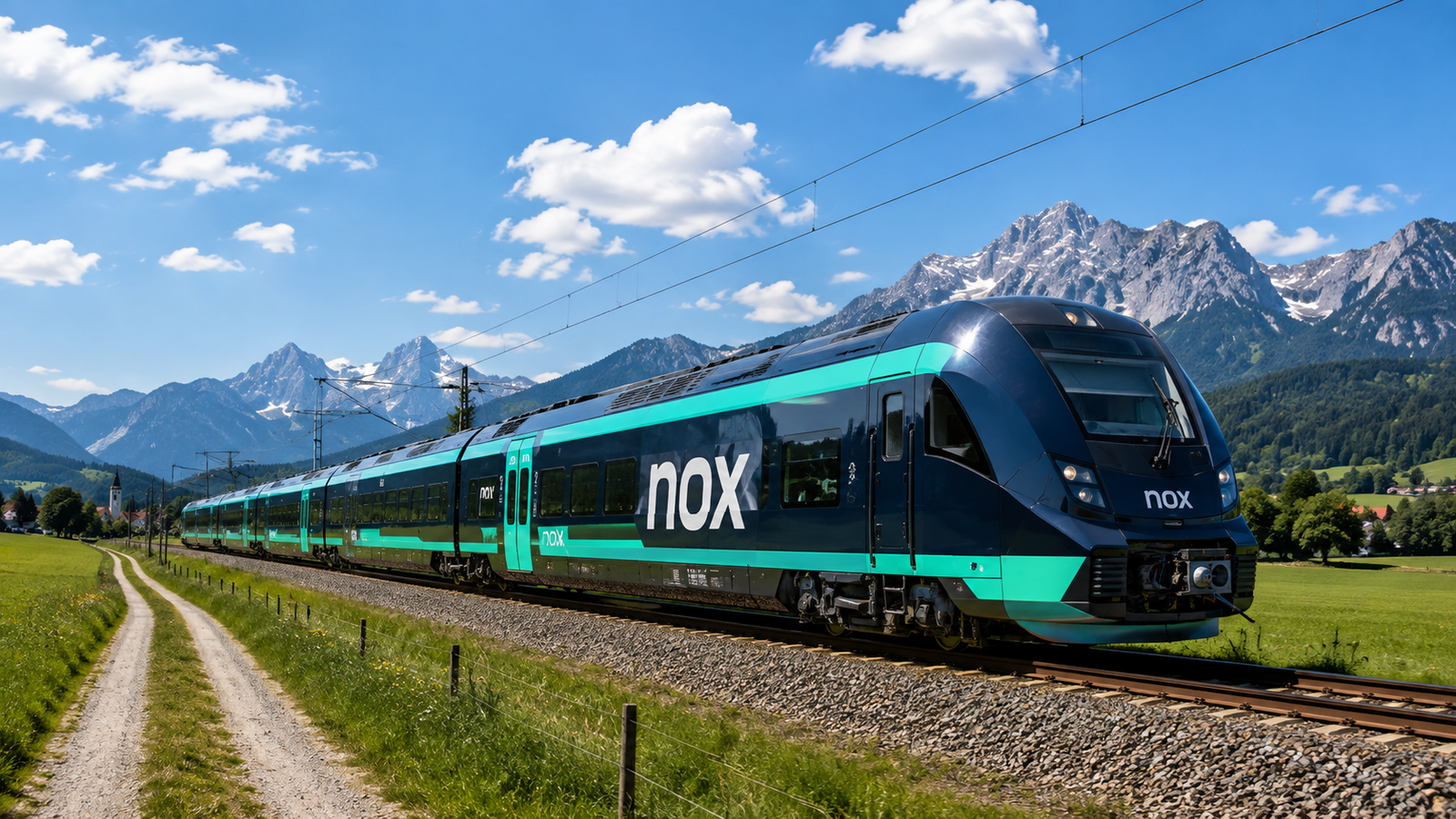

Today, private players are entering this segment of passenger transport one after another, and one of the most ambitious business projects has staked its future specifically on Munich. The Berlin startup Nox Mobility intends to turn the Bavarian capital into the starting point of its future network of night rail routes and to compete for passengers with both the Austrian operator ÖBB Nightjet and airlines on medium-haul routes.
Tender applications submitted, details still under wraps
Ahead of the Innotrans transport trade fair in Berlin, the Nox team has decided to keep the details of its future cooperation with Deutsche Bahn confidential. Nevertheless, the company has already held initial presentations for potential partners and submitted applications to DB InfraGo, the infrastructure division of Deutsche Bahn responsible for allocating routes among carriers.
One presentation that came into journalists’ possession lists a launch date for the first route in December 2026, coinciding with the annual schedule change on the German railway.
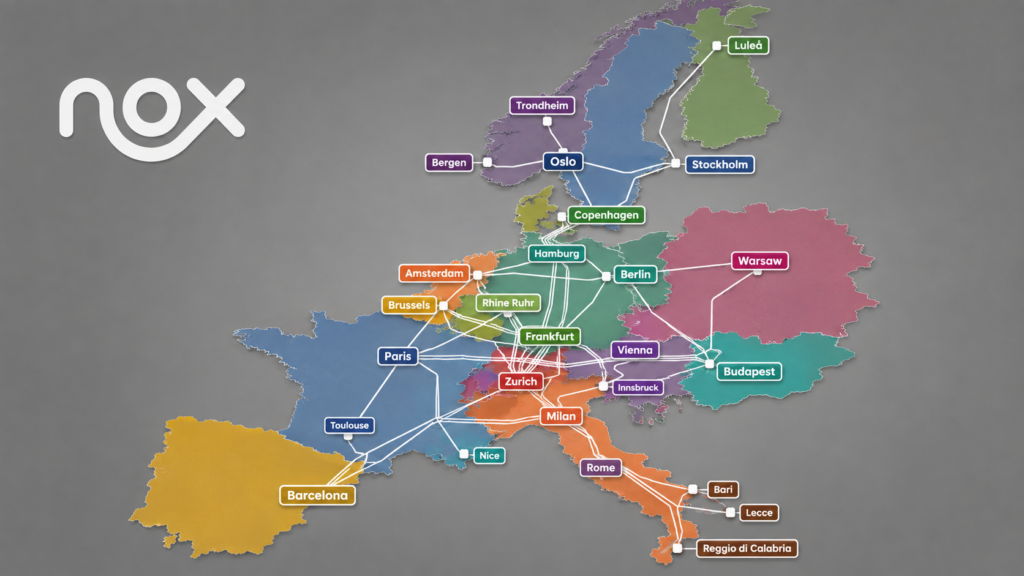
Nox co-founder and managing director Janek Smalla has not officially confirmed this date. According to him, the company is still examining all routes across Europe roughly 500 to 1,500 kilometres long where it could pose serious competition to air travel. Because of complex negotiations with government authorities, transport operators and partners, he said, the exact location and date of the project’s launch cannot yet be disclosed.
A team with experience in railway startups
The project is led by three co-founders – Janek Smalla, Thibault Constant and Arthur Hasselbach. All three came to Nox with relevant experience behind them.
Smalla previously worked on opening up the German rail passenger market for Flixtrain and later headed the German division of the scooter rental service Bolt.
Constant is a former engineer at Alstom and the French state railway company SNCF; alongside this, he runs the train-travel platform Simply Railway, which has an audience of more than 600,000 subscribers, and says he has personally spent more than 400 nights on night trains.
Hasselbach previously co-founded the payments fintech orderbird, which the Italian company Nexi acquired for more than €140 million.
So far the team has raised €2 million in its first investment round, led by the venture fund IBB Ventures, with participation from Italian investor Tommaso Lucchi.
The investment sum is, admittedly, modest for a railway project, but apparently enough to get started. Former Deutsche Bahn carriages are currently being refitted for Nox’s first train set. At the same time, a full-scale mock-up of a compartment is being built, which the team plans to use to show partners and investors what the interior of the future trains will look like.
Munich could become what is being called the Nox Hub – the starting point for the further development of the company’s route network.
Routes the startup is considering:
- Munich – Hamburg
- Munich – Berlin
- Munich – Milan
- Munich – Florence
- Munich – Warsaw
- Munich – Paris
- Munich – Brussels
- Munich – Amsterdam
According to earlier statements from company representatives, their ambitions extend far beyond a single rail network. By 2035, the startup’s founders hope to connect more than a hundred European cities with a night train network, and they intend the first line to carry around 300,000 passengers a year.
Betting on comfort and privacy
Nox’s founders present the project not as just another rail carrier, but as an alternative to short- and medium-haul flights offering a fundamentally different level of service. According to them, a trip on the carrier’s trains should feel, in terms of comfort, like business class on a long-haul flight, with the service pitched as hospitality on rails rather than simply getting from point A to point B.
The logic is straightforward: the train departs in the evening and arrives at its destination sooner than a passenger would get there by plane, once travel time to the airport, check-in and baggage screening by customs are factored in. The company plans to keep the number of intermediate stops to a minimum, which should allow passengers uninterrupted sleep without frequent waking caused by the train’s shunting movements.
The Nox presentation specifically highlights the avoidance of shunting manoeuvres at intermediate stations and a significant time buffer built into journeys to allow for detours and to prevent scheduling conflicts between carriers – such conflicts being a typical headache for night trains on Germany’s congested rail network. The company has also stated a principle of maximising passenger comfort through relatively low travel speed: the team is deliberately trading speed for quiet, smooth running.
The main point of difference from competitors is privacy.
Instead of cramped six-berth compartments shared with strangers, passengers will be offered private spaces where they can be alone – described in the presentation as resting in one’s own space. The idea draws on Constant’s years of experience: in his observation, the average traveller’s complaint sounds the same year after year – the compartment turns out to be cramped, and has to be shared with strangers even when the ticket was not cheap.
The night train market is already divided up, but still growing
Nox is not entering an empty field. ÖBB Nightjet already operates the Munich-Hamburg route and has been actively expanding its range of mini-compartments in recent years – and this format is, in many respects, considered the benchmark for new operators.
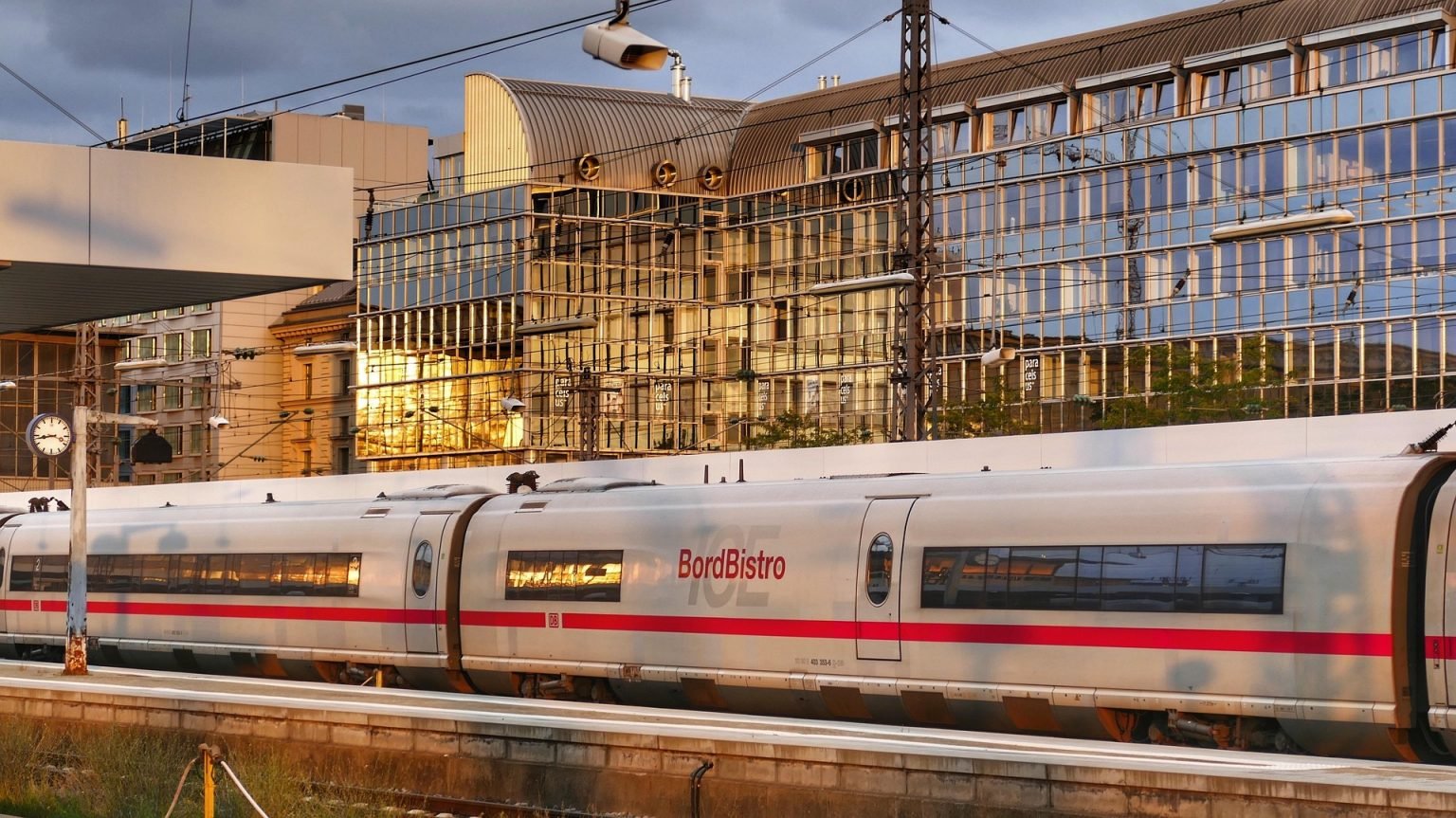
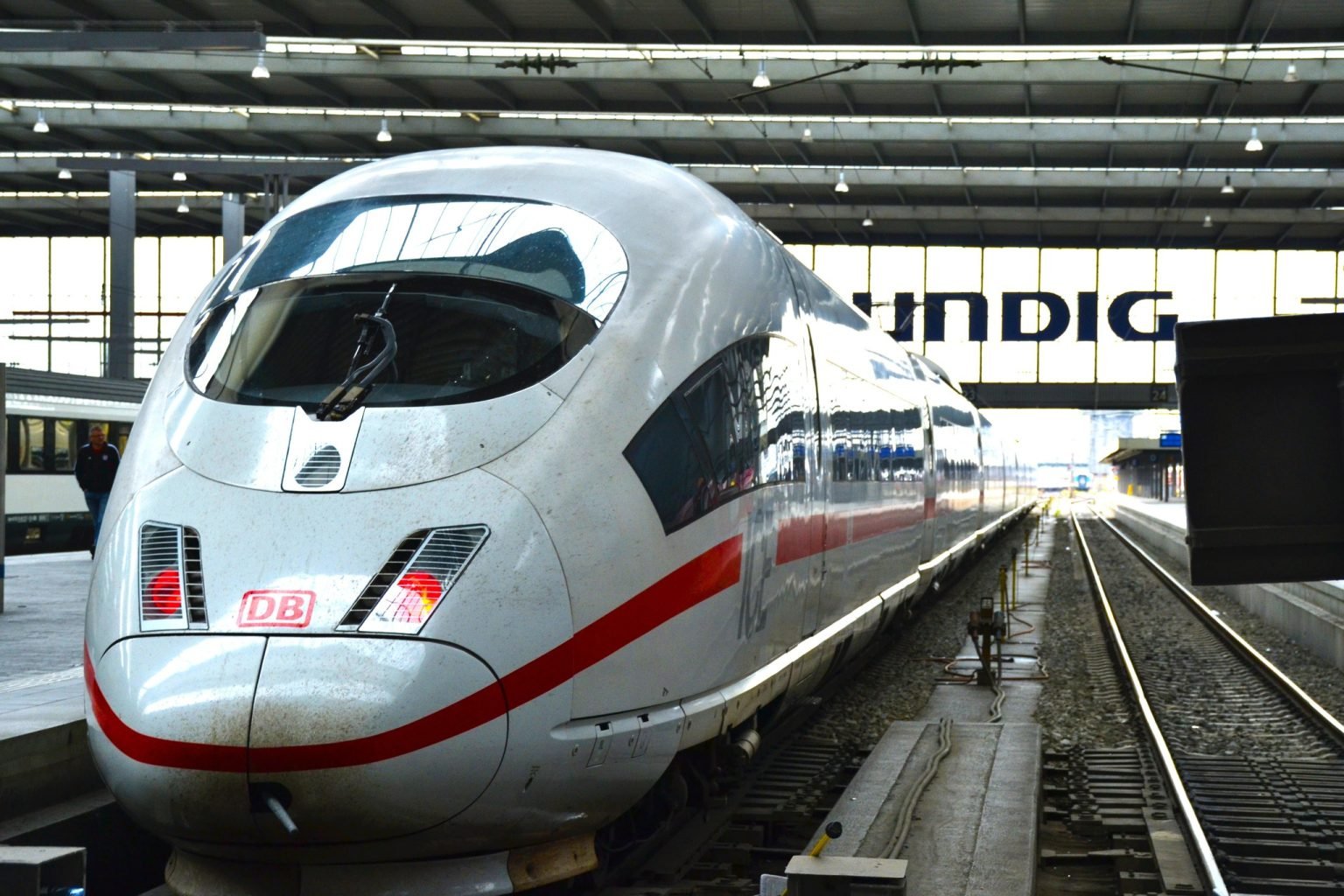
Deutsche Bahn also uses high-speed ICE trains for night services on certain routes.
Two more rail operators, Italo and Flixtrain, are set to enter the German market in the near future; Flixtrain’s parent company, the Munich-based Flix, has already ordered up to 65 high-speed train sets worth as much as €2.4 billion.
At the same time, the night-train segment itself was in decline for many years: between 2001 and 2019, the number of weekly night rail connections in Europe fell from roughly 1,200 to 450.
Investors and operators attribute the renewed interest in the format to growing demand for sustainable alternatives to flying and to passenger fatigue with airport routines – particularly among business travellers, who, for example in France, already account for around 30% of night-train passengers.
One of Nox’s potential competitive advantages could be price. According to company representatives, the minimum ticket price will be €79, comparable to budget airfares on the same routes. That said, like its competitors, the company applies a dynamic pricing model, under which ticket prices will only rise when demand is high.
More details about the project – and possibly the company’s first carriage – will be presented at the Innotrans trade fair in Berlin, running from 22 to 25 September. That is where it will become clear whether the planned launch date will hold as the real launch date, or whether Nox, like many of its predecessors, will face a rockier road from presentation to the first departure of its first train.