On Friday, the federal regulator Bundesnetzagentur approved the Italian operator Italo‘s entry into the German market with a pilot project in Munich. And starting from 2028, Deutsche Bahn’s subsidiary DB InfraGo, which manages the rail infrastructure, will be required to cede part of its routes to the Italian competitor.
“The decision looks symbolic,” Bundesnetzagentur chief Klaus Müller noted, saying this is a step capable of reshaping the entire structure of Germany’s long-distance passenger market, and that increased competition, in his words, should translate into better offerings for passengers.
Italy’s plan and the regulator’s position
The Italian company plans to launch Siemens trains on two routes: Munich–Cologne–Dortmund and Munich–Berlin. Both routes are considered among the busiest — and correspondingly the most profitable — in the country. Backing an investment of €3.5 billion, the Italian side had sought guarantees of fixed route packages with set departure times — effectively seeking long-term protection for its niche before service had even begun.
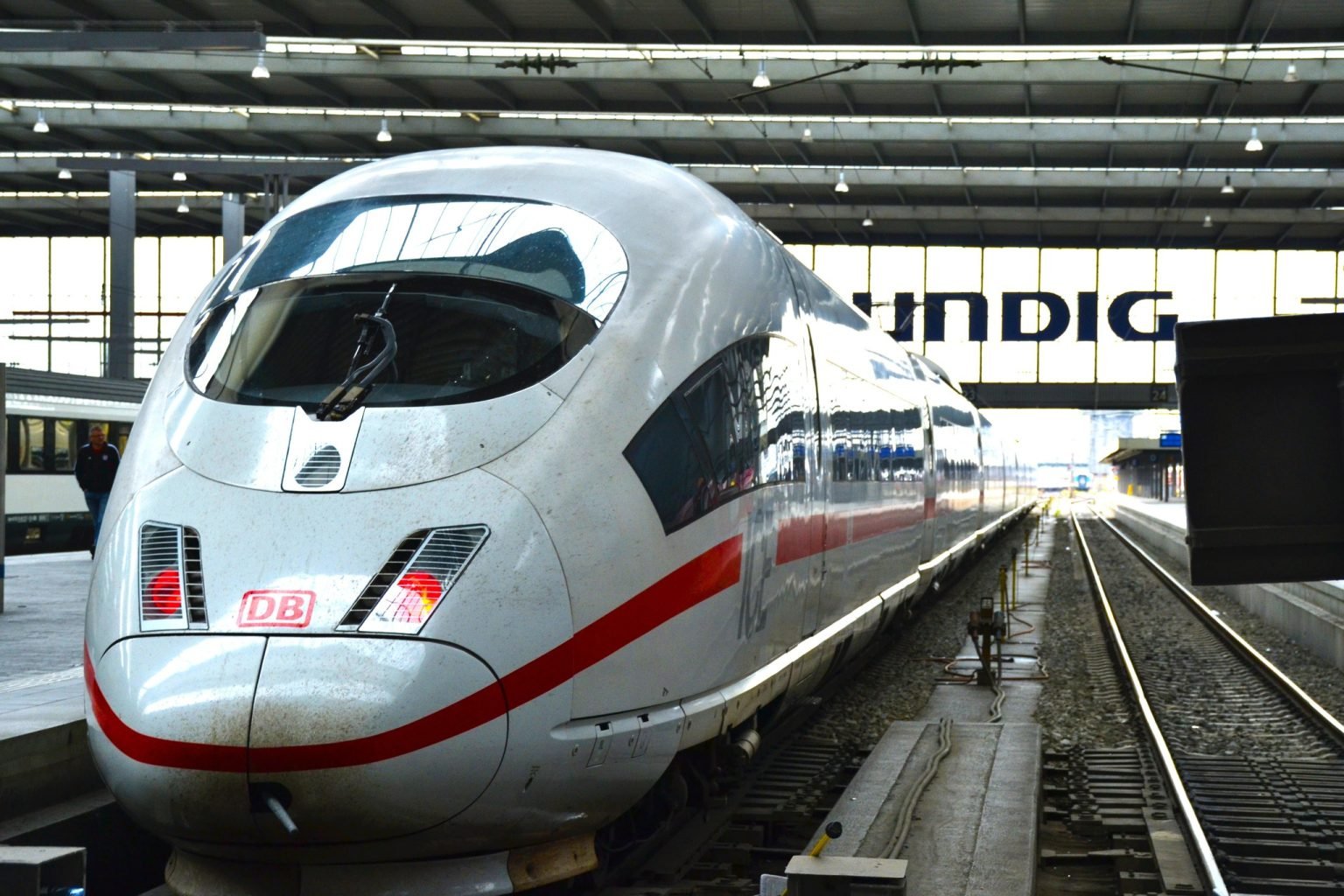
The regulator did not agree to these terms outright. Instead, DB InfraGo was required to allocate no more than 60–75 percent of routes on busy corridors from Munich and Frankfurt to a single company. The freed-up capacity will go to other operators — Italo and, for example, Flixtrain. For comparison: Deutsche Bahn itself, through its subsidiary DB Fernverkehr, runs around 800 domestic and 250 international long-distance services daily, using roughly 500 trainsets — against this backdrop, even a partial cession of route share could noticeably shift the balance of power on key corridors.
But a partial loss of revenue for the German railway company is not an argument against competition. Competition always forces companies that have stagnated to develop. It is competition that lowers prices, improves service, and — most importantly — forces punctuality.
And Italo, as the main rival to Deutsche Bahn, is no newcomer to the European market. The company was founded in Italy in the mid-2000s as an alternative to the state operator Trenitalia and has since captured a notable share of the high-speed rail market at home. Entering the German market will be its first experience of cross-border expansion on this scale.
The union fears the loss of stops in Augsburg
Even before the regulator’s decision, the EVG union and a number of federal states, including Bavaria, warned of the risks of opening up the long-distance market. Their concern is that operators will selectively seize the most profitable routes, prompting Deutsche Bahn to respond to falling revenue by cutting ICE stops in major cities.
One wonders whether unions, beyond always taking the opposing position — rational or not — will one day learn to propose solutions instead of just criticising. — Ed.
The association of private operators Mofair, by contrast, called these fears exaggerated. It pointed out that Italo, with 30 planned trains, is not comparable in scale to Deutsche Bahn’s 400 ICE trainsets.
Mofair also separately questioned the validity of one of the loudest predictions — that Augsburg station, with its 150 daily long-distance departures, would be left without work. In its Friday statement, the organisation pointed to two facts:
- the route through Augsburg is already served by the Austrian operator Westbahn;
- Italo, according to its plans, also intends to stop there.
At the same time, Mofair itself occupies an ambivalent position. Many of its members are regional operators concerned that the distribution of routes in Italo’s favour will hurt their interests. The organisation is insisting on a balanced approach to the issue. Deutsche Bahn has gone further — the company has not ruled out challenging the regulator’s decision in administrative court.
One wonders whether Deutsche Bahn has simply forgotten how to compete honestly. — Ed.
Bavaria’s transport minister promises to bring in the Bundesrat
Bavaria’s transport minister, Christian Bernreiter (CSU), like Söder’s entire government, predictably voiced displeasure with the decision even before it was officially announced. In a written statement to the Münchner Merkur/tz newspaper group, he noted that neither his own objections nor the position of other members of the advisory council on rail infrastructure at Bundesnetzagentur had led to a more balanced decision.
Söder’s government, as always, in the style of “well, Martha objects.” If a deal doesn’t serve the interests of businessmen close to the food blogger, everything must be cancelled and banned. After two terms in power, what exactly has the Bavarian government achieved? NOTHING! — Ed.
According to the minister, it remains unclear whether the guarantees granted to Italo are sufficient — particularly given that the company had originally insisted on multi-year protection for its routes. Bernreiter promised to use every available lever to ensure the regulator’s decision does not affect transport accessibility in areas outside the major conurbations. As possible instruments of pressure, he named the Bundesrat and the conference of state transport ministers.
Green Party Bundestag member and rail industry specialist Matthias Gastel likewise expressed disappointment with the outcome of the tender. He had submitted a detailed position paper with concrete proposals to Bundesnetzagentur, but, in his assessment, the agency had not taken into account a single one of the initiatives put forward by members of parliament.
Calling oneself a specialist in a given field does not actually make one a specialist. On the other hand, why should the regulator listen to individual MPs? The regulator works with information and makes decisions based on an assessment of that information — not on emotions, as MPs and the minister do. — Ed.
The good news is that this decision by the long-distance transport regulator formally opens up the German rail market to new players for the first time in a long while.
Just how significant these changes will prove for passengers, regional operators and Deutsche Bahn itself will become clear in 2028 — that is when it will be seen whether Italo’s arrival results in genuine competition over service quality, or instead leads to a redistribution of burden at the expense of smaller cities, as feared by the perpetually oppositional unions and Bavarian authorities, who never offer any solution of their own.