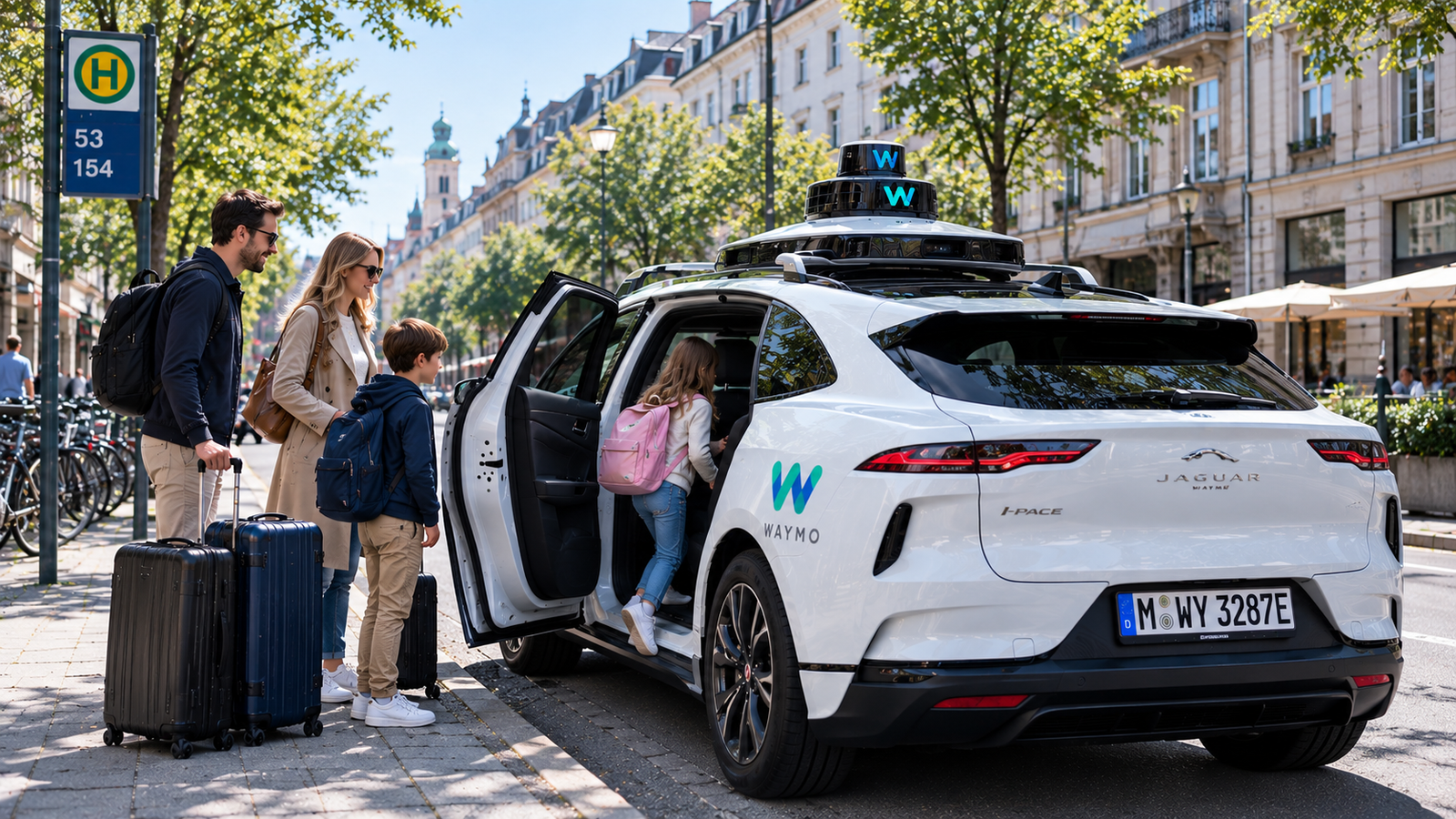

Waymo, a subsidiary of Google, has announced plans to launch a fully autonomous taxi service for the general public in the Bavarian capital by the end of 2027. If these plans come to fruition, Munich will become the first city in the European Union where Waymo operates on a regular basis. Until now, the company has offered taxi services only in the US market, and its global expansion plans have so far included only London and Tokyo.
First vehicles to hit the streets within weeks
Before the service becomes available to all passengers, a testing phase will begin. In the coming weeks, Waymo vehicles will already appear on Munich’s streets, though for now they will be operated by trained specialists behind the wheel. The purpose of this phase is to adapt the driving system to local traffic conditions and weather, and to build a detailed map of the route network.
The company confirmed the seriousness of its intentions back in June, registering a legal entity, Waymo Germany GmbH, in Munich. At the same time, staff recruitment for autonomous ride operations began, with recruitment agencies seeking test drivers in Munich and Berlin.
To move as quickly as possible to operation without a human driver, the company is working with Germany’s Federal Motor Transport Authority (KBA), as well as with regional and municipal authorities. All that is required of them is to issue the necessary permits. Germany’s federal government laid the legal groundwork for everyday autonomous driving back in 2021, when it passed the relevant legislation.
Parliamentary State Secretary at the Federal Ministry of Transport Christian Hirte described Waymo’s decision to begin operations in Munich as confirmation that autonomous transport is capable of operating in Germany on a regular basis. Florian Herrmann, head of the Bavarian State Chancellery, for his part linked the company’s interest to the region’s strong position in the automotive and IT industries, and promised further simplification of regulation in this sector.
350 million kilometres without a driver
Waymo has backed up its plans with results from its operations in the US. There, the service runs in 11 cities and metropolitan areas, including Los Angeles, Phoenix, Miami and the San Francisco Bay Area, with over 3,500 vehicles operating daily on the roads.
According to the company’s own figures:
- Waymo vehicles have driven a combined total of more than 350 million kilometres without human involvement;
- over 20 million paid rides have been completed;
- the service carries out around 500,000 paid rides per week.
The company also claims a marked safety advantage over rides with human drivers. According to Waymo’s own calculations, the number of accidents involving serious injuries is noticeably lower for driverless vehicles, as is the number of collisions with pedestrians and cyclists. In Munich, the service is expected to use Jaguar I-PACE electric vehicles – the same model Waymo uses in American cities.
Munich is not the only spot on the European map
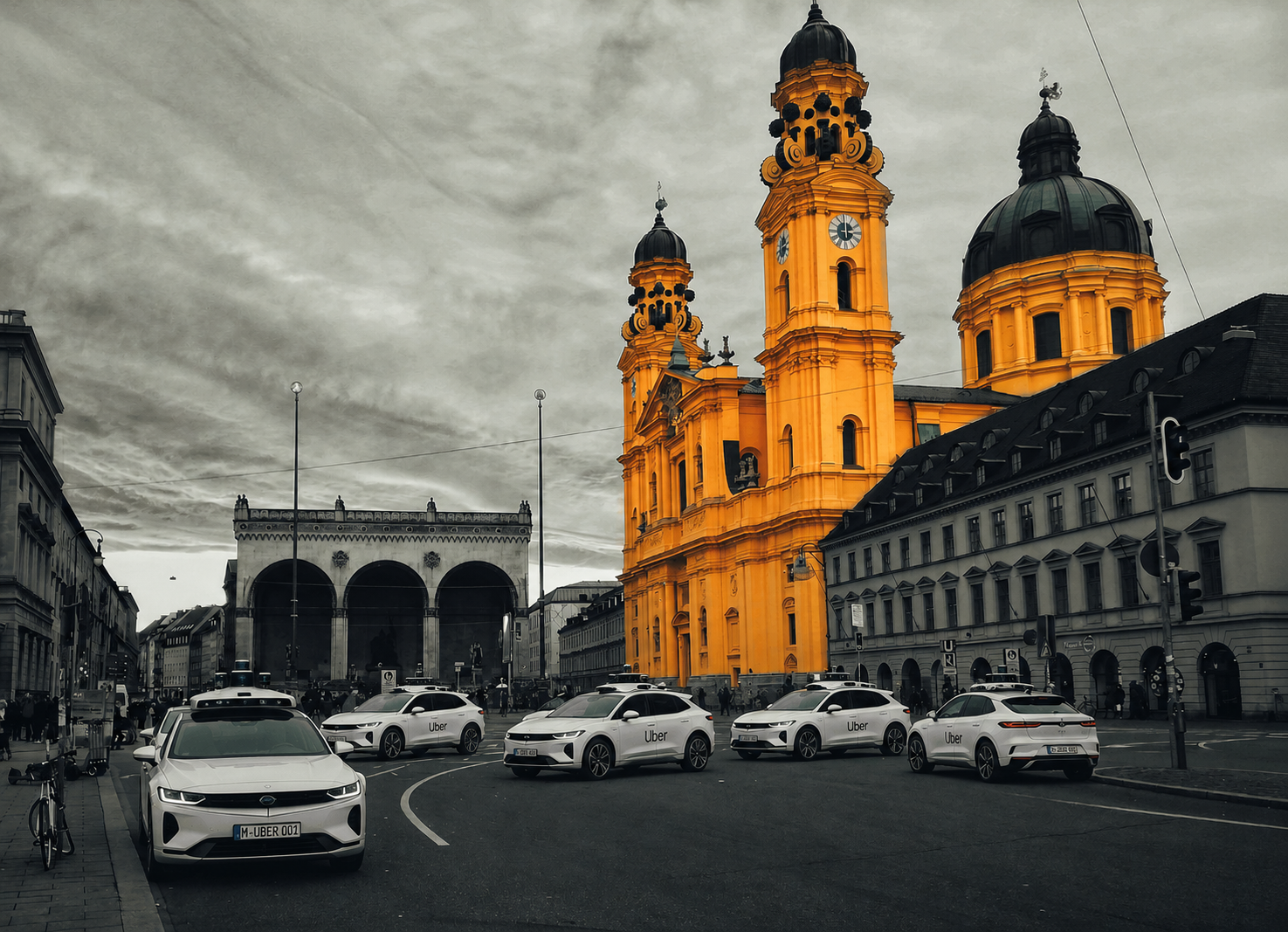
The race for Europe’s driverless mobility market has already begun, and Waymo is not the first to enter it. In April, Croatian company Verne launched what is described as Europe’s first commercial driverless taxi service available to the general public, in Zagreb. In June, Uber announced similar plans for Munich, teaming up with artificial intelligence developer Autobrains. Uber and the Chinese company WeRide are also developing their own driverless projects in Madrid and Zurich.
That said, before commercial operations can begin in Munich, Waymo still faces a long road of approvals from regulatory bodies. At present, the company does not hold permits to test Level 4 autonomous vehicles in Germany, and obtaining such permits may take longer than the company is anticipating.
Why this matters
The arrival of driverless taxis in Munich is not merely local news about one city – it is a signal that Germany is becoming a testing ground where major technology companies are prepared to trial autonomous transport under real-world conditions. For residents, it means a potentially new form of urban mobility within the foreseeable future; for the industry, it is a test of how well European regulation and legislation can keep pace with American and Chinese experience.
For the taxi industry itself, this will intensify competition, in which the best and most customer-oriented services will survive over the classic taxi model. Protests and demands from taxi unions may influence the authorities’ short-term decisions, but they cannot defeat the laws of business.
If the planned launch timeline holds, in just a year and a half Munich residents will be able to hail a taxi with no one behind the wheel. The entire journey, from booking to ride, will be handled entirely by the system itself.
Source: dpa