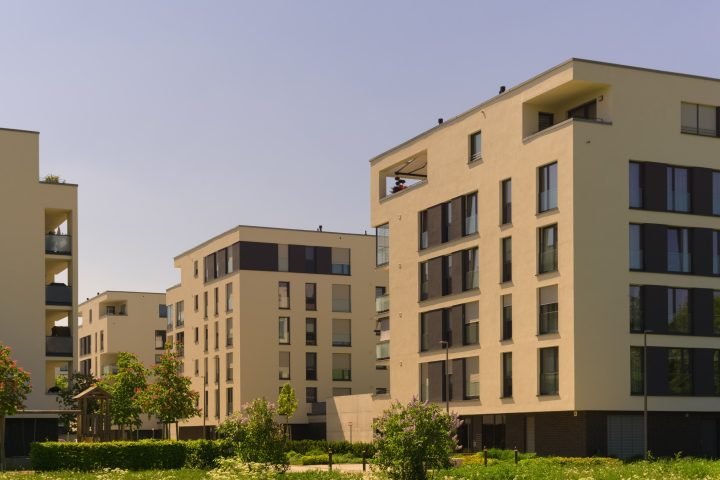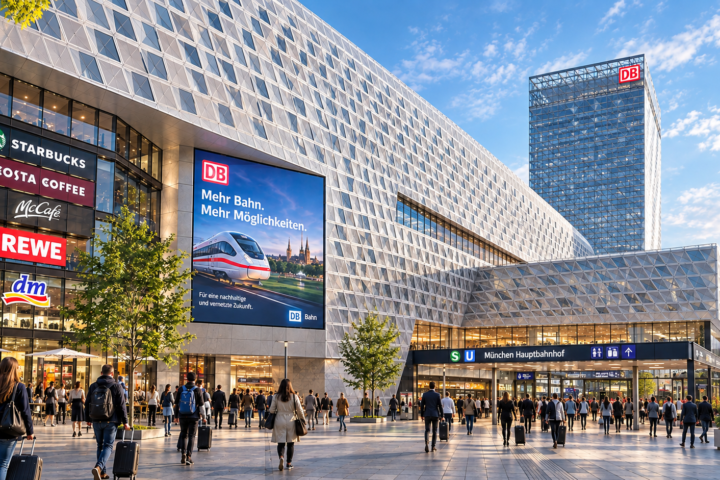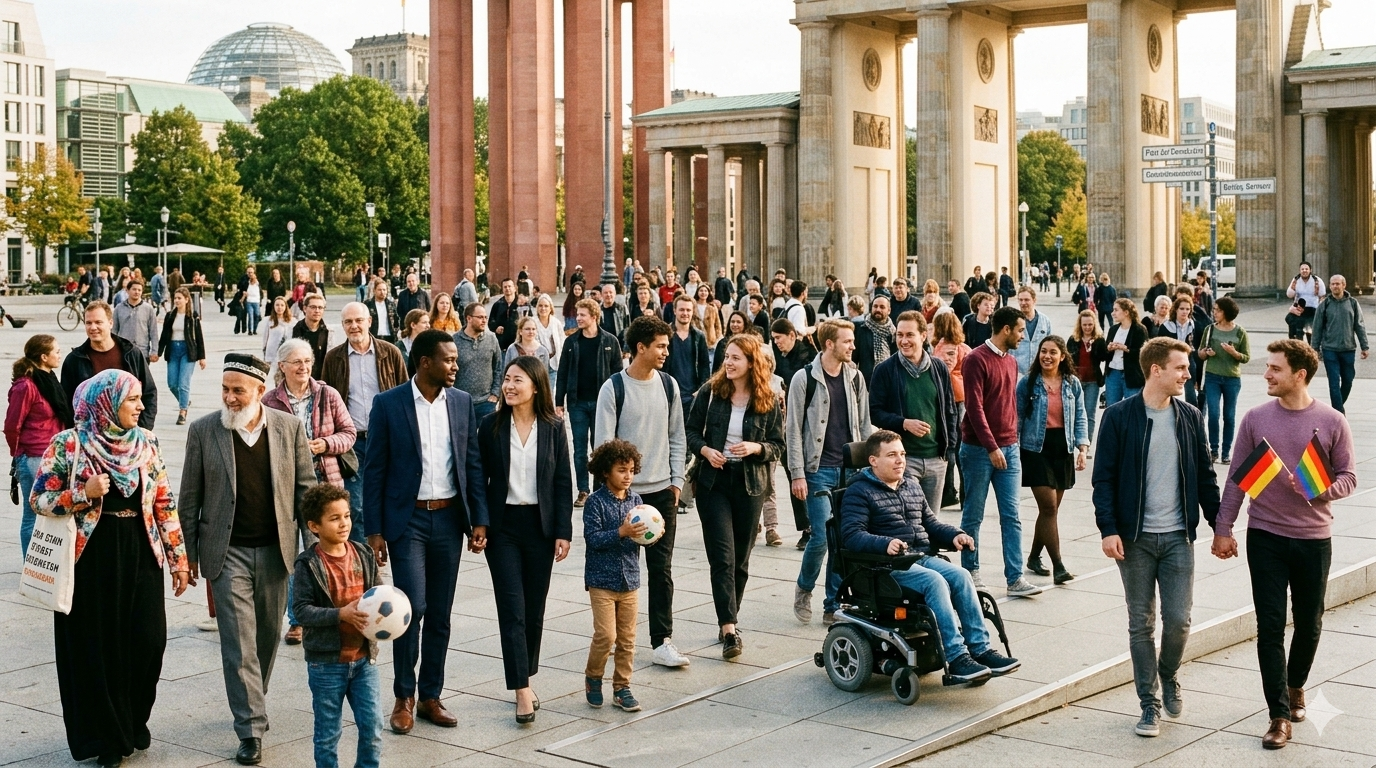

Much depends on what a region can offer people: job, housing, a place in a kindergarten, decent transport. Let us try to understand the statistics in simple terms.
Why Population Growth or Decline Matters for Regions
Is the population growing or shrinking? The answer determines everyday life in every city or district. Where the number of residents is rising, new housing, schools, kindergartens and expanded infrastructure are always needed. Where the population is falling, utilities and infrastructure continue to operate, but fewer and fewer people use them, while the cost of infrastructure remains the same.
But taken together, everything is interconnected in an even more complicated way than it seems. Take drinking water and sewage pipes. They are laid for a certain flow. When demand for water supply and sewerage falls, the revenues of utility companies fall as well. Maintenance costs, meanwhile, remain at the initial level and often even rise. Scaling down sewerage and water supply is practically impossible and expensive, so the city pays for a system that fewer and fewer people use. It is not only water utilities that face such costs. The same applies to schools, roads and public transport that were built for a larger number of residents.
More Elderly, Fewer Workers
The authors of a new sociological study have calculated that by 2045 Germany will have a population of about 81.8 million. That is 1.7 million fewer than at the end of 2025. The study was conducted by the Berlin Institute for Population and Development together with the Wüstenrot Foundation. The foundation is non-profit; it was established in 1990 by the Wüstenrot building society, and it supports research on housing, urban development and social change.
A population decline in itself is not considered a disaster, and countries with fewer inhabitants can live perfectly well. What is worrying is something else: pensioners are becoming ever more numerous, and people in work ever fewer. By 2045, the number of people in work in the country is expected to fall by 4.7 per cent. Businesses, schools and hospitals will have to search for staff, and the tax burden on those who remain will grow.
“The baby boomers are retiring, to be replaced by markedly smaller generations, the birth rate is falling, and the inflow of migrants, like a chaotic migration policy, does not compensate for the growing excess of deaths over births,” said Katharina Hinz, Director of the Institute for Population and Development, at the presentation of the study in Berlin.
Baby boomers are those born in the late 1950s and the 1960s. At that time, a million or more children were born in the country each year. Later the birth rate fell sharply, by almost half. As a result, a markedly smaller generation is replacing the large one. This difference between generations will determine how many people remain in the labour market in the coming years, and how these people will support so many pensioners in the country.
The State of the Economy Becomes Decisive
Demographically, Germany as a whole is shrinking, but not everywhere in the same way. The country is organised on a federal principle: there is the federation, the states and the municipalities. Each level is responsible for its own tasks, and many decisions on schools, transport and water supply are taken at the local level. At the lowest level are 400 districts and cities. The authors assessed each of them on 26 indicators, including demography, the economy, education and social conditions for residents. From these data an overall score was derived: the higher it is, the better the prospects of the district and of the state as a whole.
The result proved unexpected. “The familiar differences between East and West, North and South, city and countryside describe only part of reality,” Hinz explained. In the future, something else will matter far more: how attractive a region is to business and how secure its financial position is.
“In the coming years, some regions will lose residents and workers noticeably, while others will continue to grow. Even within the East, the South and rural areas, the gap in demography and the economy is widening,” Hinz noted.
Politicians Need to Act Now
“Demographic change is happening before our eyes, and it is visible everywhere,” warned the head of the research institute. “The consequences of these changes can be mitigated, but they can no longer be avoided, and the longer we wait, the less room for manoeuvre remains.”
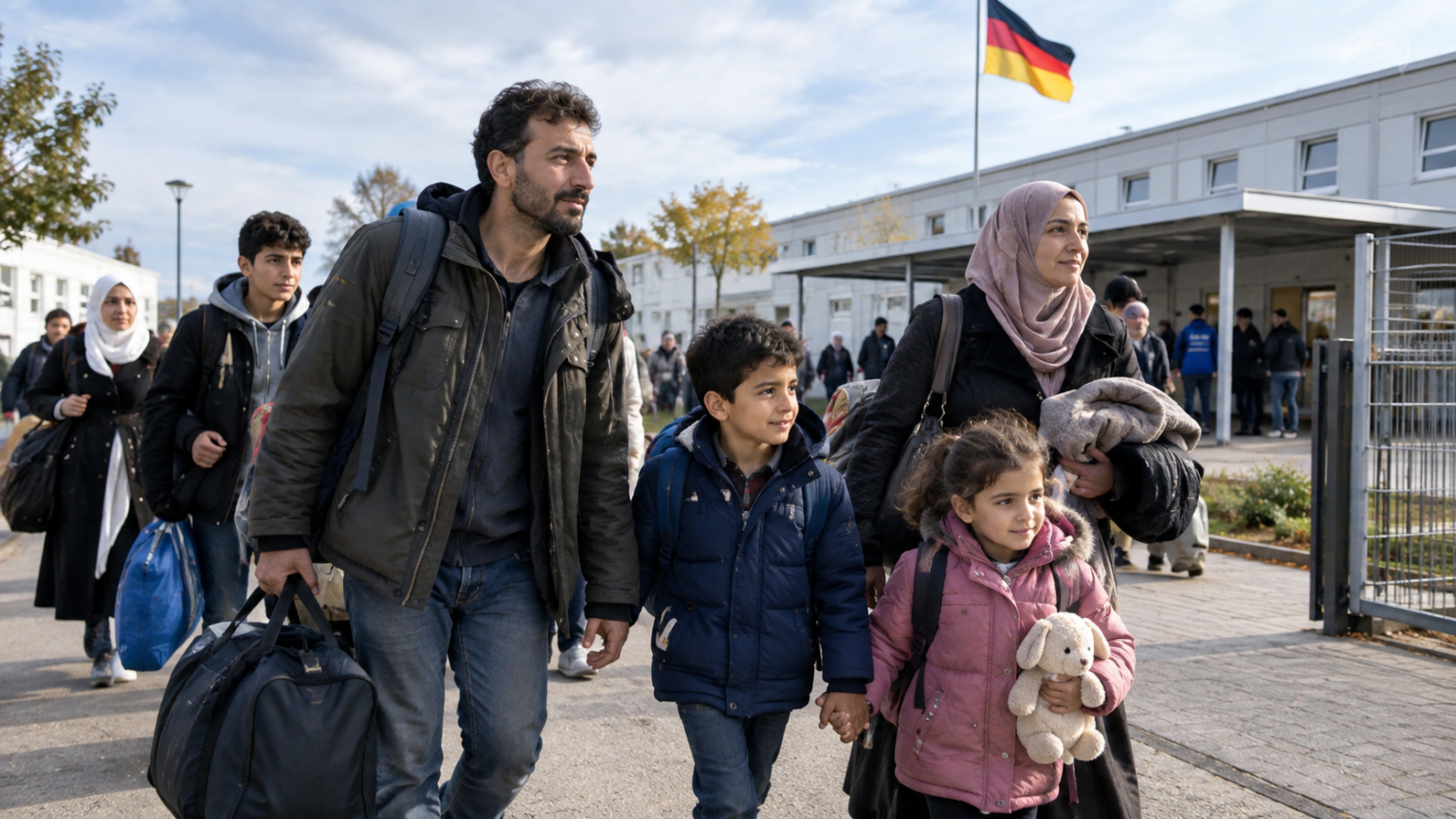
As Frederick Sixtus of the Berlin Institute for Population and Development stressed, almost everywhere in the country more people die than are born. The cause of this phenomenon lies in the low birth rate, which has remained stable for decades and cannot be changed quickly. On the other hand, the lower a population’s standard of living, the higher its birth rate: this is one of the pillars of sociology and demography. A low birth rate confirms the high standard of living in Germany, but it may turn into economic collapse in the future, especially if the far right comes to power and completely closes off migration flows, in particular flows of skilled specialists. The fate of a region is therefore decided by the migration of the population, both internal and external. In the past, the inflow of specialists from abroad repeatedly evened out the demographic and economic situation in the regions. Now migration alone cannot halt the ageing of society.
According to the study, attracting people from abroad and from other parts of Germany requires several conditions at once:
- jobs with good conditions and incomes;
- absence of discrimination in hiring (as a main factor in Germany’s problems);
- sufficient housing;
- a sufficient number of workers for businesses;
- municipalities with secure funding;
- childcare facilities for families;
- a functioning transport system.
All seven conditions are interrelated. Good work attracts people, while housing, standard of living, kindergartens and schools, and developed infrastructure help to retain them. Only a municipality with sustainable finances and revenues can pay for all this.
Berlin Leads
“Many large cities will most likely continue to grow,” noted Manuel Slupina of the Wüstenrot Foundation. Berlin takes first place in the forecast for the development of cities and regions. The capital’s population is expected to grow by almost 10 per cent in the coming years, that is, by roughly one resident in ten. Other cities are growing too: Hamburg, Frankfurt am Main, Munich and Düsseldorf in the west, and Leipzig, Dresden and Potsdam in the east. Munich remains among those expected to attract ever more people over the next two decades. For the city this means that housing and transport issues will remain acute here in future. And if the local authorities continue to play at populism, this could end in collapse for the city and even for the whole of Bavaria.
The authors found no clear difference between town and country. The suburbs of large cities will also most likely grow. Young people more often move to metropolises, while families with children choose the suburbs. As a result, the growth of cities often continues beyond their boundaries, in neighbouring municipalities.
Among the future losers, many large cities in the west of the country are expected: Bremen, Duisburg, Dortmund, Kaiserslautern. Their economy and living conditions attract people ever less. At the bottom of the ranking are Germany’s sparsely populated areas, and many of them, as ever, are in the east.
The Struggle for Labour
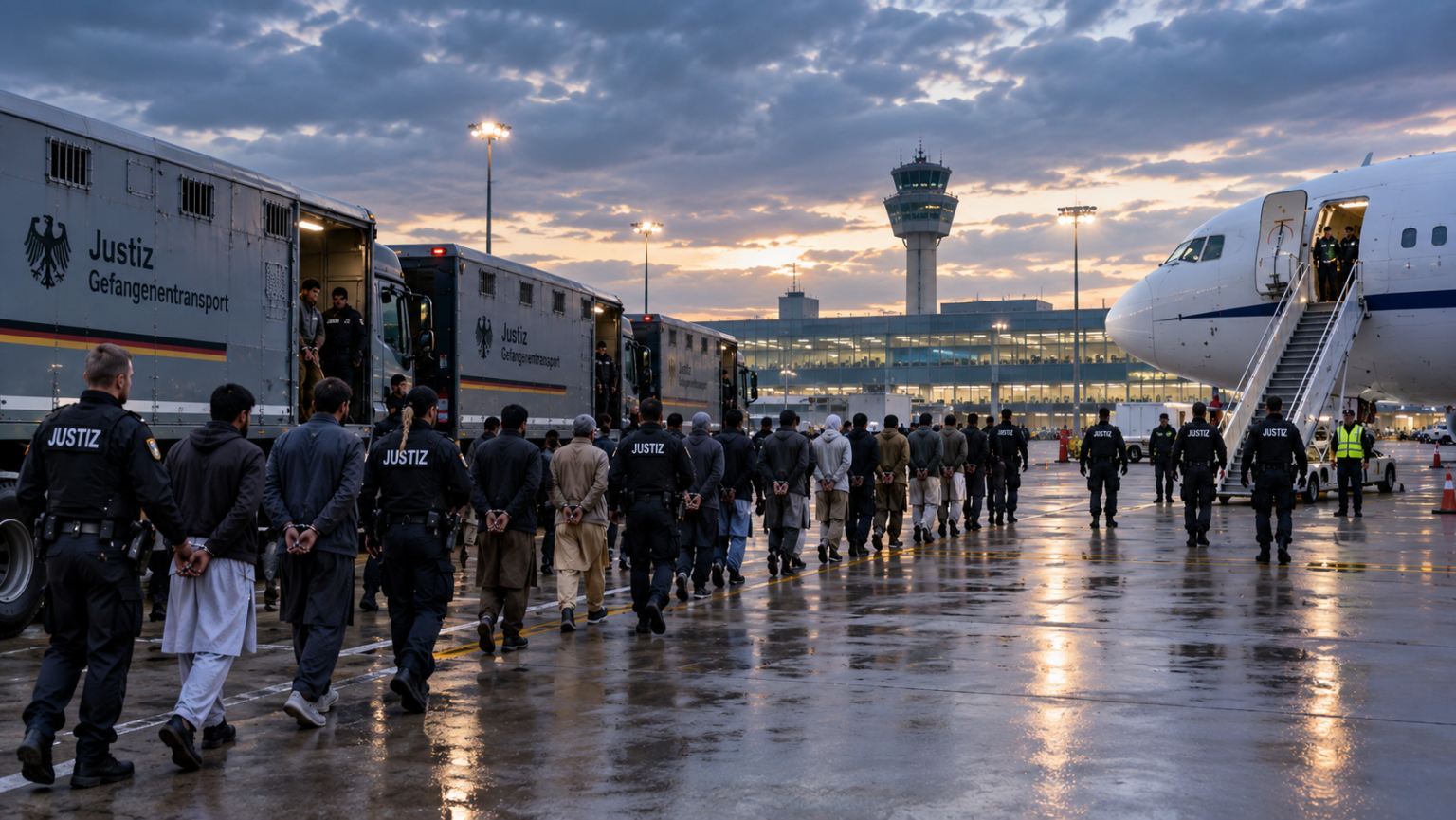
Twelve of the 20 districts and cities with the lowest scores lie in eastern Germany. In the 2019 study there were five, so their number has more than doubled. It is there that the working-age population is shrinking fastest. And by 2045, according to the study’s estimate, the population of these regions will fall by a further 18 per cent. The struggle for workers will therefore become one of the main demographic tasks in the former GDR, the authors believe. Businesses in the east will have to look for people both among locals and among those who can be attracted from other regions and from abroad. But this may be hindered by the simultaneous radicalisation of the population in these regions. As the quality of life, healthcare, culture and education decline, radical views, resentment and envy of other regions emerge. Populist politicians such as the AfD take advantage of this. And in the event of their victory in local elections, they promise to reduce migration, which would lead to even greater problems for the population of these regions. Only politicians and people close to the far right will not suffer.
The best chances in this struggle remain with two southern states, Bavaria and Baden-Württemberg. Bavaria relies on an economy that is strong in many places and a functioning labour market. But it has three main problems: a serious housing problem, the government’s populism, and the problem of discrimination by HR staff in hiring (the imposition of artificial gender and racial quotas and the like).
Solutions Must Be Sought Locally
In the opinion of Manuel Slupina, the study’s conclusions require many actions from politicians, not yet more loud statements. “How much regional difference can the political demand for equivalent living conditions withstand?” he asked, and referred to the Basic Law, Germany’s constitution. It sets the state the goal that people, wherever they live, should have comparable opportunities and a chance of a good life. If the gap between regions continues to grow, meeting this requirement will become ever harder.
But what kind of decent standard of living can be spoken of if (material on this topic is in preparation):
- At every turn, low-level HR staff want to see a German philologist, a woman, and also, without fail, of a nationality chosen by the HR employee on their own subjective views, instead of selecting on professional qualities.
- If there is not enough housing.
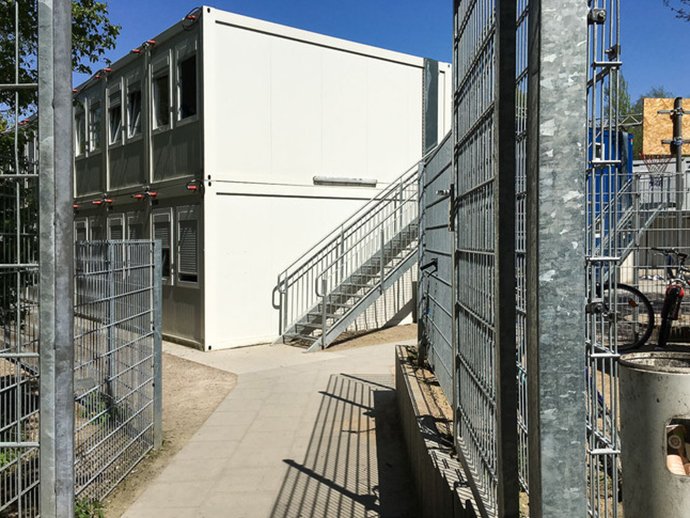
- If local officials, instead of motivating immigrants and benefit recipients to work and improving the quality of life of this section of the population, work to worsen their standard of living. For example: by moving people from a hostel where they lived one to a room into hostels with three or four people to a room.
- Or when the job centre is obliged to issue referrals to interviews and to agree arrangements with employers, but issues only a printout from a job-vacancy website, which the person could easily have found themselves.
- If there are no places for children in kindergartens or in clubs.
- If in schools, instead of an individual approach, there is levelling, and immigrants’ children are left with poor grades solely because of weak German, and are forced, even with a high IQ, to train for manual trades. And the declared support for such children remains mere populism on internet pages and in TV interviews.
Bavaria’s problems could be listed at length. And, unfortunately, apart from loud statements by local officials and politicians, “we do not see light at the end of this tunnel.”
Scientists advise politicians to concentrate on structural problems and regional differences. “A good solution for a growing metropolis is not necessarily suitable for a shrinking rural district,” Slupina stressed.
Solutions must be sought and developed for the specific place and its nuances, and for this, suitable conditions and a willingness on the part of the government to change something are needed.
“There need to be fewer rigid prescriptions, more freedom for creative solutions and more financial scope, especially for local municipalities and for those engaged in community work.” Slupina argues for greater trust in regional capabilities, though without forgetting the need for the authorities to be willing to act on this.
Municipalities will most likely support this position. Mayors and district heads have long wanted more financial freedom, so as to decide for themselves what to spend money on. They are now seeking a larger share of the state’s overall tax revenues. The federation and the states object, citing their own budgetary difficulties. But both sides understand that reform of the financial system is probably unavoidable.
What This Means for the Regions
By 2045, Germany will be smaller and older. Some cities and districts will continue to grow, while others will lose residents and workers. The dividing line between them will run along the state of the economy and of municipal finances, while the familiar lines between East and West, city and countryside describe it only in part.
Bavaria remains in a winning position in this forecast for now, but only owing to the momentum of development in past decades. Munich is an example: the economy is still working, and the inflow of population is only increasing. On the other hand, social problems are worsening proportionately, which may in the near future reverse the growth dynamic entirely. That would lead to a decline in tax revenues, and hence to the region’s decline. Whether the Bavarian government will find the nerve to root out populism in itself and transform into technocrats, time will tell.
The other regions will have to find their own path, because there is no single recipe for the problems mentioned. What works in a growing state may not suit a shrinking district. This will determine what schools, transport, and care for children and the elderly will be like, whose numbers will only grow in a particular district. The time for seeking and taking decisions is limited, and the longer politicians wait and go off photographing Bavarian sausages for their blog, the less room for manoeuvre remains for the so-called “stopping short of the abyss”. The question of money, housing and employment, which low-level HR staff are holding back for municipalities, remains open for now, and its outcome will determine whether regions can attract new residents and work with those who already live in them.