Police statistics for recent years show a sharp rise in such incidents, but there is as yet no clear answer to the main question: whether there are simply noticeably more two-wheeled vehicles on the streets, or whether the authorities have at last noticed a pattern long obvious to ordinary citizens, namely that cyclists and e-scooter riders wholly ignore both the traffic rules and the law, and show no respect for those around them. It has reached the point where one can hear an ironic warning from drivers on local trams: “Mind how you get off, check whether the cyclists have stopped. These are Munich cyclists, after all.”
One Day, Three Incidents
Günzburg: a 17-year-old, fleeing a police check, accelerated an e-scooter to 60 km/h and raced along pavements and cycle paths, even though manufacturers limit production models to 20 km/h, which means the device had most probably been technically modified. Near Mindelheim, another rider, this time a cyclist, failed to notice a turning lorry, did not slow down and suffered serious injuries. In Augsburg, a patrol stopped a 42-year-old man with a blood alcohol level of 1.5 per mille, although for e-scooters, as for bicycles, the permitted limit is only 0.5 per mille. But are Bavarian riders of two-wheeled vehicles even aware of the traffic rules?
These three episodes are merely a drop in the stream of daily police reports across Bavaria. Today no large city or town is without e-scooters and bicycles; parked, they block pavements, courtyard entrances and building doorways, causing inconvenience to pedestrians and other road users, and they are left lying at the roadside.
Figures for Swabia, Augsburg and Munich
The Police Headquarters of South and West Swabia recorded 238 accidents involving bicycles and e-scooters in 2025, 26.6 per cent more than a year earlier; 244 people were injured in these accidents.
In Augsburg itself, the number of accidents reached a record high: 129 accidents and 121 injured, almost a quarter more than in 2024.
National Statistics: Alcohol, Kerbs and Inexperience
At the federal level, the growth in accidents involving, and caused by, riders of two-wheeled vehicles is on an even larger scale. The Federal Statistical Office of Germany counted around 16,500 e-scooter accidents in 2025. The number of accidents involving injury rose by a record 38.1 per cent over the year. By comparison, in 2021 about 4,900 people were injured nationwide in such accidents and five were killed. In four years, the number of injured has more than tripled.
Other figures for 2025:
- 38 deaths;
- About 1,900 people with serious injuries;
- Almost a third of accidents (30.5%) occurred without the involvement of cars or pedestrians; in these cases, riders of two-wheeled vehicles simply fell on their own.
In Munich, the number of incidents jumped from 499 to 639 (+28.1%), and 583 people were injured; in one case in six, that is 101 cases, alcohol was the cause of the accident.
Safety Courses Are Almost Useless
For a decade, the authorities have turned a blind eye to so-called “eco-friendly transport”, and the proposed solution of one-off classes on accident analysis and mutual respect on the roads is unlikely to change the behaviour of these riders for long. An excellent example is the pedestrian tunnel and the crossings over the road at Laim railway station in Munich. Neither changes to the markings, nor additional warning signs, nor a large poster and added images hinting at respect for others, nor even large pedestrians painted on the path of bicycles and scooters have changed the situation in the tunnel. The number of bicycles parked in prohibited places has not fallen even after the area was cleared of long-abandoned bicycles. Cyclists continue to regard the tunnel as a cycle path, ride at maximum speed, shout at pedestrians and sound their bells, even though they have no right of way there.
Every resident of Bavaria understands that yet another round of courses, for which considerable sums have been allocated from the city budget, is an illusion and that such courses cannot simply change people, with the exception, of course, of activists and committed partisans. It has also long been known, from the example of integration and coaching courses, that certain people will get rich from such courses while the problem remains unsolved. Residents are particularly concerned about children: “Many accidents in our study involved children under 14, who are not yet allowed to ride scooters at all,” the police noted, recalling that the current minimum age for riding, for example, an e-scooter in Germany is 14, and no proof of skills is required. But neither the rental companies, nor still less the parents of these children, either do not know the law or deliberately ignore it, placing their children and customers in the position of potential accident victims. And the authorities do not merely turn a blind eye; they fear a fall in their ratings if they begin punishing riders of two-wheeled vehicles, which may be the main reason for the rise in accidents.
That is why, instead of courses, tougher measures are proposed: compulsory driving licences and registration plates for bicycles and e-scooters.
It is currently expected that from 2027 new technical requirements will come into force for newly registered e-scooters and bicycles, including mandatory turn indicators. But in the view of traffic specialists, this will have no effect on real safety. All the ideas put forward by specialists, for example changing the wheel size of rental e-scooters, raising the minimum age for riding on the roads and introducing driving licences, are still bypassed by the new rules. “There is essentially nothing in this law,” the city’s police concluded.
The Invisible Part of the Statistics
Beyond the official count of accidents involving two-wheeled vehicles lies another category of incidents: falls caused by scooters thrown across the pavement and haphazardly parked bicycles. A victim who trips over someone else’s vehicle does not usually enter the police statistics, which means that the real scale of such cases cannot be assessed at all.
Why This Matters
The debate over two-wheeled transport in Swabia has become a particular case of a more general problem: the rules for this kind of transport are updated more slowly than the transport itself creates problems for those around it. Over the past decade, two-wheeled transport has travelled from an idea for improving the environment to one of the main problems of urban infrastructure, yet the requirements for its riders (age, sobriety threshold, lack of knowledge of the traffic rules and of respect for other road users) have remained almost the same as when these vehicles appeared on the market. And the inaction of the authorities, and their fear of a fall in their ratings, only aggravates the problem.
Traffic specialists, in various formulations, have reached one conclusion: neither one-off courses, nor piecemeal technical amendments, nor even more road markings and warning signs can replace systemic regulation while people without basic skills and without an understanding of road risks remain in the saddle.
While accident statistics are growing faster than legislation is changing, the question of driving licences for two-wheeled transport will almost certainly remain on the Bavarian political agenda even after the new traffic rules of 2027 come into force. Meanwhile, other road users have divided into several groups: those who favour tougher penalties and, should the authorities fail to act, are ready to teach the insolent a physical lesson in how to behave in public places and on the roads; those who favour the urgent introduction of a driving licence for this kind of transport; and those who keep repeating: “It doesn’t concern me, I’m in the clear.”
Похожие записи
The Munich Mobility Department Organizes a Series of Events to Support Bicycle Movement in the Schwabing-West District
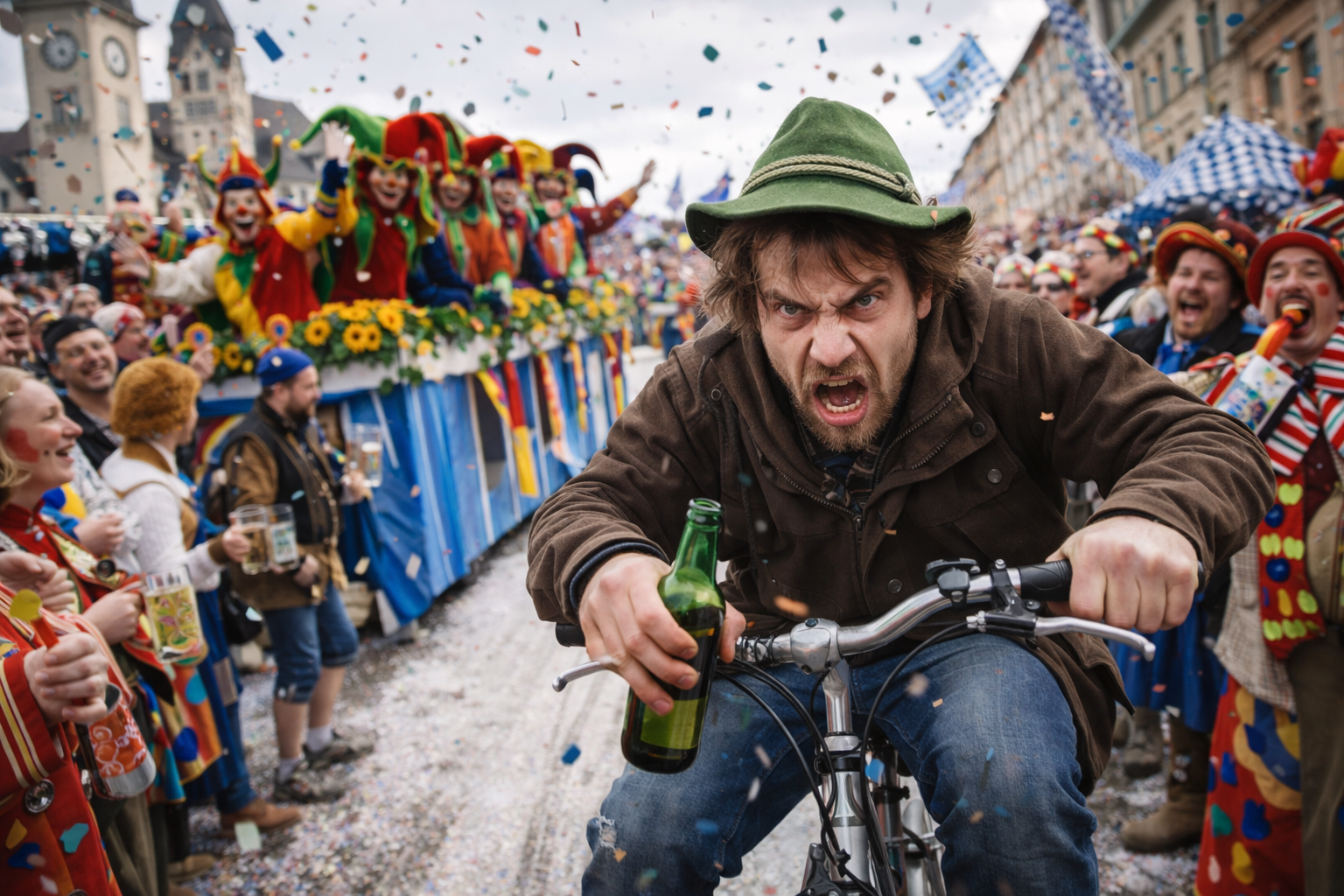
Reckless cyclists and scooters and bicycles dumped haphazardly at every turn. But what are Bavarian authorities doing for pedestrians?

On Some Bridges in the Olympic Park, the Movement of Cyclists Is Now Prohibited