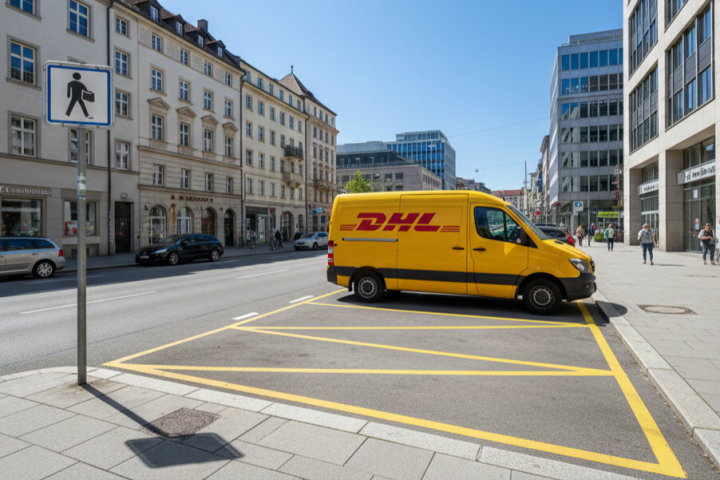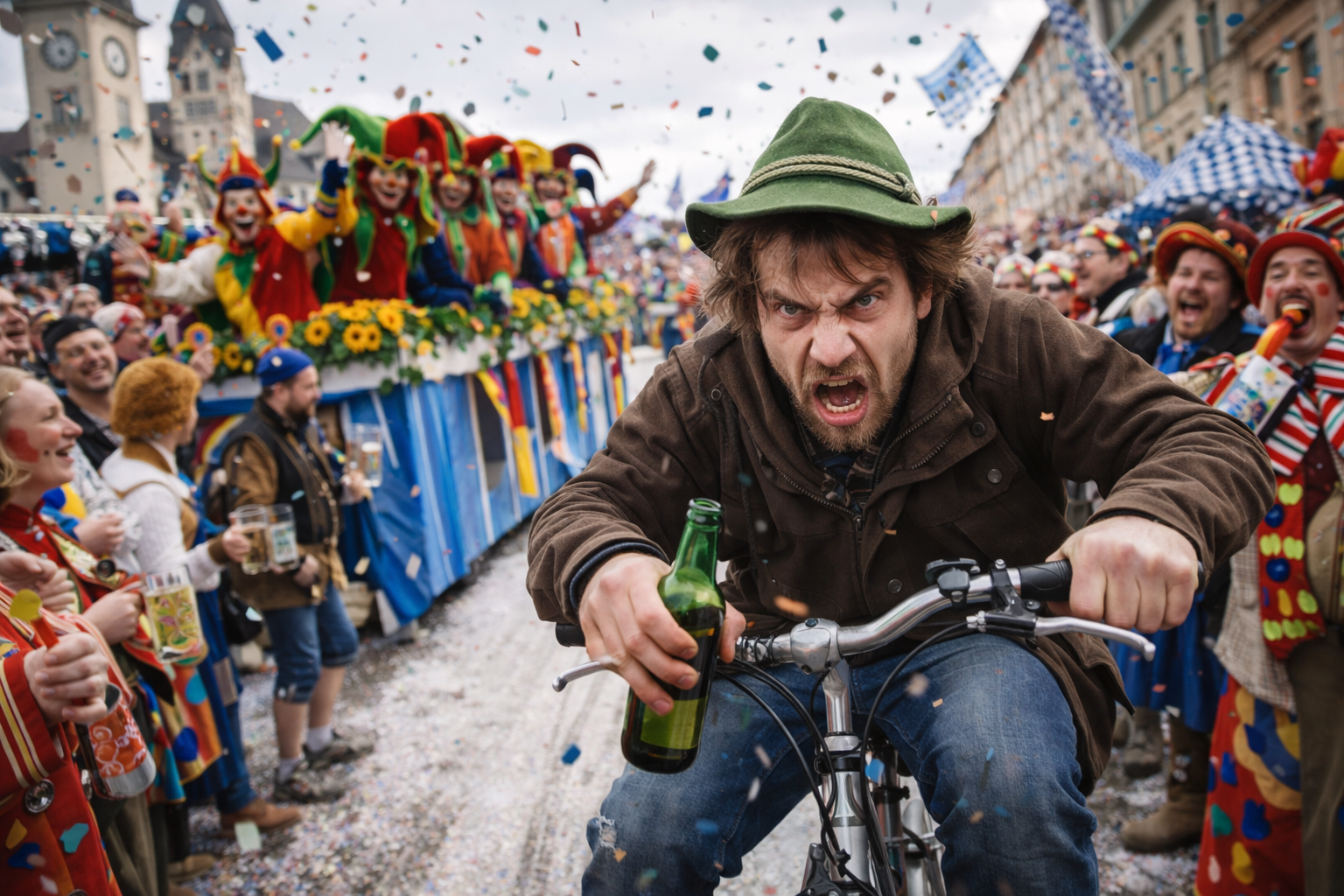

An e-scooter comes at you from the other direction, and the green light goes out before you’ve even reached the middle of the crossing. On top of that, add e-scooters and bicycles left standing in the middle of the pavement, as if parking them off to the side were somehow impossible. Then there are cyclists who don’t want to cross to the other side of the road, but are also afraid to ride the wrong way down the bike lane in violation of traffic rules – after all, the fine for riding on the pavement is smaller than the fine for riding the wrong way. Throw in courier vans and road works for good measure.
For decades, municipal budgets have gone toward rail transport and bike lanes, while the most common, ancient, environmentally friendly and healthy mode of transport – walking – has remained in the shadow of activist- and lobby-driven transport policy.
And where has that got us?
Almost everyone walks, but the city’s infrastructure is built for cyclists
Urban planners call walking “pedestrian traffic,” and they have long known its scale. Trips made entirely on foot account for about 22% of all journeys in Germany, and more than 80% of Germans walk regularly.
At the same time, walking most often serves merely as a connecting link – a way of getting to a car park, a bus, a train or a bike rack. That is precisely why, in classical transport planning, pedestrians’ interests have for years been reduced to school-route safety, or treated as a secondary add-on to cycling infrastructure rather than as an independent strand of transport policy. On top of that, the authorities are terrified of falling approval ratings because of local activists. There may be only a handful of them, but the noise they make is enough to rattle the knees of even the most seasoned politicians. And that has been, and remains, the authorities’ biggest mistake: not listening to specialists, and instead bending over backwards to accommodate every activist’s utopian idea.
Narrow pavements, short green-light phases, and chaos from scooters and bicycles
What obstacles do pedestrians actually face on Bavarian streets?
Urban planner Paul Bickelbacher heads the federal board of the FUSS e.V. association, which campaigns for pedestrian safety and comfort. According to his observations, in large cities the same key problems recur from district to district: pavements that are too narrow, green lights that don’t stay on long enough, and a shortage of properly equipped crossing points.
Sometimes the timing of pedestrian traffic lights looks so absurd it isn’t even funny anymore. In the few seconds the pedestrian light stays green, a pedestrian has to let dozens of cyclists go by – cyclists who don’t want to use the bike lane and are trying to cut their route short – reach the far edge of the crossing, and do all this without fear of being hit by couriers in a hurry. For the next green light, needed to finish crossing the next stretch of road, a pedestrian sometimes has to wait as long as five minutes. And that would be tolerable enough, if not for our Bavarian weather: one moment torrential rain and wind, the next scorching sun – unlike cyclists and drivers, who are often shielded from the weather.
The constant parking of cars and bicycles on pavements in small residential neighbourhoods is a source of particular irritation, and not only for Bickelbacher. Local authorities and police often simply tolerate this practice without imposing any sanctions, and offenders justify it by pointing to an alleged lack of parking spaces and infrastructure. But as the saying goes, a bad dancer blames his shoes. The authorities know it, and so does the police, but fear of activists is a factor that colours all of their decisions. And that’s without even mentioning that, in recent decades, people have been appointed to management and other positions not on merit but according to various quotas – gender, racial, and so on.
It’s fair to say outright that the incompetence of many officials only adds fuel to the fire. The behaviour of reckless cyclists adds further difficulties, as do e-scooters and bicycles dumped every which way, eating into the already narrow space on the city’s streets. An excellent example of the problem is the pedestrian tunnel in the Laim district. In rural areas the situation is even harsher: pavements are often entirely absent, and pedestrians are forced to walk along the shoulder of the road – even though the traffic rules clearly spell out who is meant to be on the roadway and who isn’t!
Among the main problems, Bickelbacher singles out:
- pavements that are too narrow in cities;
- short green-light phases at pedestrian crossings;
- a shortage of properly equipped crossing points;
- constant, chaotic parking on pavements in residential neighbourhoods;
- cyclists and scooters getting in pedestrians’ way;
- the complete absence of pavements in many rural communities.
There is a federal strategy, but not much substance in it
In May 2025, the federal Ministry of Transport adopted a nationwide “Pedestrian Traffic Development Strategy,” intended to serve as the basis for further regional and local decisions. The document sets out a direction, but consists mostly of general guidelines and goals, with no concrete obligations for the regions or deadlines for implementation – which once again demonstrates a lack of political will, fear of the cycling and automotive lobbies, and professional incompetence on the part of civil servants and politicians.
The Bavarian Ministry of Transport, for its part, points to the division of competencies: since pedestrian traffic mainly takes place within cities and municipalities, responsibility for it lies precisely at the municipal level.
“The Free State emphatically stresses that it does not interfere in the powers of cities and districts, but supports them mainly through funding.”
Quite right – why do any work when you can issue another loud populist statement and carry on attending banquets and restaurants instead – Ed.
On paper, this support looks far from negligible: around €250 million is allocated annually for transport infrastructure, and the urban development programme provides for a further €349 million in 2026 and €353 million in 2027.
But there’s an important caveat: these sums are not earmarked for pedestrian traffic alone, but for all forms of mobility at once, including cycling and car infrastructure. In practice, the money goes toward constant repairs and the expansion of bike lanes. As a result, in Munich itself you can witness the surreal spectacle of pedestrians crowding onto a narrow pavement at an intersection after a bike lane has been widened, with many forced out onto the bike lane or even the roadway – while on the bike lane itself you’ll spot two or three cyclists complaining about the pedestrians as they run the red light and swear at car drivers.
Bickelbacher criticises the Bavarian government for lagging behind and being passive in this area. (And what exactly are they active in, apart from populism? – Ed.) The gap is especially clear compared with Baden-Württemberg, where several thematic congresses have already been held, a state-wide strategy has been adopted, and targeted support programmes for municipalities are up and running – in other words, a system has been built that Bavaria still lacks, and is unlikely to get under Söder. Much like a strategy for solving the housing problem.
Can the people who drove Bavaria – and Munich in particular – into such serious problems really be the ones to solve them? If we lived in a former Soviet country, we could confidently say this was a pre-election political strategy: create a problem, then solve it right before the vote to win votes. But we’re not there.
“Pedestrian advocates” in city halls: who is watching the pavements, and why
These are exactly the kind of targeted programmes Bickelbacher has in mind when he talks about “pedestrian traffic commissioners” – specialists already responsible for this area in a number of city halls. In Bavaria, such positions exist in Nuremberg, Munich and Augsburg. But only on paper: the results of their work simply don’t exist yet.
In Augsburg, the pedestrian traffic commissioners have been working within the mobility and road construction department since 2023. Their task is to develop minimum standards for pavements and ensure the urban environment is accessible to all categories of residents, including people with prams, walking sticks and wheelchairs.
The work began with a large-scale survey of residents, which concluded in November 2025. Its findings have already fed into the future concept, and interim results will be presented to the city council in the autumn. According to a representative of Augsburg’s relevant department, almost every problem residents named in the survey leads, in practice, to conflict when someone tries to fix it – widening a pavement often means removing a parking space, and that rarely goes without a fight.
But here too, sheer unprofessionalism is on full display. Those responsible for solving the problem described above have spent years discussing it, when a project could easily have been drafted in a month or two, approved, and already put into practice. Instead, money is being spent on questionable surveys that aren’t run by professional sociologists, but most often carried out either on the city hall website, on social media, or among activists – which pushes the margin of error up to as much as 90%. Who, after all, spends their time constantly on the city hall website, or hanging around city hall itself? Activists! Which means the survey results will end up looking exactly like the views and ideas that created today’s problem in the first place.
New traffic rules will give cities more freedom
Despite the many obstacles, Bavarian pedestrians do have some reason for cautious optimism. In October 2024, the Road Traffic Regulations (StVO) were amended at the federal level. Since then, municipalities have found it easier to introduce 30 km/h speed-limit zones, set up pedestrian crossings and create adequately sized pedestrian zones – without first having to prove that a specific hazard exists at a specific stretch of road, as the previous rules required.
Interesting – when local authorities, at the demand of two activists, allocate millions for the so-called reconstruction of a road, which in effect amounts to the destruction of pedestrian and car infrastructure, does anyone bother producing studies or arguments then? – Ed.
As the old saying goes, the cart hasn’t moved an inch. Plenty of talk, but the problem will soon lead not just to conflicts on the roads, but to vigilante justice against cyclists who won’t keep the peace.
Why this matters
A dispute over the width of a pavement or the number of parking spaces may look trivial next to major infrastructure projects, but it’s precisely decisions like these that add up to the quality of everyday life in a city. An interesting example of urban planning is the UAE, where a district’s entire infrastructure is designed and built first, and only afterwards are residential and commercial blocks built within it. But it’s the smart and educated who learn from other people’s experience. Our own officials, recruited according to artificial quotas, and their intellectual equals, the activists, prefer their own mistakes – mistakes that never seem to teach them anything.
For now, the new federal pedestrian-support strategy remains nothing more than a framework document, and transport infrastructure funding is divided among every mode of transport except walking. As things stand, the prospects for further reform depend solely on the willingness of individual cities and their representatives to take the initiative and responsibility upon themselves.
A genuine shift toward a “city of short distances” will only happen once pedestrians are placed first on the list of priorities for transport planning – and no longer come last, as they do now, trailing behind rail transport, bike lanes and parking.