
The plan’s long-term official goal is to create – at the expense of pedestrians and motorists – a network of cycling routes that is, as far as possible, continuous and unbroken, linking the city’s districts to the centre.
Giesinger Berg: the stretch where rebuilding has already begun
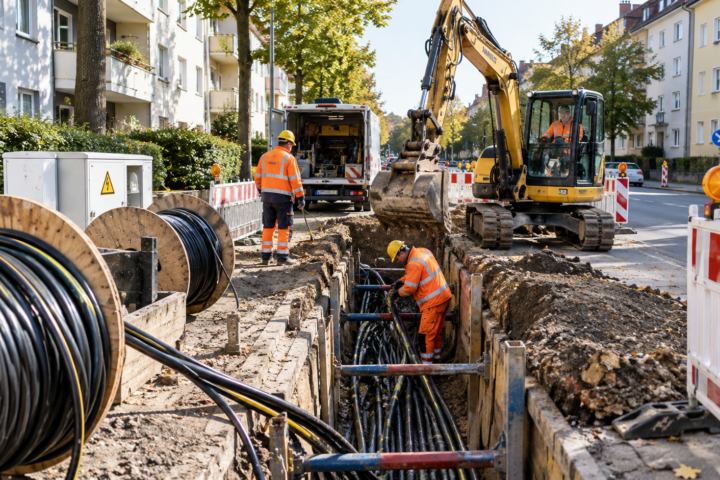
One element of the cycling network expansion is already underway, regardless of the outcome of the vote on the master plan. By the end of 2026, Giesinger Berg is to get wider bike lanes, clearly separated from pedestrian paths. Whether this will do anything to curb cyclists’ brazen behaviour remains an open question – particularly after the case in which, faced with numerous complaints from pedestrians, the city council did the opposite: permitting free cycling without right of way on a problem stretch where cycling had previously been banned.
The road changes are supposedly meant to improve safety for cyclists, including pupils at nearby schools, and to improve the connection between the district of Giesing and the city centre for cyclists. But as we know, these are just fine words. No matter how many dedicated streets get built, no matter how many roads and pavements get narrowed, this only increases the number of accidents and does nothing to solve the problem of cyclists’ behaviour on the roads. The project, meanwhile, carries a price tag of around €600,000 – at a time when the city has far more pressing problems still waiting for a solution.
Three rings and links to the city’s key hubs
The starting points for the planned expansion of the cycling network will be central locations and major transport hubs: Munich Central Station, Harras, Rotkreuzplatz. From the city centre, cyclists are to be given safe and, where possible, uninterrupted access to these points.
The cycling network will consist of the following elements:
- Altstadt-Radlring – a ring route around the old town;
- an inner cycling ring;
- an outer cycling ring;
- bike paths along the Isar;
- cycling routes linking the city’s districts to one another.
The Altstadt-Radlring was not included in this plan as a new idea: several years ago, activists, through a so-called “citizens’ initiative,” demanded a continuous cycling ring around the old town, physically separated from the roadway. The approved master plan has folded this initiative into the wider city cycling network, alongside the inner and outer rings, the routes along the Isar, and the links between districts.
What this means
The adopted document sets out the structure of the future cycling network, but it is not a list of construction projects with fixed deadlines. Every stretch – whether another segment of the inner ring or a further extension of the route along the Isar – will require its own separate council decision, as has already happened with the Giesinger Berg stretch. How quickly the cycling network actually becomes continuous will depend not on this vote, but on how often, and in what order, the city council goes on to approve specific projects on the ground. At the same time, this decision confirms the fact that the city authorities do everything demanded of them by activists who are a minority in the city, and continue to turn a blind eye to the problems cyclists cause – despite Munich having one of the most developed cycling infrastructure networks in Europe.
Based on materials from Munich City Council meetings
Похожие записи

The Munich Mobility Department Organizes a Series of Events to Support Bicycle Movement in the Schwabing-West District

The Munich Municipality Opened New Mountain Bike Trails in the Laim District

Reckless cyclists and scooters and bicycles dumped haphazardly at every turn. But what are Bavarian authorities doing for pedestrians?