
New information that has reached newsrooms across Bavaria shows that in Geretsried, dozens of social housing units owned by the company Bayern-Heim now stand vacant, while families entitled to such housing have their applications rejected. People do not understand why this is happening. As in Munich, the district authorities acknowledge only delays in processing documents, and their replies sound formulaic.
Flats Stand Empty, Applications Are Rejected
Ragnar W. was looking for housing for his mother and found a suitable option: the new Opus G development, with social housing on Banater Strasse in Geretsried. Her certificate of eligibility for social housing is valid, and she meets all the requirements. Lukas entered her details himself into what he called a “complicated digital system” and received a brief rejection. Yet at the same time, Bayern-Heim’s flats in this building remain vacant.
Such stories have been collected by Merkur reporter Susanne Weiss. According to her, applicants entitled to social housing have been struggling for months with the local authorities and long waiting times, receiving only rejections.
The Certificate, the Company and the Building
The certificate of eligibility for subsidised housing (Wohnberechtigungsschein) confirms that a household’s income does not exceed the legally established limit. Without this certificate, it is impossible to obtain a flat with regulated rent. In Bavaria, such certificates are issued by district administrations: Geretsried belongs to the district of Bad Tölz-Wolfratshausen, and applications for the certificate are accepted only by its district administration. There is no single income limit for subsidised housing in the state, so each application undergoes an individual review.
Bayern-Heim is owned by the State of Bavaria and builds housing with regulated rents. The company was founded in 2018, and the state government set it the goal of building 10,000 flats by 2025. It is one of Bavaria’s three state housing companies and received 500 million euros in capital at its launch. The path to the government’s target has proved a long one. In 2022, the Bavarian Audit Office noted that, more than four years after its founding, the company had not yet built a single flat on its own. In principle, much like all the companies and undertakings of the Bavarian government.
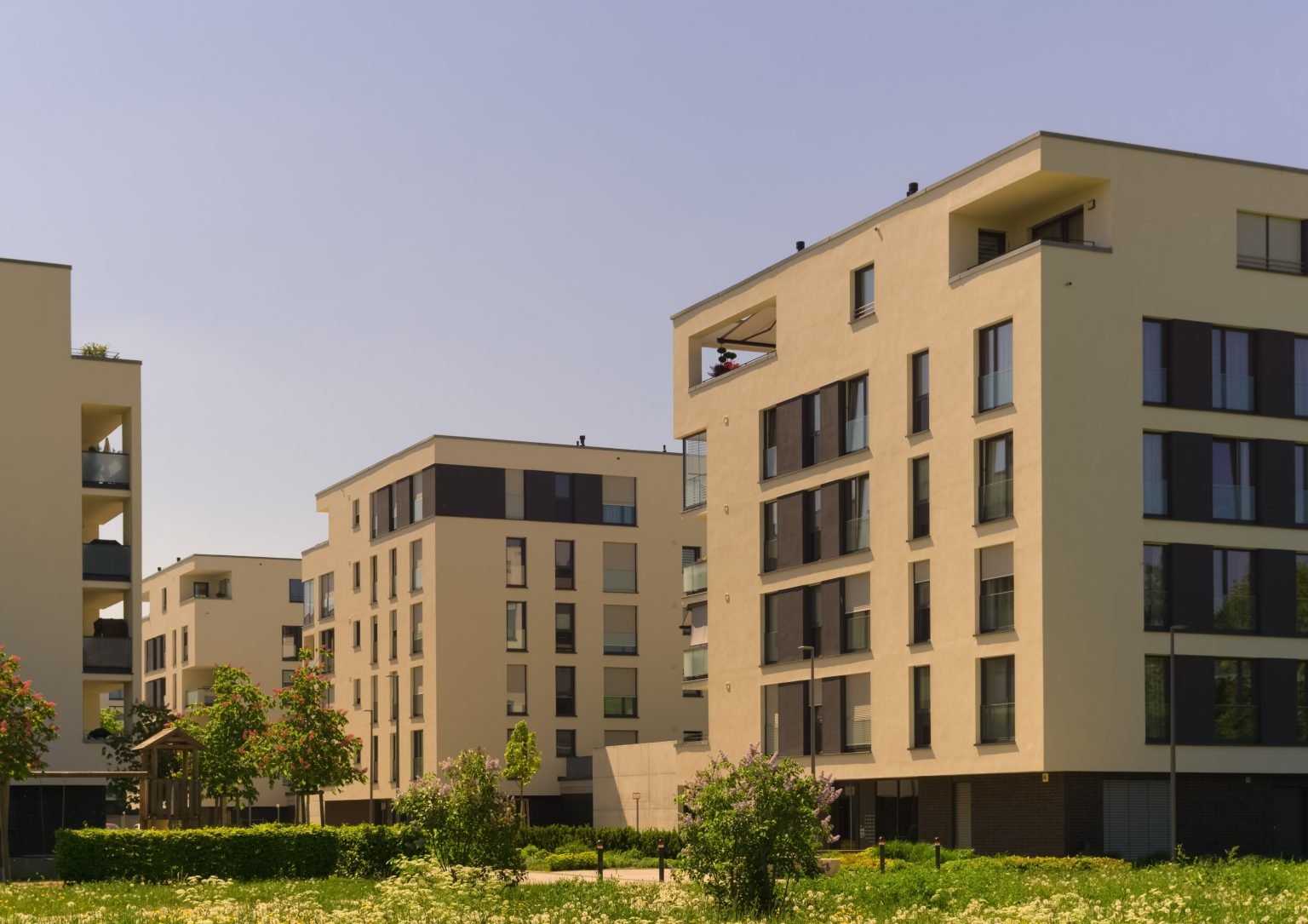
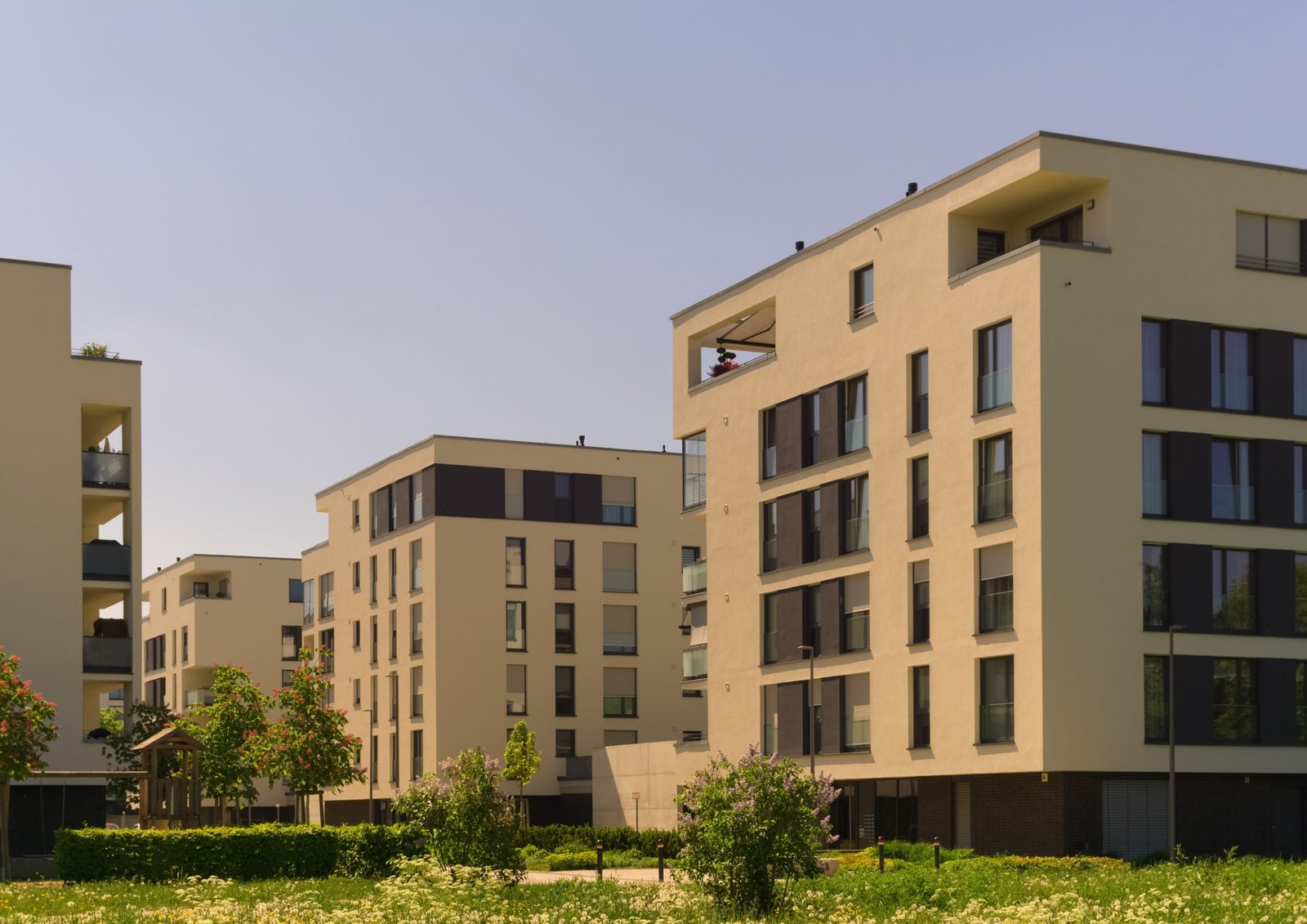
Opus G is a car-free district designed for 750 flats. Bayern-Heim received 199 flats there, and the keys were handed over to it in October 2025. The investment in this deal totalled about 83 million euros, of which almost 32 million came from state housing subsidies. According to the original plan, the new flats are intended for single people, couples and large families, ranging from one to five rooms, and for roughly 600 residents of the district in total. Every flat has a balcony or terrace, and the building was designed to be barrier-free.
The Flat They Were Not Shown
Ragnar W. wrote to the editorial office: “If so many flats are empty and eligible applicants are turned away, that frankly baffles and upsets me.” According to him, the search for a flat is taking a heavy toll on the mental health of his mother, who is already in a difficult situation.
Another example: the family of Maria Z., five people in all, applied for a four-room flat. Instead, the family received an offer for a five-room one. “They immediately offered us a five-room flat and praised it in every possible way,” Maria recalls. But she was unable even to view the new home: “They did not even let us look at it and hurried us to sign.” The family declined the larger flat and must now apply again, even though time for moving is running short.
Rainer Berthold, the former mayor of Wolfratshausen, who is helping a Ukrainian family, has encountered the problem of renewing a certificate. “At the district office, they explained to me that renewing the certificate would take six months,” he stated.
Bavarian and Munich authorities are right now applying roughly the same approach to low-income residents in the relocation of Ukrainian refugees, supposedly to save public money. Although it is known that the hostel will be closed six months before the deadline, no one is being rehoused, regardless of whether the person works, is disabled, is a pensioner or is simply a benefit recipient. Officials take the situation to the point of absurdity: a week before the move, they issue ultimatums and make threats, social housing is not provided, and people are simply relocated to accommodation of worse quality, often several people to a room. In essence, this violates federal law, the constitution, international law and even the criminal code. We are preparing a separate article on this subject.
And What Do the Authorities Say?
The district administration of Bad Tölz-Wolfratshausen, like the Munich city hall before it and like the Söder government, has acknowledged only one thing: there are difficulties with processing applications. To uncomfortable questions, all the authorities respond with formulaic brush-offs about how the Söder government and local authorities care for low-income residents. These formulas can easily be compared with the stock phrases of bureaucrats in the USSR. As if they had been taken from the same textbook. Marlis Peischer, spokeswoman for the district administration, explained that the number of requests from citizens has risen noticeably. “In recent years, the number of applications has increased considerably. We are now talking about roughly 900 applications a year,” she noted. However, she was unable to answer the question of “how this affects the empty flats” and the fact that they have stood idle for years. Which, in principle, only proves that the flats are being kept empty deliberately, on orders “from above”.
Bayern-Heim, too, follows a script in its reply, pointing to high demand and noting that swift processing is possible only with a complete set of documents. But the question of why no one is receiving social housing still remains unanswered, and the work of Munich’s SOWON has long deserved a review by the public prosecutor’s office.
To Sum Up
To sum up, one thing can be said: Bavaria is in a serious housing crisis, yet the authorities are not rehousing those in need of social housing, which stands idle and eats up large sums from the budget, while those in need live in hostels in ever worse conditions, because the same authorities want to save money. The question of savings is also not entirely clear, since most hostel residents work and pay for their housing out of their own pockets. Meanwhile, journalists write, but write cautiously, so as not to offend the delicate sensibilities of Söder and the mayors of the cities. And people are left only to hope for early elections and a change of populists in power.