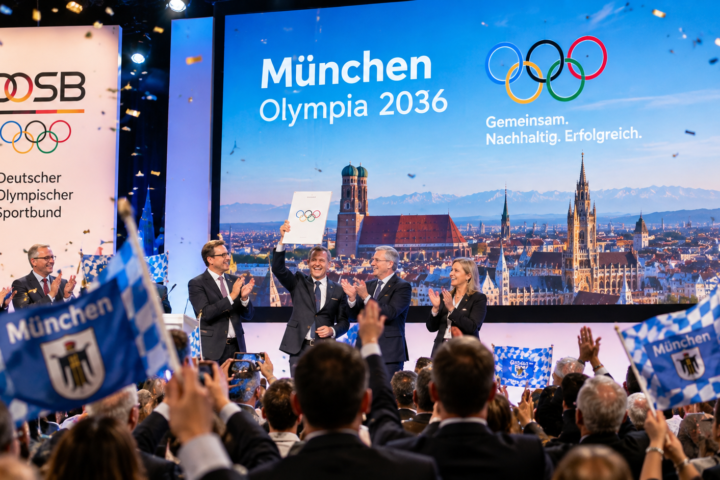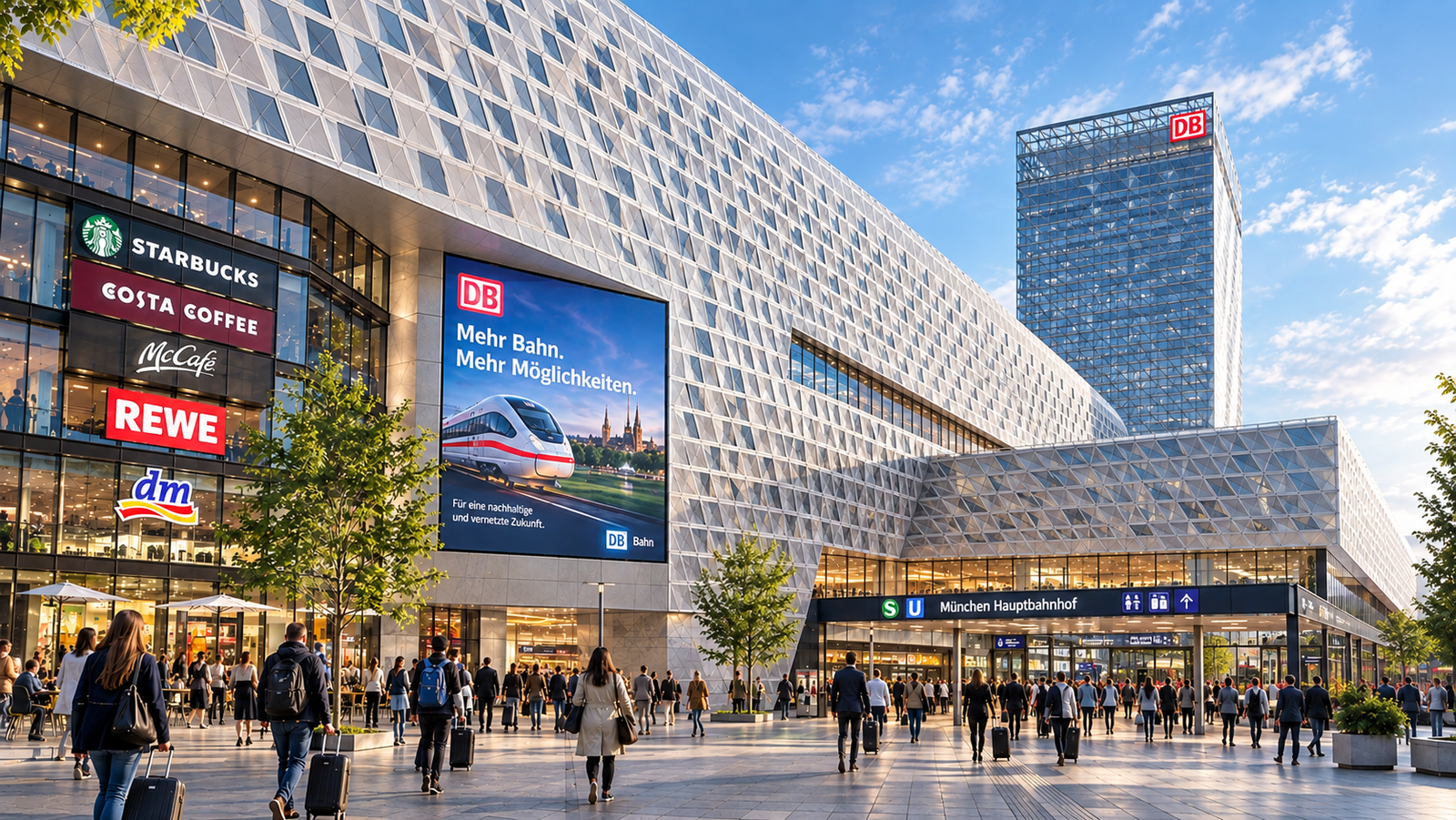

Under the updated construction schedule, the new main station building will not be completed until 2038. A two-year gap looks trivial on paper, but it could influence both the decision of the Olympic committee and Munich‘s reputation on the world stage.
Construction of the Station Has Dragged On
From the standpoint of transport logistics, it would suit the city better for the Games to take place as late as possible: in 2036, 2040 or 2044. Under Deutsche Bahn’s current plans, the main station, as Munich’s key interchange, will receive passengers in the new building only in 2038, that is, two years after a possible 2036 Olympics. A Deutsche Bahn spokesperson confirmed this to Munich media on Monday, 28 September. By comparison, under the earlier plans construction was to have been completed back in 2028, but it has been delayed by a full decade.
Had Munich been entrusted with the Olympics as early as 2036, millions of guests arriving by train would have found themselves directly on a building site. The station is a terminus: all trains end their journeys here, which means passenger flows inevitably converge in a single building. This fact significantly complicates the city’s chances of success with an Olympic bid for 2036.
A Station Without a Scenario for Speeding Up Construction
For now, the railway station looks exactly like what it is: a project that has dragged on far too long. Deep underground, a second S-Bahn trunk line is being built, while above ground part of the old building has already been demolished. The new underground station will lie at a depth of about 41 metres, directly beneath the demolished ticket hall. So that passengers need not be on the building site, Deutsche Bahn plans to build a temporary building on the southern station forecourt: a five-storey interim station, due to open by mid-2027 and to serve the city for the next decade.
Hardly anyone in the city’s leadership wants to greet Olympic guests with a temporary structure. Andreas Frank of the Pro Bahn organisation puts the task succinctly: “By the time the Olympic Games begin, Munich’s main station must not look like a construction site with low capacity. Such an unsightly picture would be all too noticeable against the backdrop of thousands of fans arriving from all over the world.”
The Second Suburban Rail Trunk Line Will Decide Everything
On the same Monday, the new Deutsche Bahn representative Christoph Kraller met Bavaria’s Minister of Transport Christian Bernreiter (CSU). The meeting had been planned for a long time, but the decision in favour of Munich’s Olympic bid lent it unexpected urgency.
Speeding up construction of the new station is not as simple as it seems: it can be completed only after the second S-Bahn trunk line enters service. Construction of that line began in 2017 and will cost, by various estimates, around 9.4 billion euros.
The rule of thumb is this: the new station building will open two years after the trunk line goes into operation, and Deutsche Bahn currently plans for the line to start operating between 2035 and 2037. The design for the building itself was prepared by the architectural firm Auer & Weber back in 2003, so on paper the solution has existed for more than twenty years.
The result is a vicious circle: to finish the station above ground sooner, the tunnel below ground must be completed earlier. At the same time, news about the second suburban rail trunk line project occasionally sounds noticeably more optimistic than the official deadlines announced by DB. At one press conference, representatives of the construction company allowed that they might manage to finish the tunnel by the start of the Olympic Games, should these take place as early as 2036. But the Deutsche Bahn spokesperson distanced himself from such promises: “The company is not prepared at present to make any encouraging statements about hypothetical scenarios for speeding up construction.”
Why This Matters
Munich’s Olympic bid is in danger of collapsing. All of this stems from the constant missed deadlines in building the new railway station and the underground S-Bahn trunk line, which are being built as a single organism, with the schedule of one project rigidly determining that of the other. This is not a bureaucratic formality but an engineering reality. The old S-Bahn network was built just before the 1972 Olympic Games. It was designed for a load of only 250,000 passengers a day, which is precisely why building the second tunnel addresses the problem of constant train delays and disruption to timetables.
For now, Deutsche Bahn names a single completion date for construction: 2038. At the same time, nobody at the railway company is proposing a single realistic way of speeding up the work. In general, Munich residents have already grown accustomed to the sharp decline in the quality of work of both state and private companies in Germany over the past ten years. We have already set out the reasons in our previous analytical articles. One of them is that a new generation of recruiters holds radical views and hires not professionals but people according to artificially introduced quotas, such as gender, racial and so on. As a result, the city finds itself held hostage by its own infrastructure and by the unprofessional employees of the railway company.
If the right to host the 2036 Olympics is nevertheless awarded to Munich, the city’s main transport gateway will welcome the world in a building that works, but is temporary, while the final station, designed twenty years ago, will be seen by Munich’s guests only two years after the closing ceremony, and that is if a war with Russia does not break out.