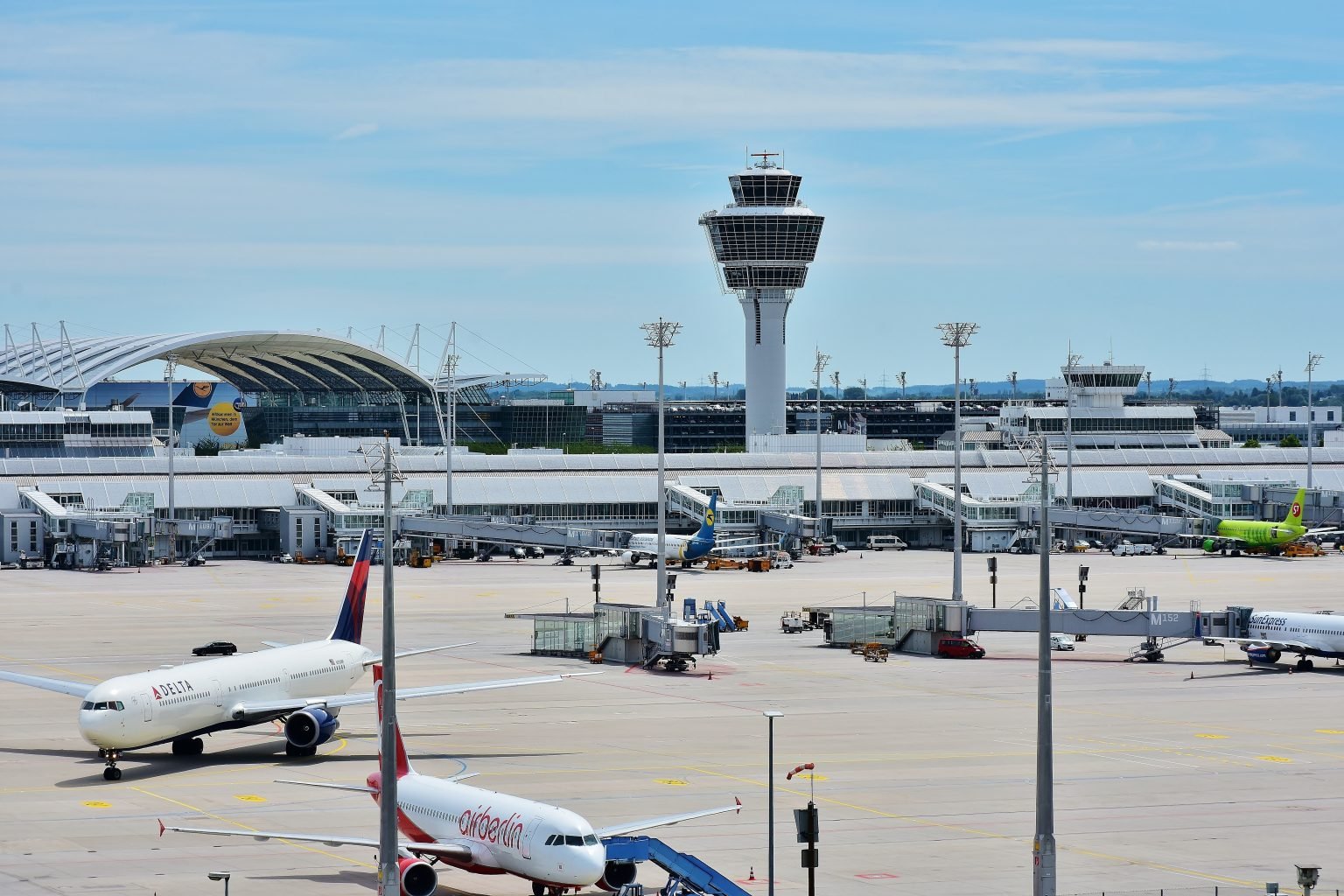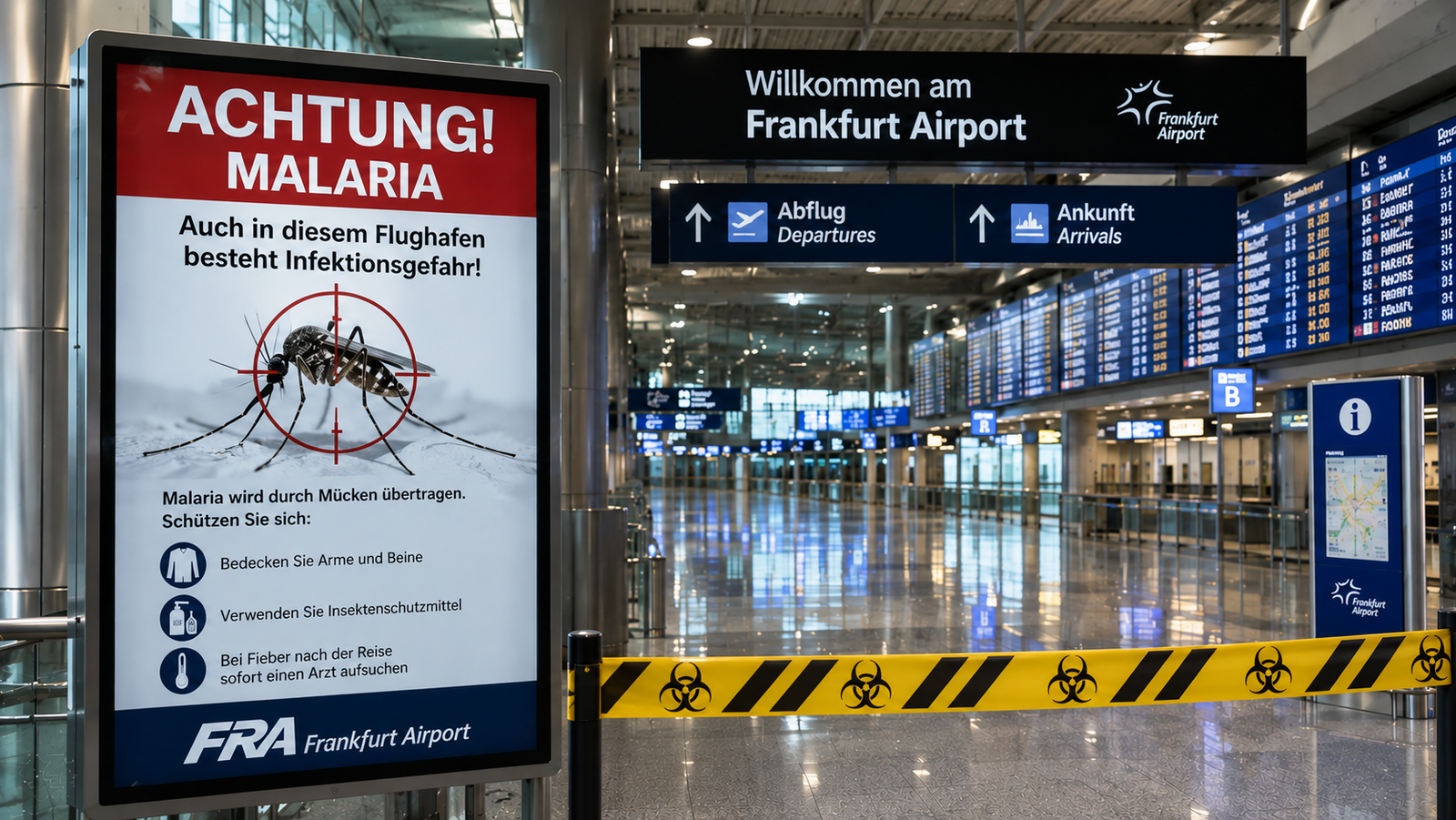

The incident in Frankfurt has raised questions about how prepared other German airports are for similar threats, and representatives of Munich Airport – the country’s second-largest – have for the first time spoken in detail about their own safety protocols for a comparable scenario.
Six Infections, Two Deaths
According to Fraport, the operator of Frankfurt Airport, six employees contracted malaria. Two of them died, while the other four recovered after treatment. The company called the incident a heavy loss and offered its condolences to the families of the deceased.
Hesse’s public health authority told the Frankfurter Rundschau that the insect that carried the infection has presumably already died. According to specialists’ working theory, a malaria-infected mosquito of the genus Anopheles arrived in Germany aboard a flight from a tropical region with a high prevalence of the disease.
Following the incident, insect traps were set up on the airport grounds. Any mosquitoes caught will be sent for genetic analysis to the Institute of Tropical Medicine in Antwerp, where their species and origin will be determined.
Fraport has also instructed staff to see a doctor without delay at the first sign of illness and to be sure to mention their workplace. This is meant to speed up an accurate diagnosis, since malaria is extremely rare in Germany and general practitioners do not always recognize it right away.
Airport Malaria: A Rare but Recognized Phenomenon
What happened in Frankfurt is what doctors call airport malaria, or Odyssean malaria. These are cases in which an infected mosquito survives a flight from a tropical country and bites someone who has never left Europe, was never vaccinated, and has never encountered the disease’s carriers in their natural habitat.
Despite aircraft cabins being treated with insecticides, individual insects sometimes manage to survive the flight, especially during the warmer months. Such cases are recorded only in summer, when the temperature at the landing site is high enough for a tropical mosquito to survive.
A systematic review of airport malaria cases in Europe, published in 2024 by the European Centre for Disease Prevention and Control, documents 145 confirmed cases dating back to 1969.
The largest numbers of infections were recorded in three countries:
- France – 52 cases
- Belgium – 19 cases
- Germany – 9 cases
On average, those infected lived or worked no more than 4 kilometers from an international airport. Despite an overall decline in the number of recorded infections over the past two decades, a third of all episodes since 2000 occurred between 2018 and 2022. This statistical rise is linked to the growth in air traffic from tropical regions.
Munich Airport’s Position
Munich Airport, which receives flights from every continent every day, responded to the events in Frankfurt in a measured and constructive manner.
An airport spokesperson stressed that the health and safety of employees, passengers, and visitors remain an unwavering priority for the company.
According to him, Munich has well-established safety protocols in place for cases of infectious disease and other biological threats. These are based on statutory requirements, international standards, and the airport’s own emergency response procedures.
If an infectious disease is suspected, Munich activates a coordinated safety protocol involving the Bavarian State Office for Health and Food Safety (LGL), along with other relevant public health authorities.
Should a real threat to public health arise, airport representatives promise to promptly inform visitors on the airport premises, as well as through the internal staff portal and the organization’s official website. At the same time, Munich Airport declined to comment on the situation in Frankfurt itself. The airport spokesperson confined himself to general statements about the airport’s own readiness for such scenarios, without naming a single concrete measure for an actual emergency – since hardly any visitor ever notices the airport’s website or its display boards.
I’m still amazed by the logic of the Bavarian officials responsible for this. Do they really believe that every airport visitor is going to refresh their website every second, hoping to spot a warning about a biological hazard? – Ed.
Why It Matters
Airport malaria remains a rare phenomenon. Over more than half a century of observation, fewer than 150 confirmed infections have been identified across Europe. But the two fatal cases at Germany’s largest airport have shown that rarity does not mean complete safety.
This incident also exposed the German aviation industry’s utter lack of preparedness on security matters.
First, drones carrying explosives are freely crashing into aircraft – fortunately without detonating – and now people are dying of malaria. Yet airport representatives talk about safety protocols that sound straight out of the early 20th century, back when warnings about danger were spread through the printed press. In this case, it’s a barely visited website instead.
Why does the malaria case matter so much? Left untreated, malaria can kill within days, and its symptoms – high fever, chills, headache – are easily mistaken for a common cold or the flu. That is precisely why how quickly a patient sees a doctor, and whether they mention their workplace, can play a decisive role in saving a life.
For the millions of passengers who fly through Frankfurt and Munich every year, the risk of infection remains minimal. But for the employees who spend long hours at these airports every day, the events in Frankfurt served as a reminder that even the smallest “stowaway” can change the course of someone’s life.
And what happens if an emergency occurs while someone is at the airport, but that visitor or employee wasn’t glued to the organization’s website the whole time, and never found out what had happened? That question remains open.