
While this marks a key technological advancement for the region’s rail network, commuters must first brace for two weeks of phased service disruptions during the switchover.
New Signal System Replaces Outdated Technology but Requires Network Closures
Deutsche Bahn is preparing to activate a state-of-the-art electronic interlocking system that will replace the aging relay signal box installed in 1971. That outdated system had become increasingly unreliable in recent years, causing repeated service interruptions. After two previous delays, the new system is now scheduled for launch, with an official ceremony set for June 26 featuring high-profile guests such as Bavarian Premier Markus Söder and Deutsche Bahn infrastructure executive Berthold Huber.
Before that celebration, however, both technical teams and passengers must navigate a challenging transitional period.
Initial Closures Affect Key S-Bahn Routes
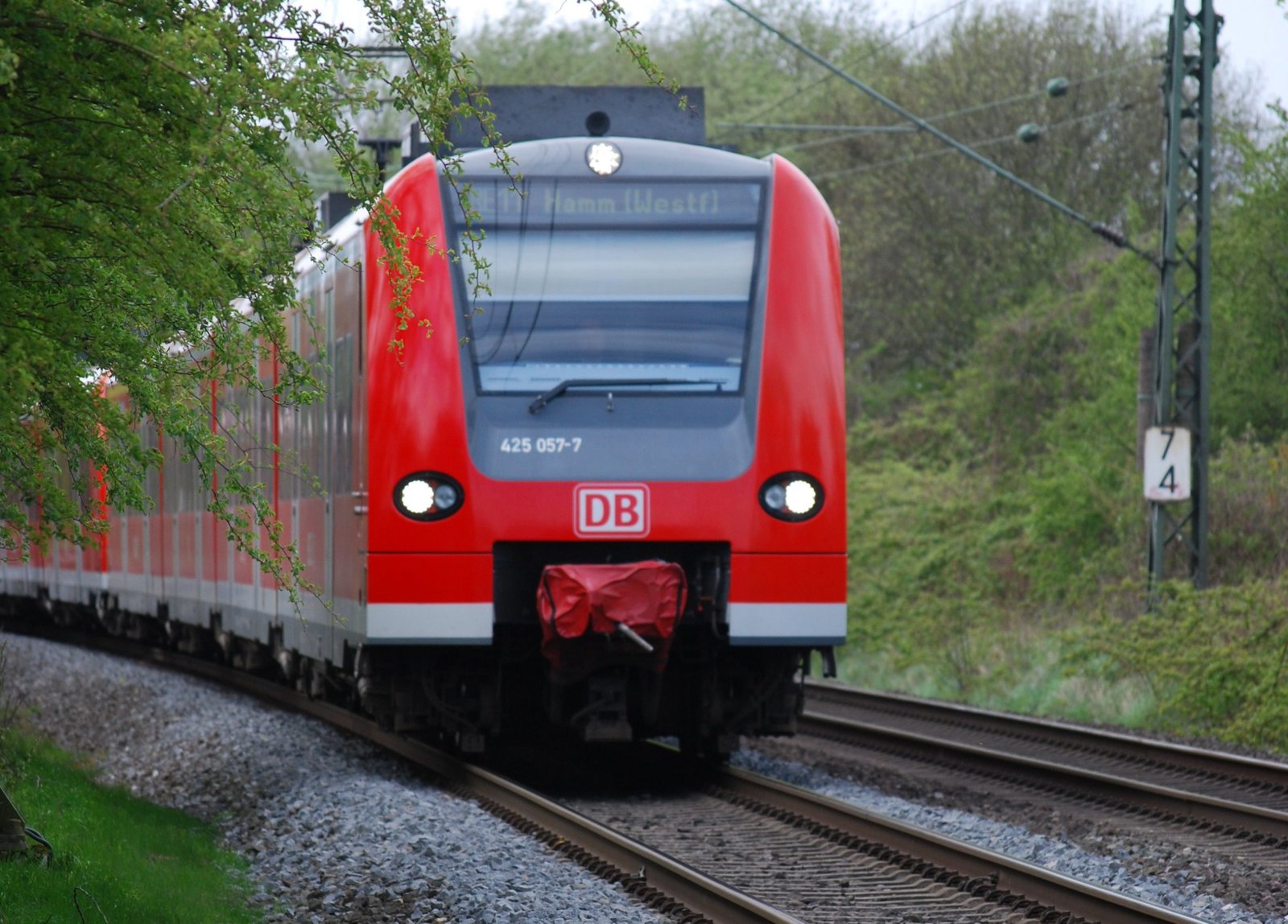
The first stage of the system changeover begins at 10:30 p.m. on Friday evening. Train service will be completely halted on the central S-Bahn trunk line and at several key stations, including Ostbahnhof, Riem, Trudering, Giesing, and Johanneskirchen. This full closure will last until 5:00 a.m. on Saturday. After that, a second phase begins, offering limited service. Lines S2 and S3 will run between Laim and Isartor, while other lines will terminate earlier than usual—at stations such as Pasing (S6, S8), Heimeranplatz (S4), or Munich Central Station (S1).
New Control Centers and Extensive Testing Underway
The switchover involves two newly constructed ESTW buildings: one at Ostbahnhof, which will oversee the first S-Bahn trunk line, and another at Leuchtenbergring, which will handle eastbound traffic. The planned second S-Bahn trunk line—due to launch in about ten years—will also be controlled through this system.
Roughly 8,000 hours of testing are scheduled to validate the system’s readiness. Teams are inspecting switches, signals, and connections to the operations center located at Donnersbergerbrücke. This center is housed in a distinctive round building resembling a UFO. Unlike the old signal box, which required constant on-site staffing, the new electronic system will be remotely controlled, with only emergency stations staffed locally.
Gradual Return to Normal Service Begins June 13
Phase three of the transition begins at 5:00 a.m. on Friday, June 13, when all tracks are scheduled to reopen. However, S-Bahn service will remain reduced by about 25 percent, according to Deutsche Bahn. Lines S1 and S5 will initially remain excluded from the trunk tunnel. Additional trains on S2, S3, and S8 that normally run every 10 minutes will not operate.
Line S1 is expected to resume normal tunnel service by June 16. Full restoration of the S-Bahn timetable, with up to 1,300 daily departures, is projected for Thursday, June 19.
Mixed Expectations for the New Signal System’s Impact
The key question remains whether the new system will meaningfully improve reliability. In 2024, S-Bahn punctuality hit a record low, with only 87 percent of trains arriving within six minutes of schedule—worse during peak hours and on specific lines. A report from the Bavarian Railway Company attributed 60 percent of delays to infrastructure problems, including faults with tracks, signals, switches, and safety systems.
SPD state legislator Markus Rinderspacher revealed that 1,500 signaling and safety issues were recorded in 2021 alone—140 of them directly linked to the old Ostbahnhof signal box. The new ESTW is expected to reduce such disruptions by up to 10 percent. While this is a notable improvement, it falls short of a transformative breakthrough for Munich’s rail system.
Old Signal Box Still in Use for Long-Distance Trains
The transition is not entirely complete. Long-distance trains running through Ostbahnhof will continue to be managed by the old relay signal box for the foreseeable future, as it remains operational for tracks not yet integrated into the new system.