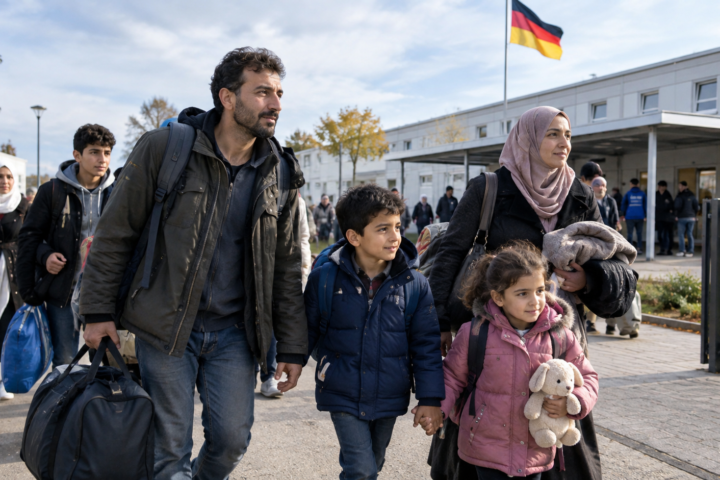

According to Tagesspiegel, the draft law may be approved by the Federal Cabinet as early as this coming Wednesday.
Federal Council Approval No Longer Required Under New Plan
At the heart of the proposal is a fundamental change to current asylum law. In the future, the federal government would be able to designate safe countries through a statutory ordinance—without needing the approval of the Bundesrat, Germany’s upper house. Under existing rules, such changes require Bundesrat consent, which has repeatedly failed due to opposition from the Greens and the Left in state governments.
A country is considered “safe” under German asylum law if there is no evidence of political persecution, inhumane treatment, or punishment. Asylum applications from such nations are usually dismissed as “clearly unfounded,” although exceptions remain legally possible in individual cases.
Faster Asylum Processing and Easier Deportations Expected
While the Federal Office for Migration and Refugees (BAMF) typically rejects applications from nationals of safe countries, the new classification would further ease the deportation process. It would simplify legal procedures by shortening appeal deadlines and shifting the burden of proof onto the applicant.
Expansion to Include Algeria, India, Morocco, and Tunisia
The proposed list of new safe countries includes Algeria, India, Morocco, and Tunisia—an expansion outlined in the coalition agreement of the previous CDU/CSU-SPD government. Currently recognized safe countries, besides EU member states, include Albania, Bosnia and Herzegovina, Ghana, Georgia, Kosovo, Moldova, Montenegro, North Macedonia, Senegal, and Serbia. The overarching goal of the expansion is to reduce the number of irregular entries from these regions.
Conservative Support Meets Green Party Opposition
The proposal has been met with praise from conservative politicians. Minister of State at the Federal Chancellery Thorsten Frei (CDU) welcomed the plan, telling Tagesspiegel, “The public has a right to expect this government to quickly reverse the trend in migration policy. That’s why we are working intensively on a process that simplifies the designation of further safe countries of origin.”
The Green Party, however, voiced strong opposition. Party co-chair Felix Banaszak criticized the initiative as “largely ineffective in addressing the real challenges.” He added that it was merely designed to “project toughness” and was nothing more than “a performance to reassure conservative voters.”
As the legislative process moves forward, the plan is expected to provoke further debate over the balance between national security interests and humanitarian obligations in Germany’s asylum policy.