
These unlawful practices have left many refugees in severe financial distress while also placing a hidden burden on the public welfare system. A detailed investigation by the political affairs program Kontrovers, broadcast by Bayerischer Rundfunk, has revealed a troubling pattern of exploitation and a lack of effective state oversight.
Refugees from Syria Forced to Pay Thousands in Cash Without Contracts or Receipts
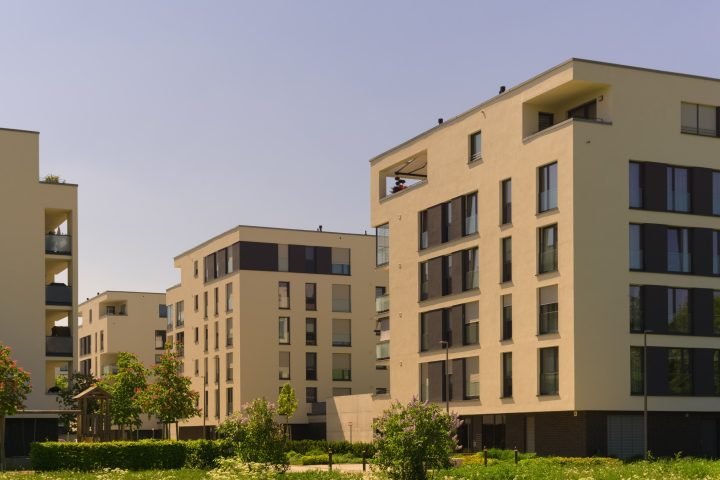
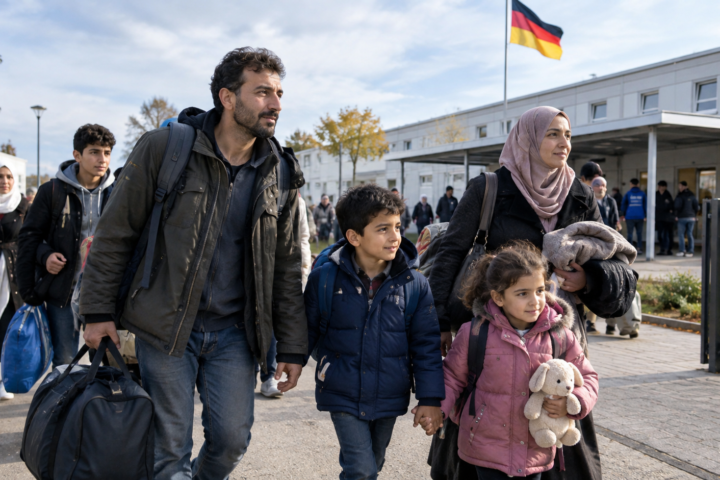
In a modest residential building on the outskirts of Munich, several refugees from Syria are currently living under precarious circumstances. Earlier this year, Bayerischer Rundfunk received a tip suggesting illegal dealings were taking place in this location. According to the report, refugees have been required to pay thousands of euros in cash to secure housing — without receiving any official contract or receipt, and without any legal oversight.
Mutasem Al Hetari: “Brokers turn people’s desperation into profit”
Mutasem Al Hetari, a journalist from Yemen who fled to Germany in 2021, has experienced firsthand the challenges of finding housing as a refugee. He emphasized that it is not only the housing shortage that makes life difficult for newcomers, but also a network of predatory brokers. “These brokers deliberately exploit the difficult situation of refugees,” he said. “They demand outrageous sums, paid in cash and completely off the books.”
Undercover journalists from Kontrovers documented how apartments were being offered to refugees for several thousand euros on top of regular rent — which is typically covered by the Jobcenter. As a result, many refugees found themselves under immense financial pressure, with some even resorting to using their basic welfare benefits, such as Bürgergeld, to pay the illegal fees.
Video Evidence Shows €4,000 Cash Payment to Broker
In one particularly revealing case, Mutasem Al Hetari met with a Syrian mother living with her family in an apartment arranged by an illegal broker. The family had secretly recorded a conversation with the broker, in which he clearly explained that refugees would need to make an additional payment — in this instance, €4,000 in cash — if they wanted to secure the apartment.
Whether or not property owners are aware of, or benefit from, these transactions remains unclear. In many instances, the arrangements are so opaque that neither tenants nor authorities can determine who is ultimately responsible.
Illegal Brokers Advise Refugees on How to Redirect State Funds
In another case documented in the suburbs of Munich, a refugee — referred to by reporters as Hedi — described a well-organized system of illegal brokerage. He said that after paying a broker, he was advised on how to obtain the funds despite his limited financial means: by applying for a one-time housing grant through the Jobcenter. Instead of using the funds for furniture, the broker instructed him to hand over the money directly — and, if necessary, to sleep on the floor.
Monthly Under-the-Table Payments on Top of Rent
The investigation also uncovered that in multiple cities across Bavaria, apartments were rented to refugees only if they agreed to make regular cash payments under the table. These were not limited to one-time fees — in some cases, refugees were charged an additional €200 per month on top of the rent already paid by the Jobcenter.
One landlord, who also acted as a broker, defended the practice by claiming that state-funded rent did not cover his actual expenses. He portrayed himself as someone helping to house refugees despite strict regulations. For those affected, however, this arrangement meant they had to make regular illegal payments out of their own pockets, even while relying on social assistance.
Ongoing Investigation for Coercion as Authorities Struggle to Prosecute
Authorities in Augsburg confirmed that they were investigating a housing broker for alleged coercion. However, citing the ongoing nature of the investigation, they declined to release further details. Law enforcement agencies face serious obstacles, as many refugees are afraid to report these practices or are unsure of their rights. Payments are usually made in cash, without documentation, often conducted in Arabic and entirely outside any legal framework.
These conditions make it extremely difficult for prosecutors to effectively dismantle the operations of illegal housing brokers. The primary victims are the refugees themselves — but the public also suffers, as these practices often involve the misuse of taxpayer-funded benefits.