Nymphenburg – Until recently, only eleven sisters, most of them over 80 years old, were living in the institute buildings of the former “Englische Fräulein” – now known as the Congregatio Jesu – on Maria-Ward-Straße. According to order spokesperson Christina Waechter, they have now all moved into a nursing home. The land and properties are intended to be “put to a meaningful, forward-looking use that corresponds to our charism.”
Farewell Service on Tuesday, October 28th, in the Trinity Church on the Order’s Grounds
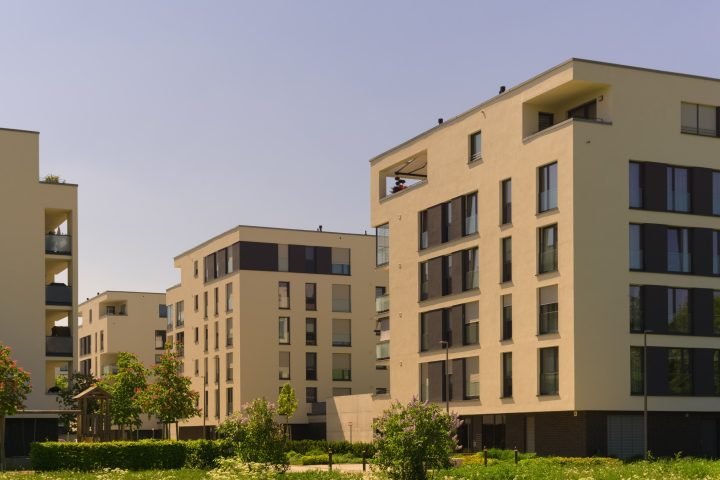
This also applies to the Trinity Church, which is part of the protected historical ensemble. A farewell service will be held there on Tuesday, October 28th, at 4:00 PM. The church and the residential and administrative buildings on Maria-Ward-Straße were designed by architect Josef Wiedemann and built between 1960 and 1964.
Negotiations on the Future Use of the Buildings are Underway – No Current Plans to Deconsecrate the Church
“The property and the existing buildings will continue to be used partly by the Congregatio Jesu and partly rented out,” the spokesperson explained in response to an inquiry from Hallo. According to a post on the order’s website, it is confirmed that “the central archive of the Central European Province will maintain and even expand its location there.”
Through discussions with various stakeholders, a concept is being developed to determine “which further co-users can find their place on the grounds and in the buildings, so that synergies and mutual enrichment become possible.” Deconsecrating the church – meaning its secularization for non-religious use – is “not currently under debate,” according to Waechter.
Closure of Locations is a Consequence of the Changing Age Structure in Religious Life
The background is the “changing age structure in religious orders.” Furthermore, since religious communities do not receive church tax income and are responsible for their own financial support, they must “manage their resources particularly sustainably to ensure successful retirement provision for their fellow sisters and brothers,” the spokesperson said. This also means, among other things, closing and consolidating locations to save costs. Waechter acknowledges: “For everyone involved, this is a process that is certainly also very painful. Nevertheless, it is necessary to create a viable future for the order.”
Hope in Christkönig Parish: Will the Trinity Church Remain Available for Services?
Locally, many are now wondering what will happen next and where, for example, the Maria-Ward schools with around 1,400 children and young people will hold their school services in the future. Pastor Augustinus Bauer of the Christkönig parish, to which the institute church belongs, said: “We have no influence over this, but we would be very pleased if the wonderful Trinity Church would continue to be available for services.”
Strictly Speaking, Not a Monastery
The religious complex on Maria-Ward-Straße is, strictly speaking, not a monastery. The spokesperson for the Congregatio Jesu (CJ), Christina Waechter, explains: “The sisters of the CJ are neither nuns, nor do they live in a monastery. Nuns are religious sisters who live in a monastic order under cloister. The sisters of the CJ spend their lives within society and pursue a profession.” The establishments where the CJ sisters live are, according to her, called communities or (depending on size) institutes. The difference also lies in the structure of religious life: “Monasteries are places of retreat and contemplation. The communities are respective places where the sisters live together according to the rules of the order.”