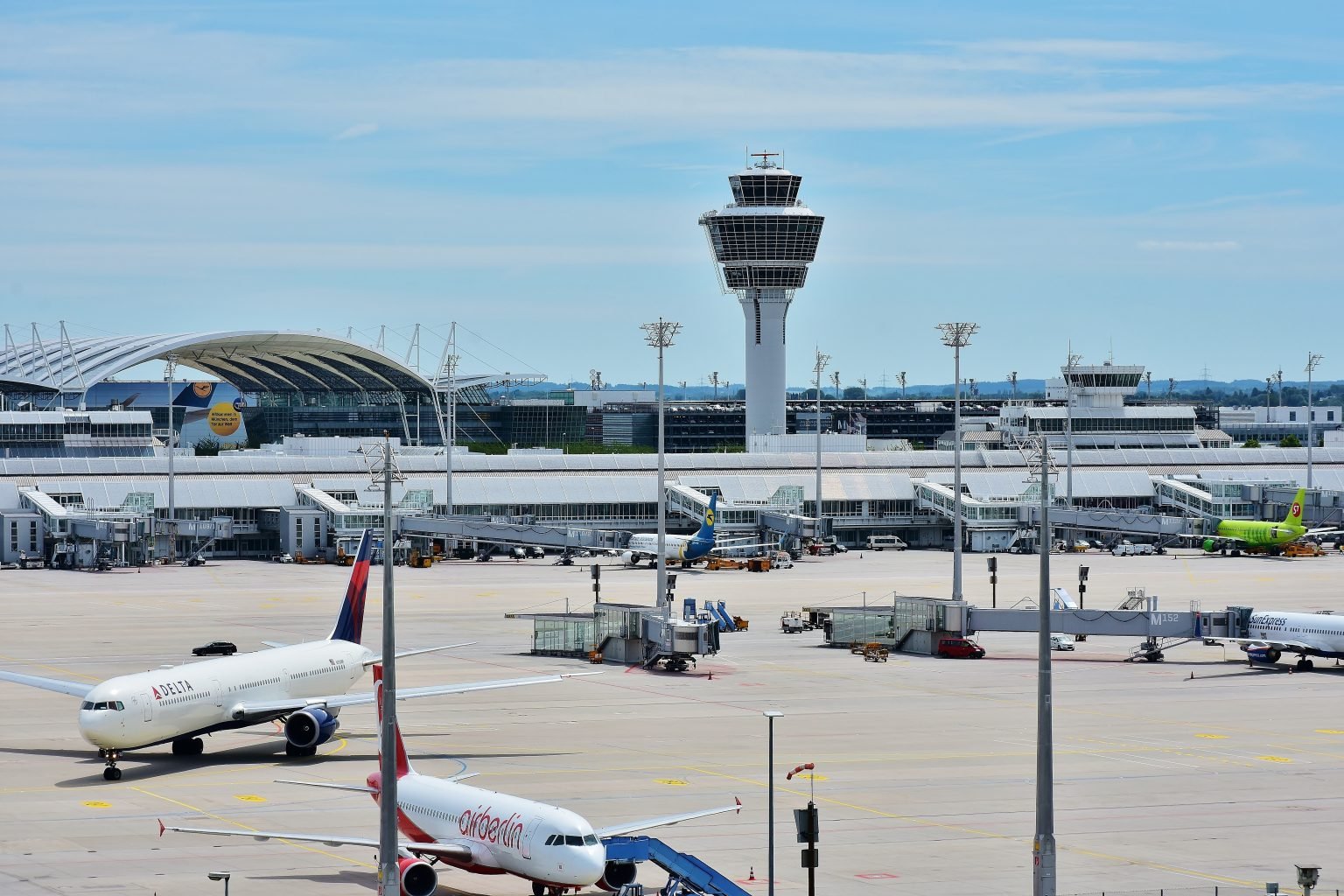
Munich – Normally, quiet prevails at Munich’s Franz Josef Strauß Airport between midnight and 5 a.m., thanks to a long-standing night flight restriction. However, the airport will make an exception on two nights in May due to a safety-critical inspection, as confirmed by the German Air Traffic Control (DFS).
From the night of Monday, May 12, to Tuesday, May 13, the Instrument Landing System (ILS) for runway 26R will undergo scheduled calibration. The DFS clarified that these are not commercial flights, but technical test operations essential for flight safety. Runway 26R, primarily used for aircraft approaching from the east, requires regular calibration to maintain precise and safe guidance for incoming flights.
The inspection will involve a specialized aircraft, the Beechcraft Super King Air 350 — a propeller plane specifically designed for high-precision measurement flights. According to DFS, if technical issues or adverse weather conditions arise, the tests will be extended until the necessary data is fully collected.
Safety First: ILS Checks are Mandatory
Regular ILS inspections are a key part of aviation safety protocols. DFS mandates these test flights at set intervals to ensure that navigational aids are fully functional and offer pilots accurate, reliable landing information. The ILS system provides electronic signals from ground-based stations to aircraft, guiding them on both their horizontal course and vertical descent — a vital tool for safe landings, particularly in low-visibility conditions.
Munich Airport has earned recognition for maintaining exceptional safety standards. In 2024, international aviation organizations awarded the airport for its outstanding reliability, affirming the importance of such system calibrations.
Impact on Local Residents
Though the calibration work spans only two nights, nearby communities should expect increased aircraft noise during the late hours. The DFS has acknowledged the inconvenience and asked residents for their understanding, emphasizing the necessity of the temporary night flight exemption to uphold aviation safety standards.
For many living near one of Germany’s busiest airports — which sees around 1,000 flight operations daily — these brief nighttime disturbances are an essential part of ensuring the continued safety and efficiency of air traffic in the region.