
One of the most pressing questions for many residents concerns where, how, and for how long they can afford to live in the city. While private real estate prices per square meter continue to rise, many seekers look to the city itself as a landlord.
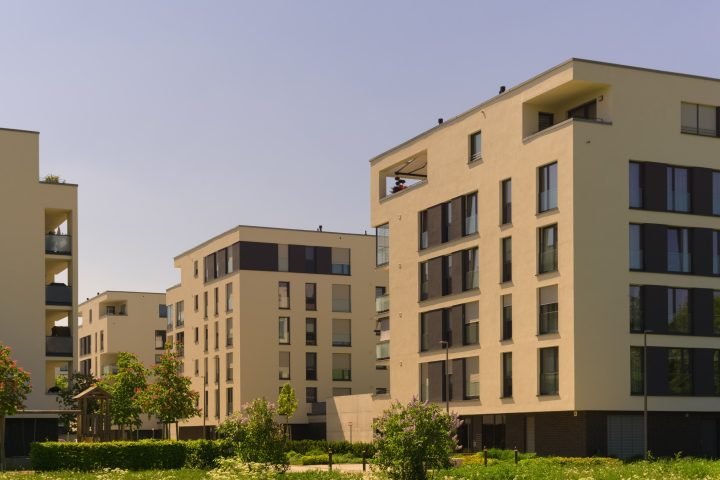
According to the Department of Planning, the city maintains its target of delivering 1,250 new housing units annually through the municipal company Münchner Wohnen. Last year, 1,217 apartments were created for approximately 3,000 tenants. For 2026, the company plans to break ground on 1,097 new units, while another 777 are scheduled for modernization. This year, construction is expected to conclude on new buildings in the districts of Freiham, Neufreimann, Harthof, Harras, Ramersdorf, and Laim.
Munich’s 2026 Development and Garden Show Ambitions
In the long term, new housing is also expected in the city’s northeast as part of Urban Development Measures (SEM). Since over 66% of Munich residents voted in October to bid for the Summer Olympic and Paralympic Games in 2036, 2040, or 2044, the city must now account for a potential Olympic Village in its plans. If the Games are held in Munich, an athletes’ quarter will be built in eastern Bogenhausen, which will later evolve into a permanent residential district.
Urban development discussions have been ongoing in the city council since 2008. Planning Department spokesperson Ingo Trömer reported: “Expert opinions are currently being prepared as part of preparatory studies.” Topics under review include transport, the creation of a swimming lake, social infrastructure, and groundwater management. The department also intends to investigate whether the area could host a garden show and how to minimize noise and pollution levels on-site.
However, funding remains a critical issue. Following significant cuts in 2025 to the income-oriented housing subsidy program (EOF) by the Free State of Bavaria, and with uncertainty remaining for 2026, several projects may be at risk. A notable example is the former Parcel Post site in Neuhausen, where 40% of the units were originally planned as subsidized housing.
City Criticizes State Authorities
The local building plan will only be officially published and take legal effect if the Bavarian Administrative Court deems a citizen initiative to stop high-rise construction inadmissible. The site is intended to provide 1,200 apartments and 3,000 jobs.
Munich city authorities are distancing themselves from the Bavarian government’s stance on subsidies. According to Trömer, the planning committee recently secured funds for affordable housing. New development projects under Socially Just Land Use (SoBoN) will continue to feature “Munich Model” rental apartments for middle-income residents, with a focus on families. However, Trömer emphasized that due to state-level cuts, housing for the lowest-income groups likely cannot be fully funded.
While the east of the city is still taking shape on paper, authorities have moved to action in the west. The first phase of the Freiham-Nord quarter already resembles a future urban district. A legal framework for the second phase is expected by early 2026, after which land allocation will begin.
Erdbeerwiese and Heuweg Territories
Planning procedures for Bauseweinallee, Erdbeerwiese (school construction), Pasinger Heuweg, and Mühlangerstraße (geothermal plant and fire station) moved through the consultation phase this autumn. Public feedback is currently being reviewed for inclusion in the final planning process.
Westfriedhof (West Cemetery)
Renovations at the West Cemetery are entering a new phase. In addition to water network updates, construction of a temporary facility will begin by mid-2026 to facilitate a general overhaul of existing buildings, with a project timeline extending to 2030. Plans include allowing cyclists on main paths and upgrading the pond near the Baldurstraße entrance for ecological and aesthetic reasons.
Candidplatz
A decision on the development plan for Candidplatz, which includes greening municipal areas, is scheduled for early 2026. The focus is on affordable housing and recreational zones for youth, though a local citizen initiative is campaigning to keep the area undeveloped.
Source: Hallo