At the same time, tens of thousands of German citizens are desperately looking for ways to get out of the crisis-ridden Persian Gulf region and return home. The situation where the world’s most capacious passenger aircraft flies empty over the heads of people stuck in a conflict zone has caused a wave of bewilderment. The airline’s management provided official explanations for the reasons why this intercontinental liner returned to base in solitary pride.
Last Monday, the huge machine touched the runway of Munich Airport, having only two people in the cockpit — the pilots. The picture looks truly paradoxical: the Airbus A380 is capable of taking more than 500 people on board, ensuring them a comfortable return to Europe, but the seats remained cold. While this intercontinental liner cut through the clouds, tourists and business people languished in anticipation in the Gulf countries, their plans destroyed by the escalation of tension. As it turned out, the main obstacle to providing assistance to compatriots was a critical shortage of cabin personnel and bureaucratic barriers.
Legal norms excluded the possibility of transporting passengers to Munich
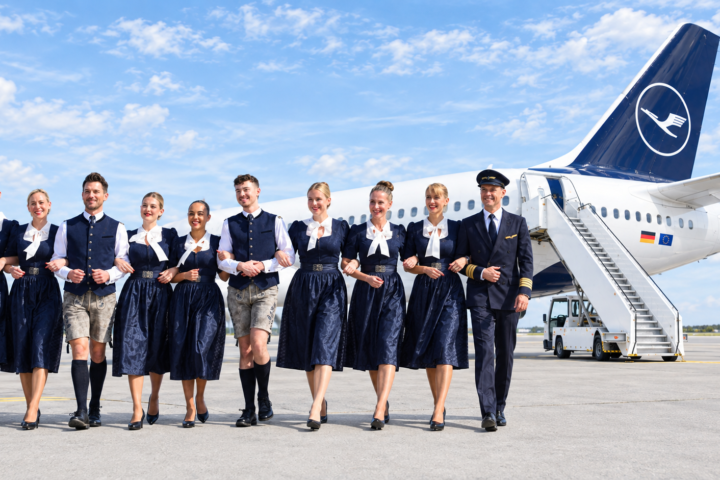
According to an official statement from Lufthansa, in order for a flight on such a vessel to be considered legal and safe, a minimum of 17 flight attendants had to be on board without fail. This is not an internal whim of the company, but a strict requirement of international aviation safety protocols. In Abu Dhabi at that time, the required number of certified personnel was not present. Due to serious restrictions imposed on the airspace because of the military conflict in Iran, it was not possible to promptly transfer an additional crew from Germany to the Emirates.
Without the presence of flight attendants, any transportation of civilians is excluded for legal reasons. Lufthansa explained that the safety of passengers in an emergency situation directly depends on the coordinated work of the team in the cabin, and a violation of this regulation would threaten the carrier with colossal fines. In addition to the personnel deficit, logistical difficulties are also mentioned: in the conditions of current instability, many travelers would physically not have been able to reach the Abu Dhabi terminal on time and safely. Moreover, the airport’s ground services under crisis conditions could not guarantee the uninterrupted conduct of standard procedures for registration, screening, and organized boarding of the flight.
The A380 liner had been in Abu Dhabi for technical maintenance since November
It is important to understand the context of this movement: according to information from the air carrier, this flight was originally planned as a purely technical ferry flight. The aircraft had been in the United Arab Emirates since November 6 of last year. There, it underwent long and complex routine work aimed at maintaining airworthiness. Now, according to a pre-approved schedule, the intercontinental liner was supposed to return to Germany to resume regular operation. The Airbus A380 remains the largest civilian aircraft of modern times, and its absence from the schedule causes tangible financial damage to the company.
According to current information from the tourism sector, about 30,000 clients of various German operators remain forcedly in the Persian Gulf region. The war in Iran has led to the fact that in a number of key air corridors, a ban on flights is effectively in force, which turns the departure to Europe into a most difficult quest. The situation has affected not only vacationers but also many representatives of business circles who found themselves hostages of mass flight cancellations. Against this somber background, the passage of an empty A380 is perceived by the public as a missed opportunity, although from the point of view of aviation rules, no other way out existed.
The landing of the empty board in Munich provoked heated debates in the German media. Many wonder whether an exception could not have been made in the conditions of a humanitarian crisis. However, Lufthansa again emphasized the fact that taking people on board in such circumstances is categorically prohibited — both from a legal point of view and for the sake of ensuring the absolute safety of the lives of the passengers themselves. The rules remain unyielding even when the logic of common sense would seem to dictate different solutions.Source: dpa