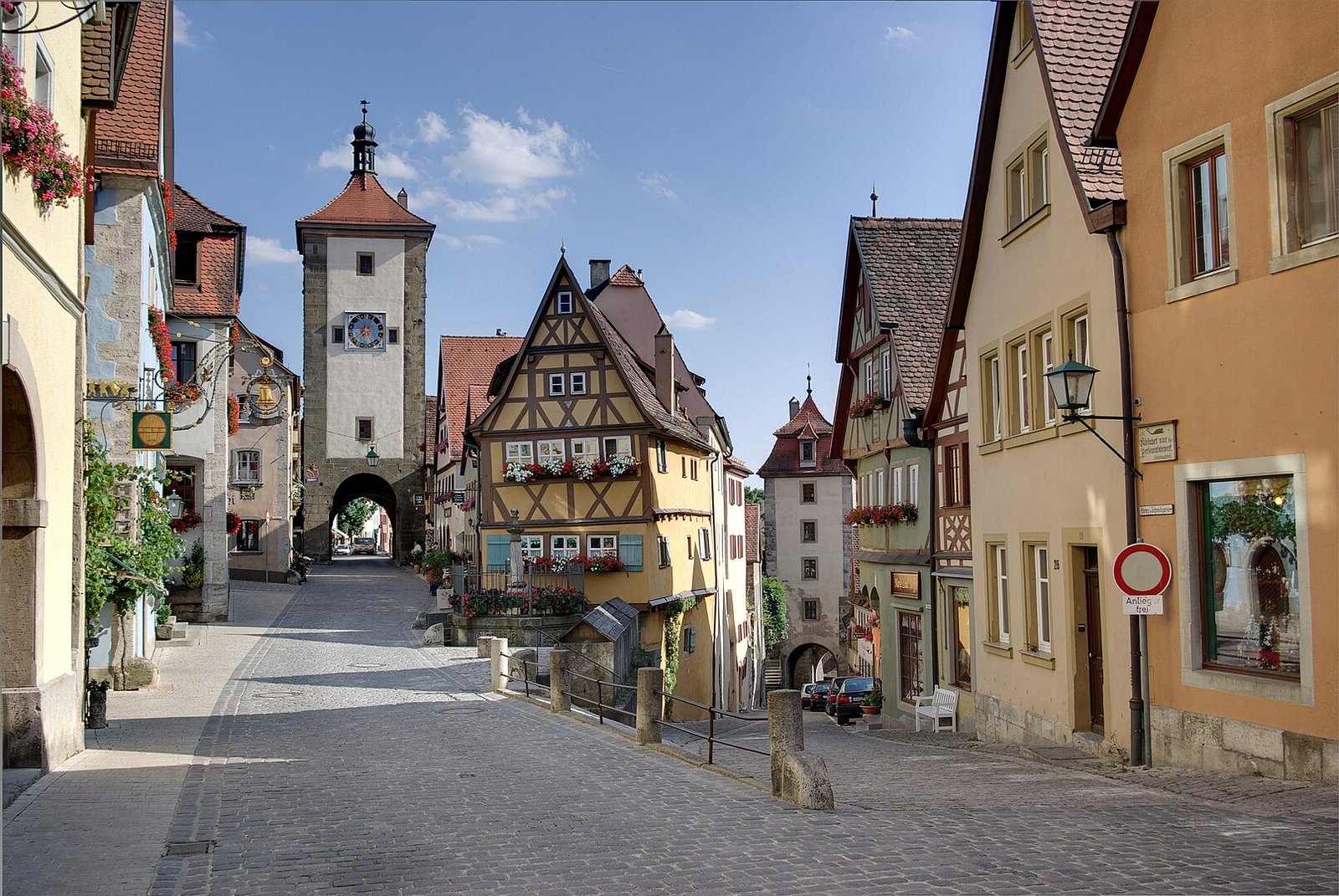

During redevelopment work on Kapellenplatz in the northern part of the old town, remains of a medieval synagogue were unearthed beneath the square. The site is believed to have once been one of the most important centers of Jewish life in southern Germany. The city now plans to integrate this rediscovered heritage into the public space and local historical consciousness.
A Remarkable Find in the Heart of the City
“This is truly something special,” said Nicolas Tomo, who leads the excavation work at Kapellenplatz. The project initially aimed only to redesign and improve the square’s infrastructure. However, since Rothenburg’s historic old town is protected as a heritage zone, any construction must be preceded by archaeological investigations. What the team discovered has since been described as a small sensation. The exposed wall structures are highly likely to be the remains of a former synagogue, potentially one of the most significant Jewish houses of worship in the region during the Middle Ages.
Historical Records Confirmed by Discovery
While the discovery came as a surprise to many, experts had already suspected that a synagogue once stood in this location. Christoph Loibinger, regional manager at the Bavarian State Office for the Preservation of Monuments, explained: “We knew from historical documents that there had been a synagogue on Kapellenplatz. What we lacked until now was the exact location.” With the discovery of the wall segments on the southern section of the square, researchers are now confident that the synagogue has been definitively identified. The size, structure, and alignment of the remains match historical drawings with striking accuracy.
A Center of Jewish Learning in the Middle Ages
Rothenburg’s Jewish history dates back to around 1180, when one of the oldest Jewish quarters in southern Germany emerged in the city. It was widely known as a center of Jewish scholarship. A key figure of that era was Rabbi Meir ben Baruch, who lived and taught in Rothenburg during the 13th century. Mayor Markus Naser remarked: “Rabbi Meir ben Baruch remains one of the most important Talmudic scholars of the Middle Ages. It is very likely that the synagogue discovered here existed during his lifetime.” His Talmudic school was located on Kapellenplatz – the very site where the remains have now been found.
A Building Shaped by Religious Persecution
The history of the structure reflects the difficult fate of Rothenburg’s Jewish community. During pogroms in the 13th and 14th centuries, much of the Jewish population was expelled or killed. In 1406, the synagogue was converted into a Christian chapel dedicated to the Virgin Mary. The core structure was retained but significantly altered. Drawings from that period clearly depict the chapel at the same location where the wall remains were just uncovered. “The accuracy of those historical images is astonishing,” said excavation leader Tomo. “They correspond exactly with what we see in the ground today.”
The Marienkapelle was likely demolished about 200 years ago. Since then, the area remained an open square used mainly for trees and parking. A new Jewish community later developed in the northern part of the old town, eventually building another synagogue at Schrannenplatz.
Partial Excavation Only in Active Construction Zones
Only two walls of the historic chapel have been fully exposed. It is believed that more lies hidden beneath the square, but the excavation team is restricted to areas affected by the current redevelopment. “This is a so-called emergency excavation,” said Tomo. “We only dig where construction is already planned. The rest remains untouched.” Current plans involve planting two trees and installing a charging station for electric vehicles on the site.
Preservation Plans and Public Memory
The archaeological work is expected to continue for another two weeks. After that, the uncovered wall segments will be carefully preserved and reburied. However, they will not be forgotten. “We intend to mark the layout of the walls on the square using paving stones in different colors,” announced Mayor Naser. In addition, a new and prominently placed information plaque will be installed, explaining the history of the medieval synagogue.
The city of Rothenburg sees this discovery as an important opportunity to integrate its complex past into the modern urban landscape and to strengthen awareness of its Jewish heritage among residents and visitors alike.