
According to preliminary findings, the latest figures again point to a negative trend. The question now is why this is happening—and what solutions are being proposed.
“The situation in German schools remains poor. Compared to 2024, conditions have worsened slightly,” said Axel Plünnecke, head of Education, Innovation, and Migration at the IW. The 2025 Education Monitor will be officially published in two weeks, but extracts have already been shared with Welt am Sonntag.
IW Calls 2015 a “Watershed Moment”
The IW uses 2013 as a benchmark year. In comparison, results in 2025 are significantly lower in many areas: integration and equal opportunities have dropped by 43.7 points (on a scale of 0 to 100), school quality has fallen by 28.2 points, and efforts to combat educational poverty are down by 26 points.
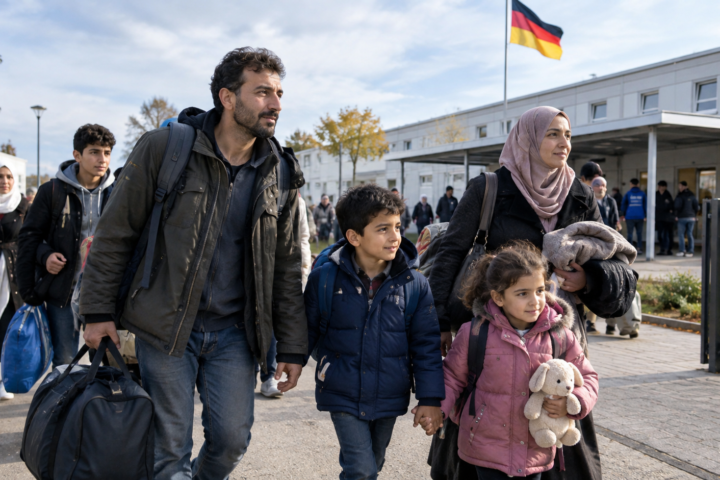
Plünnecke described 2015 as a “watershed moment.” Until then, the education system had been improving, but from that point onward a clear downward trend emerged. The IW expert cited “overload due to high levels of refugee migration” as a key reason.
Minister Prien Stresses Early Language and Development Screening
Federal Education Minister Karin Prien (CDU) pointed to the coalition agreement of the black-red government in light of the findings. It includes a “mandatory nationwide language and development assessment for children at the age of four.” This, she said, would help identify early which children need extra support.
According to Prien, parents play a crucial role in this process. “Our aim is to create opportunities, not to punish,” she emphasized. “But if children need support and it is consistently withheld, we must work together to find solutions.”
CDU Calls for Possible Sanctions
Anne König, the CDU’s education policy spokesperson, raised the issue of consequences if parents refuse to send their children to compulsory preparatory courses. “If necessary, we also need to consider effective sanctions,” she said.
SPD education policy spokesperson Jasmina Hostert partially disagreed. While she also supports binding support measures and language testing, she rejected the idea of sanctions against parents.
Greens: Language as the Key
The Greens also back mandatory language tests and additionally call for nationwide standards. Green MP Anja Reinalter told Welt am Sonntag that binding tests make sense, but punishment for parents does not. The goal, she said, is to involve parents, persuade them, and achieve the best outcome for children. “Language is the key to the world,” Reinalter stressed.
AfD politician Götz Frömming also supports language testing but believes the real problem lies in socially disadvantaged schools where little or no German is spoken at home. “Language acquisition is determined by the family environment. Nothing can replace a functioning home environment,” Frömming said.
Bavaria Already Implementing Mandatory Language Tests
Details of the 2025 Education Monitor results for Bavaria have not yet been published. However, in 2024 the state ranked second nationwide—just behind Saxony.
Since 2025, Bavaria has introduced mandatory language tests for children between four and a half and five years old. The first evaluations show that around half of all tested children require additional language support in German.
Bavaria’s Language Assessment Regulations
Children entering school from September 2026 onward must undergo a language test in Bavaria. This is based on the “Law on the Introduction and Enforcement of Mandatory Language Assessments and Language Support Measures Prior to School Enrollment,” passed on November 28, 2024, by the CSU and Free Voters in the Bavarian state parliament.
The test aims to ensure that children start elementary school with sufficient German language skills.
Key provisions include:
Language test before school enrollment: Conducted about 18 months before school entry by a public elementary school. Parents are informed in advance by the school.
Exemptions: The test is waived if a state-funded daycare certifies that the child has no additional language support needs.
Compulsory preparatory course: Children with identified needs must attend a daycare with an integrated German language program one year before school entry.
Deferred school entry: If a child lacks sufficient German skills and has not attended a preparatory course, school entry may be deferred by one year, with mandatory daycare attendance.
These regulations have been criticized by parts of the opposition and the Bavarian Teachers’ Association (BLLV). Critics argue that mandatory language assessments already exist in many kindergartens, while offers for preparatory courses are insufficient.
With material from the Catholic News Agency (KNA)