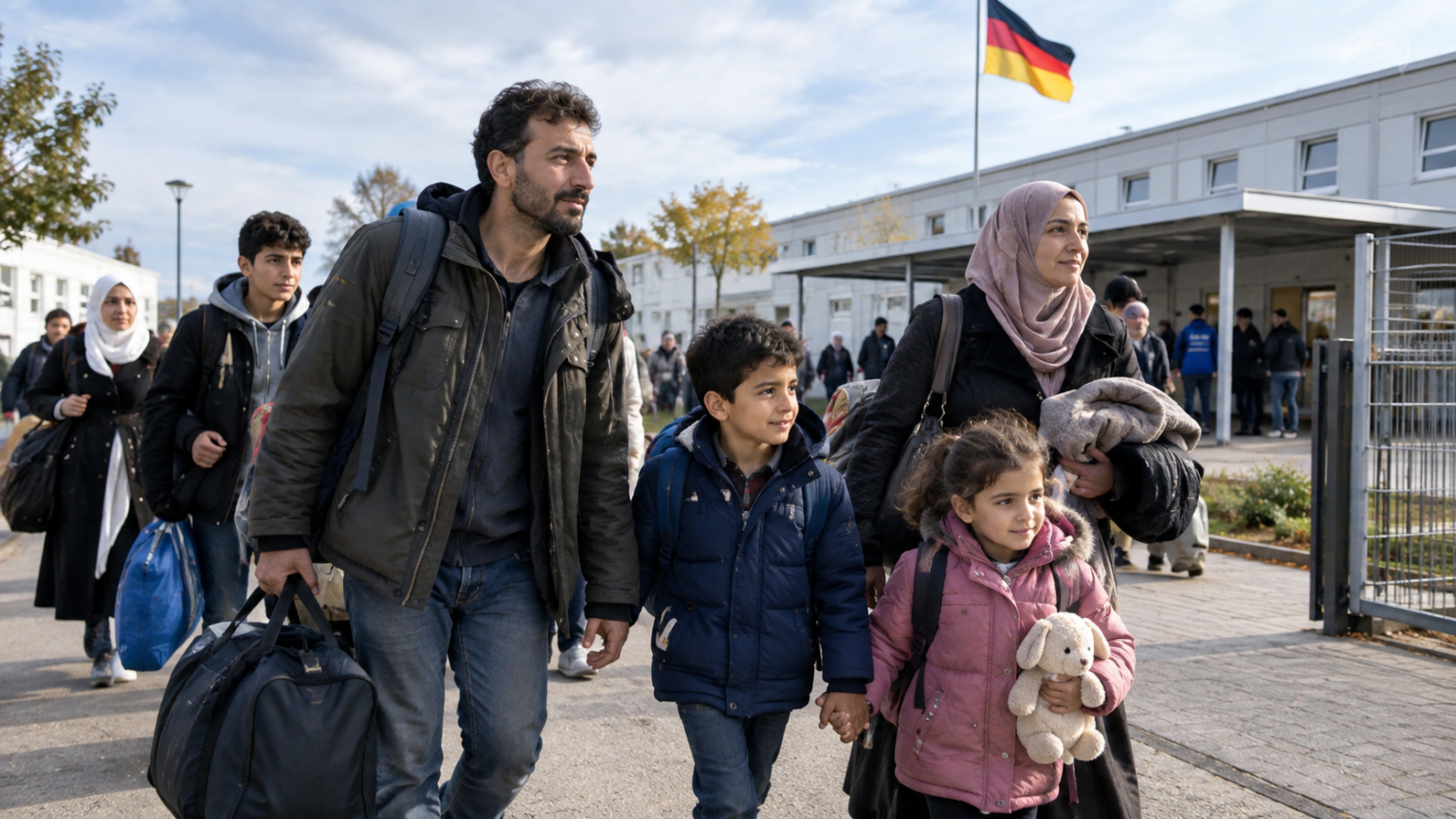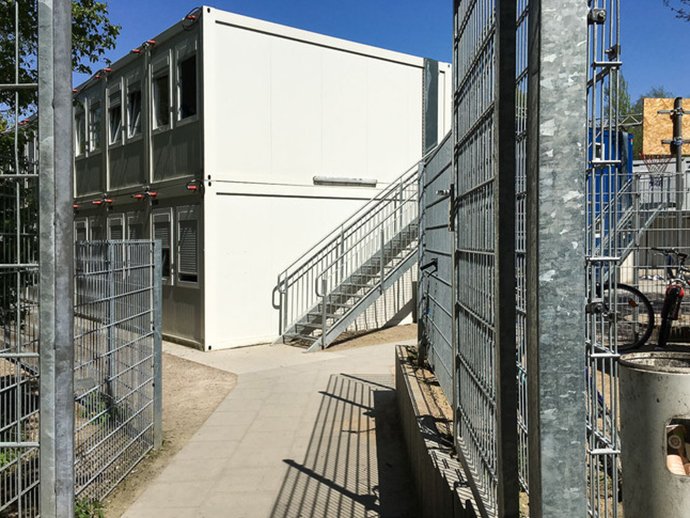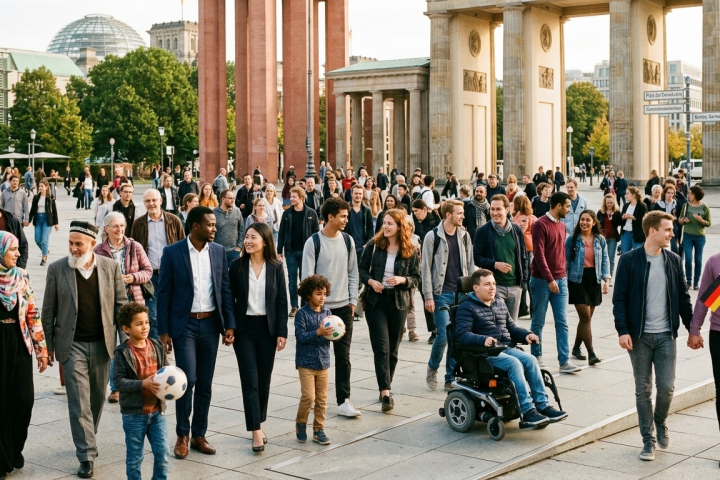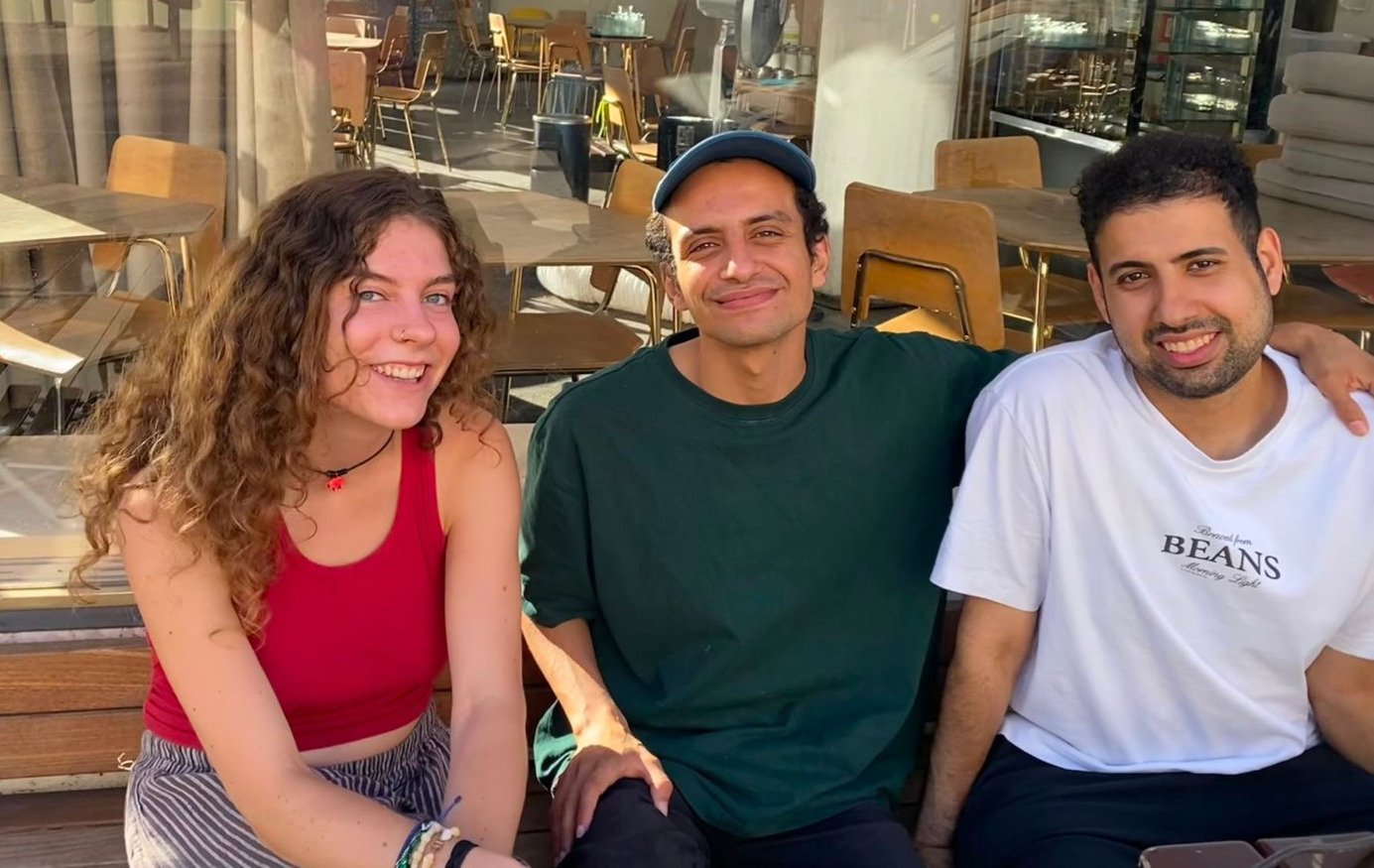

Both situations share one thing: there is no one nearby to translate the conversation and take the edge off the anxiety that comes from not understanding. For thousands of newcomers in Germany, scenes like these are not rare – they are part of everyday life. English often doesn’t help; many public offices simply won’t communicate in another language. And finding someone who will actually come with you to the appointment – not just translate down a phone line – is a task that is not always solvable.
The real bottleneck: not a lack of goodwill, but a lack of capacity
It is tempting to frame this as a shortage of qualified interpreters. But the people closest to the problem describe something different. Social workers at Bellevue di Monaco, Caritas, and Care.de all report the same thing: there are far more requests than they can meet, and there is no system for rapidly matching a person who needs help with someone who can give it. Volunteers who accompany migrants regularly burn out under the load, and the help that does exist is distributed unevenly – some accommodation sites are surrounded by a dense network of helpers, while others, with the same need, get almost no attention at all.
The striking part is that the willingness is there. Students, immigrants who have already found their feet, and local residents are often glad to help – they simply have no easy way to connect with the people who need them. In-person interpreting makes this harder still: for a doctor’s visit, a personal conversation, or sensitive family business, a remote translation marketplace won’t do, and a child or an acquaintance isn’t always the right choice either – sometimes what’s needed is a neutral person, not a relative who becomes privy to everything that is said.
Even the official channels are thin. When the Federal Office for Migration and Refugees (BAMF) reviewed its interpreter roster in 2018, only around 620 of some 5,800 active interpreters were sworn or formally qualified for the specifics of the work – a sign of how stretched even institutional capacity is. But the day-to-day gap that newcomers actually feel is simpler: at the moment they need someone beside them, there is usually no one there.
A new tool: the Wusla platform
Wusla, a platform built by students in Munich, is an attempt to close that gap. It lets a newcomer find and book a bilingual companion who will personally accompany them to an appointment – at a school, an office, or a doctor’s.
A note on what Wusla is, and isn’t: it does not provide sworn or court-certified interpreters, and it is not a substitute for the official interpreter that some proceedings legally require. What it offers is a bilingual companion – someone who speaks both languages, understands the cultural context, and goes with the newcomer to translate the conversation and ease the stress of an unfamiliar setting. For the many everyday situations where no certified interpreter is mandated, that is often exactly what people need.
Crucially, Wusla was not designed to shuffle work between already-overburdened volunteers, but to increase the total amount of help available – and, in the longer term, to become infrastructure that organisations can plug into, instead of coordinating through scattered messaging-app chats.
How the service works
- the newcomer submits a request describing the appointment, the language needed, and an acceptable budget – from €0 for a volunteer visit up to around €80 for longer appointments, with €20-€30 typical for a standard visit;
- the request reaches companions who speak that language, and interested ones respond;
- the newcomer chooses a candidate from their profile – background, reviews, number of past visits, gender, language skills;
- the two work out the details in chat, then meet and go to the appointment together;
- afterwards, the newcomer pays for the service – currently in cash, as online payment is still in development;
- both sides leave reviews, which later help others making similar requests.
Early results
The first weeks have been less about volume than about learning what people actually ask for – and the pattern is telling. Almost every early request has come from Arabic-speaking newcomers in and around Munich, and they cluster around the moments where not understanding carries a real cost.
Government offices come up most often. Someone needs a person beside them at the Jobcenter for “a very important appointment”; a parent needs help at the Standesamt to obtain a child’s birth certificate; another simply needs the boxes on a form filled in correctly. These are errands that look routine – until you can’t read the letter that summoned you or the fine that followed.
The legal thread is heavier than it first looks. One person had filed a case at the labour court and was searching for someone who could handle the terminology – not just translate, but carry the weight of words that decide an outcome. Another wanted an Arabic speaker present at a meeting with a lawyer. A third needed to understand their own status, and how to secure a Duldung, before a looming date.
And there is health – rarely routine. A striking share of the medical requests are not check-ups but surgeries and specialist consultations: a patient facing an operation for a herniated disc who asked for an interpreter fluent in medical terms “to ensure accurate communication with the team”; a man looking for someone to interpret for his wife during a procedure, as the doctors ask her whether she is in pain; a newcomer preparing for a specialist appointment where the doctor would ask about symptoms and medical history. In those rooms, a companion isn’t a convenience – it’s the difference between being understood and being guessed at.
Two things stand out across all of it. First, how little people ask in return: the requests run from volunteer visits to a small fee, and what they want is often not “translation” in the abstract but simply a person who will be there. Second, how quickly the other side has shown up – companions have signed on faster than newcomers, most of them Arabic speakers, with a growing group offering Farsi, Russian, Ukrainian, French and Turkish. The first accompaniments have already happened and the first reviews are in, and the team keeps reshaping the platform around what each new request teaches them.
From question to solution: the founding story
Wusla’s founder is Ziad Aly, an entrepreneur and a master’s student in Management and Technology at Ludwig Maximilian University of Munich. Before this, he worked on startups and digital products; his interest grew out of personal experience, having navigated Germany’s institutions as a newcomer himself.
The starting point wasn’t a product but a question: why, in one of the world’s most developed welfare states, are there so few visible solutions in the social sphere? A conversation with Frieda Bald was the turning point – she suggested looking past the familiar startup world to the unsolved problems of the social sector, where difficulties often go unaddressed not out of indifference but because organising access to help is itself hard.
What followed were conversations with people on the front line. Aboodi, a staff member at Munich’s Bellevue di Monaco and himself a former refugee, described how volunteer help clusters in some places and never reaches others. Lisa, from Caritas, put it plainly: “Refugees regularly ask for someone to accompany them to a doctor, an office, or a housing meeting. But what they need isn’t just translation – it’s the presence of a person who speaks their language, understands their cultural context, and can offer reassurance in an unfamiliar setting.”
A pattern emerged: there were enough willing people – students, immigrants, locals – but no simple tool to connect them with those in need. That gap became Wusla. Early companions, among them Duna, a Palestinian computer-science student at TUM, tested the system and showed in practice what good accompaniment looks like. The name Wusla comes from an Arabic word meaning connection, or link.
The team is small and deliberately avoids social media for now: they want to be sure the service works flawlessly for every user before announcing themselves widely. The platform takes requests in Arabic, Ukrainian, Farsi, Kurdish, Turkish and Russian; today its companion pool is strongest in Arabic, with the others growing. Companions may work for free or for payment, depending on the newcomer’s means.
Why it matters
The need is not marginal. According to the Bavarian Statistical Office, in 2025 around 3.5 million residents of Bavaria had a migration background – roughly one in four – of whom 2.7 million are first-generation and a further 789,000 are their German-born descendants. Since 2010, work has been the leading reason people move to Bavaria. With numbers on this scale, the demand for someone who can bridge a conversation at a critical moment is not going to shrink.
In conclusion
The language barrier remains one of the most underestimated obstacles to integration in Germany – but the harder, less visible problem is capacity: willing helpers exist, yet the social workers and volunteers who coordinate them are overwhelmed, and no system routes that help to where it’s needed. Initiatives like Wusla occupy a space that neither government offices nor commercial translation marketplaces fill. It doesn’t solve the problem outright, but it eases the load on volunteers and social workers and, above all, gives newcomers the sense that someone nearby understands them. Even single cases – registering a newborn, explaining a letter – show how much a small act of human help can ease life in a new country.
The service for booking a companion is available,
For newcomers: wusla.de/uk/start
For Companions: wusla.de/de/companion