
Today, the Munich-based company has closed one of the largest investor deals in the history of Europe’s technology sector: €1.8 billion in a Series E round, at a market valuation of €18 billion.
By comparison, back in June 2025, following a round led by Spotify founder Daniel Ek’s fund Prima Materia, the company was valued at roughly €12 billion. In less than a year, its value has grown by almost half again, even as Europe’s defence technology market has, if anything, been contracting rather than growing of late.
Helsing was founded in 2021 by Torsten Reil, Gundbert Scherf and Niklas Köhler. In four years it has become one of the most prominent players in the industry — so much so that financial analysts regularly compare it to the American start-up Anduril, which in May 2026 raised €5 billion at a €61 billion valuation.
It is against the backdrop of this comparison that the scale of Helsing’s deal becomes clearer: this is not a one-off success for a single company, but a structural shift — investors on both sides of the Atlantic are now willing to commit sums to military artificial intelligence that until recently were associated only with the largest technology corporations.
Who invested in the company
The list of investors in the latest round shows that interest in Helsing has long since spread beyond a narrow circle of venture funds. New participants include the Canadian pension fund CPP Investments and two major players in the American financial market:
- the bank JPMorgan Chase;
- Goldman Sachs’s investment arm, Goldman Sachs Alternatives.
They were joined by the investment firm Dragoneer Investment Group and the venture funds Lightspeed Venture Partners, Disruptive, Iconiq, General Catalyst, Plural and Stepstone. At the same time, the company stresses, the controlling stake remains with European shareholders — a detail Helsing uses as an argument in favour of what is called Europe’s technological sovereignty.
The board of directors remains unchanged: it is still chaired by Daniel Ek and former Airbus chief executive Tom Enders. The company currently employs around 1,000 people.
Betting on artificial intelligence
Helsing itself has long stopped considering itself a start-up in the conventional sense. The company places itself in the category of Neo Primes — the industry’s term for young technology firms that bet not on hardware but on software, and are increasingly competing with traditional defence conglomerates such as Rheinmetall or Thales.
This is also evident in what the company actually does. Formally, Helsing is known as a drone manufacturer, but its core business is artificial-intelligence-based software systems that control unmanned aircraft. Its flagship platform, Altra, processes sensor data from multiple drones in real time and combines it into a single picture of the battlefield for operators — meaning the company sells not so much the aircraft itself as the “brain” that can be built into a wide range of weapons systems.
The practical application of these developments is already visible on the front line: Helsing supplies the Ukrainian armed forces with HX-2 kamikaze drones — aircraft weighing about 12 kg with a range of roughly 100 km, capable of operating under GPS jamming.
In February 2026, the Bundestag‘s budget committee approved a contract for the supply of such munitions worth €269 million, with the option to expand the framework agreement to €1.46 billion over seven years — meaning this is no longer a matter of pilot purchases but of a long-term military order.
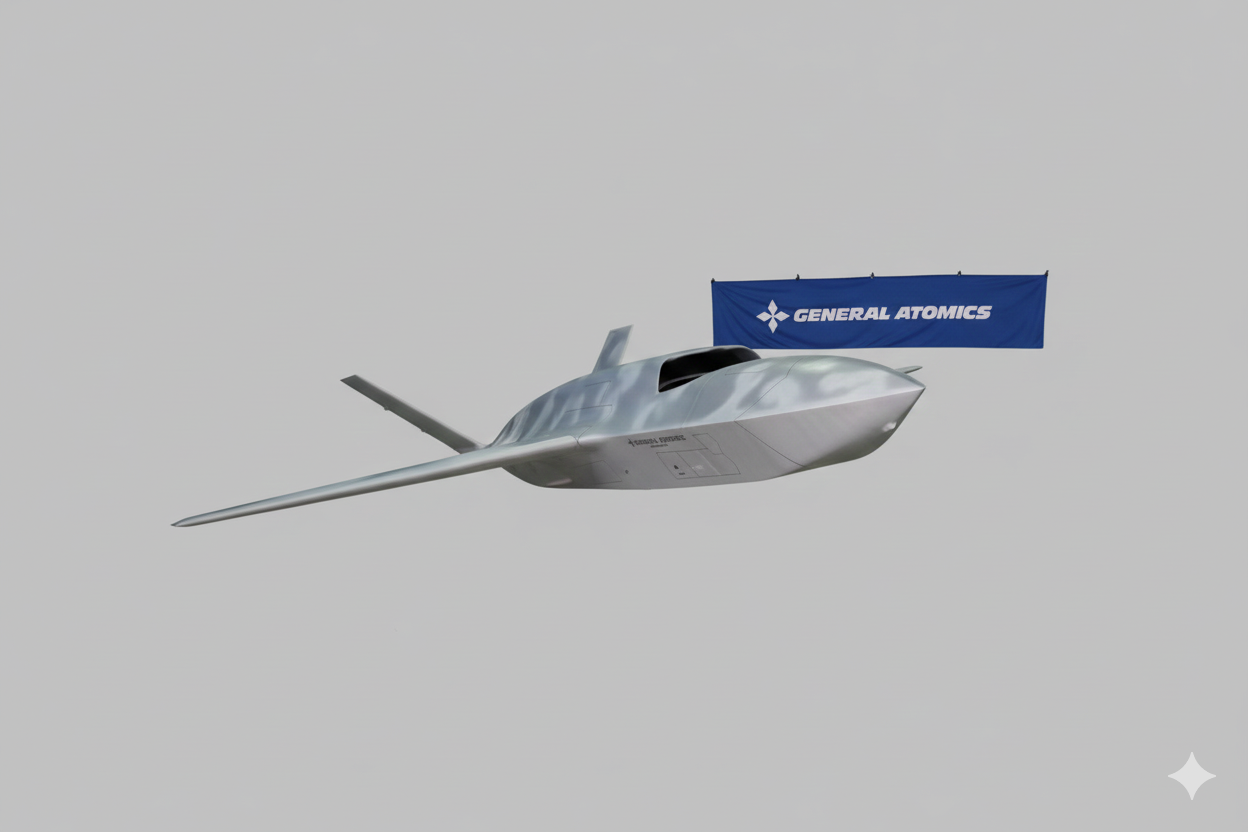
Since last year the company has also been producing underwater reconnaissance drones, and together with Grob Aircraft, an aircraft manufacturer it acquired in 2025, it is developing an unmanned fighter jet. It is precisely the development of these new kinds of platforms that Helsing plans to fund with the money it has raised.
Investors cool on defence conglomerate stocks
Against the backdrop of the record round Helsing has raised, market sentiment toward traditional weapons manufacturers is shifting noticeably — and not in their favour.
Rheinmetall’s shares have halved in value since January, though they still stand many times higher than five years ago. The Franco-German tank and artillery systems manufacturer KNDS has gone so far as to postpone its planned stock market listing — a clear sign that investors have grown far more cautious about the classic defence industry.
And while the heads of defence conglomerates look on jealously at the young manufacturers, including Ukrainian ones, dismissively calling them “kitchen cooks,” it is precisely these manufacturers that are becoming so-called “unicorns,” in contrast to the industry’s “dinosaurs,” mired in their own arrogant ambitions and bureaucracy.
The contrast is especially striking: interest in the sector’s young technology companies is not waning. According to Helsing’s own figures, demand for participation in the latest round significantly exceeded supply — the company could have raised even more but deliberately limited the size of the deal.
Less than two weeks earlier, another Bavarian company, Quantum Systems, played out a similar scenario: it closed an investment round of more than €1 billion at a valuation of €8 billion. To this can be added other recent deals: the German unmanned-systems maker Stark raised around €570 million at a €3.2 billion valuation, while the Finnish company ICEYE, whose radar satellites are ordered by military agencies across Europe, received €450 million.
The overall picture is unambiguous: capital in Europe’s defence sector is flowing away from ageing factories and assembly lines and toward companies betting on code, algorithms and new technologies.