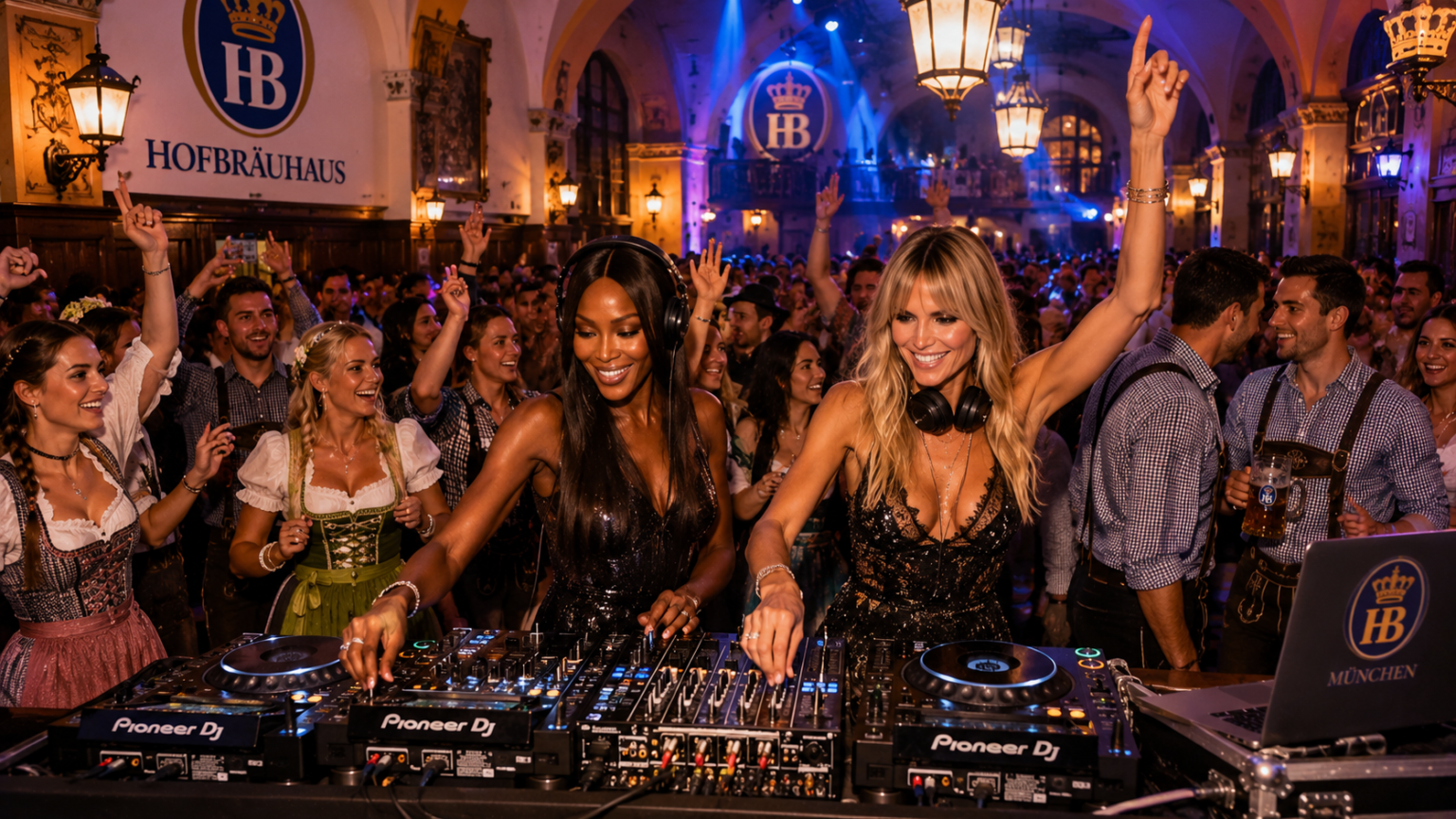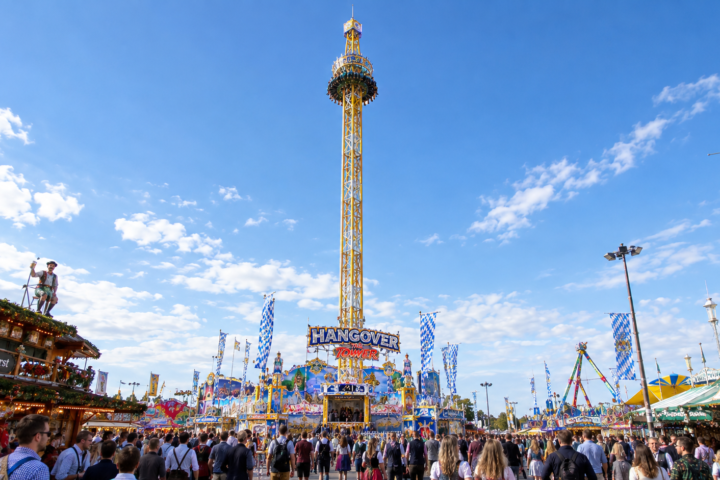

Oktoberfest 2026 runs from 19 September to 4 October and attracts around 7 million visitors each year. In 2023 that number reached a record 7.2 million, and guests drank around 7.4 million litres of beer. With figures like these, attention to the festival on social media has long since become a separate source of income, and it is precisely this commercial side that the city council has decided to tax.
The council has already issued 200 accreditations – applications came in at one and a half times the expected number
In the first weekend of Oktoberfest alone, Munich City Council’s economic affairs department received around 300 enquiries from influencers. Of these, 200 applications have already been completed and accredited. This was reported by a representative of Munich City Council’s economic affairs department to the news agency Deutsche Presse-Agentur (dpa).
She did not disclose the exact cost of accreditation: according to her, Munich City Council makes a point of not naming specific sums in agreements with third parties. What is known is that the fee is calculated based on the income the author earns from a given publication.
The final amount of the fee depends on three parameters:
- the reach of the publication;
- the method of monetisation on the platform;
- the format of the content posted.
For posts that bring the author only marginal income, a minimum-significance threshold applies. In such cases, accreditation is not required at all. This provision spares the bureaucracy for those who publish content about the festival more for personal enjoyment than for profit.
Latecomers pay more for accreditation
For those earning money on Instagram and other social platforms, it is more cost-effective to arrange the paperwork in advance. If an author has not obtained accreditation before publishing content, they will have to arrange it retroactively. And this works out noticeably more expensive for the blogger. The representative of the economic affairs department explained the price difference by the increased workload involved in the procedure. After the fact, staff at the economic affairs department have to separately check material that has already been published, rather than agreeing on the terms of cooperation in advance.
The new rule caused noticeable discontent among influencers even before the festival began – understandably so, since many of them are not accustomed to paying taxes. But Munich City Council remains unyielding (unlike on issues raised by activists). According to statements from council representatives: “This year, accreditation is required of everyone who creates content for social media on the grounds of Oktoberfest while simultaneously pursuing a commercial interest – direct or indirect, whether that means advertising collaborations, sponsorship, or product placement.” And indeed, there is no such thing as a blogger with hundreds of thousands of followers who has not monetised their content.
According to the representative of the economic affairs department, publications on YouTube and TikTok today constitute an independent branch of the economy in their own right, and the council has decided that this branch should operate under the same rules as other businesses working at the festival.
Whoever earns money from our festival must pay their share
The representative of the economic affairs department stressed that influencers at Oktoberfest are not being restricted in any way. Publications about the festival are only welcomed: “Impressions that spread around the world via social media are good for it and work in favour of brand recognition. But if an author earns income from these publications, they are obliged to pay – just as innkeepers and ride operators pay for their spots at the festival.”
Requirements of this kind for accreditation are not unique to Oktoberfest; a similar practice is now in place at many other major events across the EU. Department staff contact each author individually, and, according to the council representative’s observations, those who have worked professionally in this field for a long time generally treat the new requirement as a natural part of their work. As for those who are used to concealing their income and decided to take the opportunity to make some extra money, unpleasant surprises await them.
Cathy Hummels – one of the reasons behind the new rule, and now one of its supporters
Blogger Cathy Hummels played a notable role in this story. It was precisely events of this kind organised by bloggers – such as her annual “Wiesn-Bummel,” a guided walk through the festival involving followers and partners – that pushed the city to tighten regulation of influencer activity at Oktoberfest. This year, Hummels obtained accreditation herself, thereby securing access to the festival for her guests as well.
The 38-year-old Hummels broadly supported the new rules. In her view, Munich City Council is doing the right thing by protecting Oktoberfest as a globally known brand and setting clear boundaries for the commercial use of the festival.
The discussion that has unfolded around the new requirements, in Hummels’s view, showed just how important educational work is in this area. In an Instagram video, she explained the essence of the new requirements for content creators to her followers and noted that many of them had previously not understood where a personal post ends and commercial use begins.
Hummels proposed a digital content check
At the same time, Hummels believes the new system itself could be simplified. She proposed making the procedure more transparent and moving it into digital form – for example, as an app or platform with the working title “Wiesn Content Check.” According to her idea, content creators would answer a few questions there in advance: whether the publication involves a collaboration, whether a product is being advertised, and whether the author is pursuing commercial gain.
According to Hummels, such a system would immediately show whether accreditation is required in a given case. If it is needed, it could be arranged and paid for directly through the online platform, without any correspondence with department staff. This would give content creators quick clarity, and give the council a transparent picture of how its brand is being used for commercial purposes. She did not, however, explain what she proposes should be done about those who fill out the questionnaire by deceiving the council.
The council does not profit from accreditations
The representative of the economic affairs department dispelled a misconception that has arisen, particularly among bloggers from countries of the former USSR: “The council itself does not derive any financial benefit from accreditation fees. Oktoberfest operates on a self-financing principle: all proceeds, from the rental of spaces for beer tents to accreditation fees charged to bloggers, go back into organising next year’s festival.”
Why this matters
The story of influencer accreditation shows how major city festivals are gradually incorporating social media into their financial model – on a par with the rental of tents and trading spaces. Oktoberfest long ago stopped being an event that exists only “live”: millions of views on Instagram, YouTube and TikTok shape the festival’s image for audiences who have never been to Munich, and bring real – and at times considerable – income to those who create that image.
By introducing accreditation, the city has effectively recognised the commercial weight of bloggers on a par with innkeepers and ride operators, while at the same time drawing a line between personal impressions and advertising integration. Cathy Hummels’s proposal for a digital platform shows that content creators themselves are interested not in abolishing the rules, but in making them transparent – or, perhaps, in later heading up that very platform. On the other hand, the clearer the procedure, the fewer conflicts there will be between city authorities and those who earn a living from its flagship festival.
Source: dpa