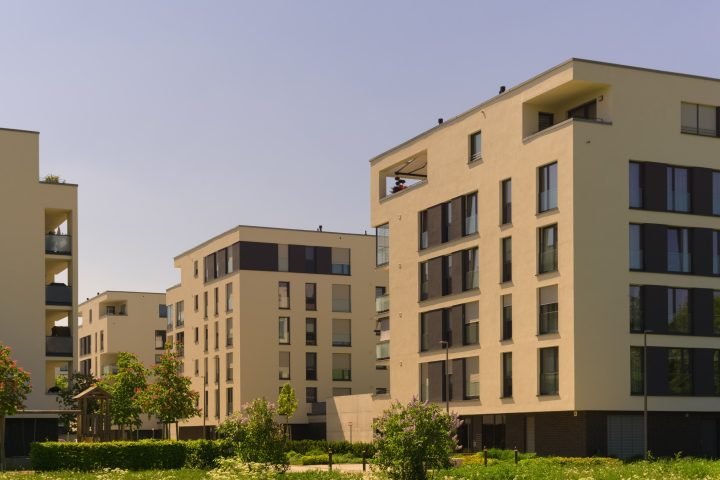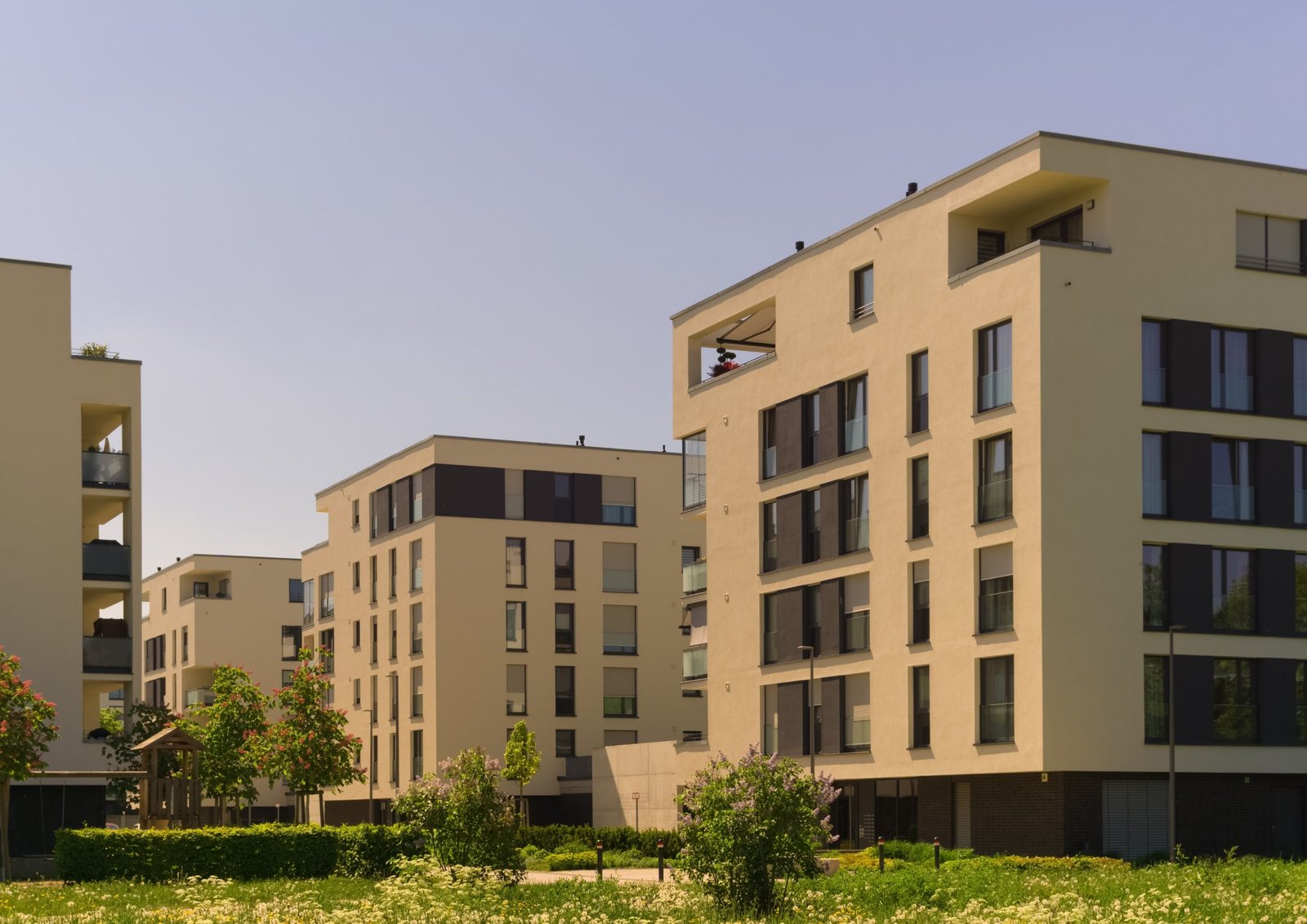

The transformation, which the city officially unveiled this week, will introduce up to 1,000 new residential units alongside restaurants, green spaces, and community facilities.
From Industrial Zone to Sustainable City Neighborhood
Spanning 5.4 hectares, the area—currently dominated by large parking lots, wholesale markets, and commercial structures—will be reshaped into a modern, green district with diverse uses. The redevelopment aims to create a dynamic urban environment combining housing, gastronomy, and public gathering spaces, complemented by rooftop gardens and landscaped courtyards.
The Munich city council’s planning committee approved the project’s urban development guidelines on Wednesday. The winning design, created by German-Spanish architecture firm FGGH, emerged victorious in the 2023 Europan international design competition and has since been further developed into a comprehensive concept.
Residential Core, Commercial Fringe
While the outer edges of the Euro-Industriepark—particularly along Maria-Probst-Straße—will retain their commercial and industrial character, the central area will pivot toward residential development. Between 700 and 1,000 apartments are planned, offering much-needed housing in one of Munich’s fastest-growing regions.
The northern perimeter of the new district will host two taller buildings designed for retail outlets, a childcare center, and other community services. Adjacent to this, a marketplace with greenery, outdoor dining, and an open-air stage will serve as a hub for local gatherings. Additionally, the adjacent green corridor along the railway tracks will be ecologically enhanced to improve its recreational and environmental value.
Prioritizing Green Space and Reduced Traffic
Environmental sustainability is a core focus of the project. According to a statement from the Green Party/Rosa Liste city council group, the plan includes significant tree planting, green façades, and spacious interior courtyards. While the area will become denser and feature taller buildings, it will also offer numerous publicly accessible open spaces designed to foster a cooler and more livable urban climate.
A “mobility hub” is planned along Maria-Probst-Straße to minimize car traffic in the new neighborhood. The design strongly favors walking and cycling, aligning with the city’s goal of reducing car dependency and promoting sustainable transport.
Energy-Efficient Buildings and Innovative Heating Concepts
The redevelopment will also address energy efficiency and future-oriented heating solutions. Buildings will be designed to require minimal energy for heating and cooling. The city is currently evaluating whether residual heat from existing industrial facilities in the area could support a decentralized, low-emission heating network.
A Model for Munich’s Future Urban Development
City councilor Florian Schönemann of the Green Party/Rosa Liste emphasized that the Euro-Industriepark project sets a precedent for future urban development in Munich. He noted that the project demonstrates how commercial areas can be intelligently repurposed to meet housing needs without eliminating their original functions.
Northern Munich is currently one of the city’s most rapidly evolving areas. Alongside the Neufreimann development on the site of the former Bayernkaserne, the transformation of the Euro-Industriepark marks another step in reshaping the city’s future and addressing its pressing housing demands.