
The journey began in 1965, when the foundation stone for what would become a vital part of Munich’s infrastructure was laid.
In the mid-1960s, Munich faced mounting transportation challenges. Streets were increasingly congested with cars, and traffic flow had slowed dramatically. City officials determined that an underground transport system was the only sustainable solution. Preparatory construction work officially began in February 1965, and recently, the BR Retro television program revisited these formative years.
Historical footage shows an 18-meter steel beam being lowered into an excavation pit to reinforce the walls of what would become a metro station. However, before tunneling could begin, workers had to carry out extensive underground operations. A broadcast from that period noted: “The average person cannot begin to imagine what lies beneath the streets of a major city.” Beneath Munich’s pavements lay a vast network of gas, water, and telephone lines, along with complex sewage systems — all of which had to be relocated or rebuilt to make way for the metro.
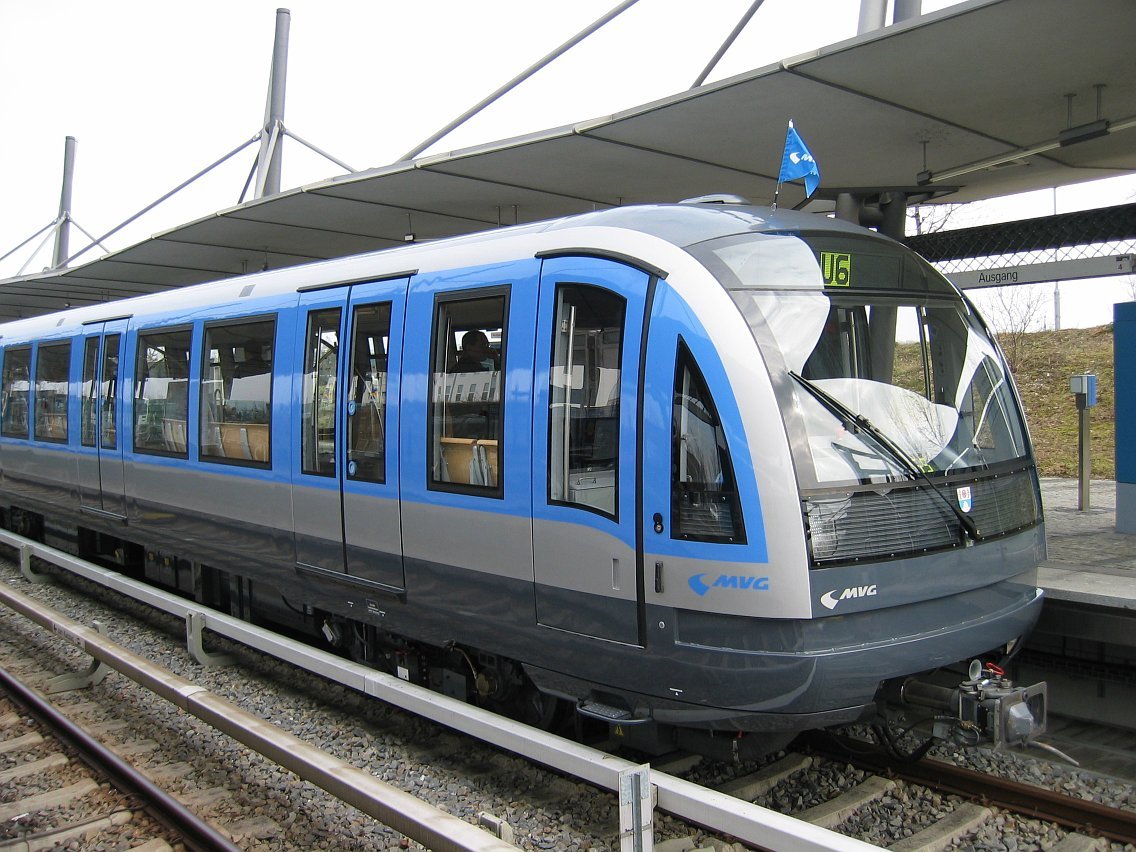
The decision to host the 1972 Summer Olympics gave the project additional urgency. On October 19, 1971, the first train ran between Kieferngarten and Goetheplatz — three years ahead of schedule. For this route on the U6 line, engineers repurposed and upgraded an old Reichsbahn tunnel dating back to the 1940s. The revamped tunnel was opened to the public during an open house event.
The U3 line was constructed with the Olympics in mind. Over the 17 days of the Games, it transported approximately four million passengers between Münchner Freiheit and Olympiazentrum. Today, Munich’s U-Bahn network includes eight lines, 100 stations, and 95 kilometers of track.
Passenger numbers reached an all-time high in 2019, when the U-Bahn transported 429 million people. In 2024, the network once again reported growth. Zinaida Cordes, head of Mobility Development and Revenue at Münchner Verkehrsgesellschaft (MVG), identified several key factors behind the renewed increase. She explained that 2024 marked the first full year of the Deutschlandticket, a nationwide public transport pass. In addition, Munich hosted a record number of large-scale events, and tourism figures returned to high levels.
Latest Posts