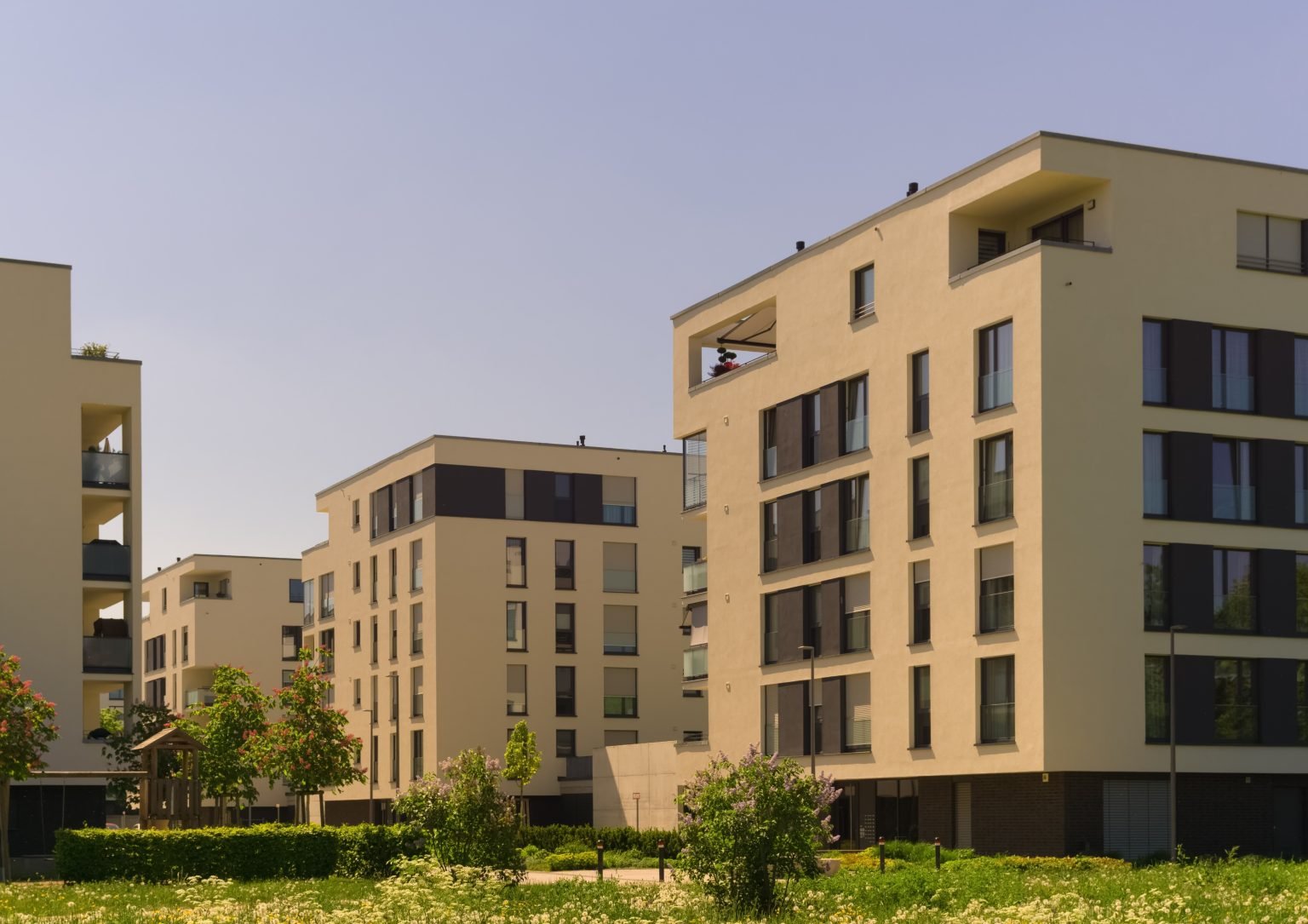

The housing market is expected to remain strained in the coming year. To stabilize the situation, authorities are pulling several regulatory levers. Plans include capping increases for index-linked rents, increasing carbon dioxide emission costs to make energy-efficient properties more attractive, and adjusting subsidies for energetic modernization. Furthermore, rent control regulations will soon apply to a larger number of Bavarian cities and municipalities.
Expansion of Rent Control (Mietpreisbremse) in Bavaria
The Tenant Protection Ordinance is designed to protect renters from excessively high prices in regions where demand significantly outstrips supply. Starting January 1, 2026, this will apply to 285 cities and municipalities in Bavaria—an increase of 77 locations.
The new territories are primarily located in the Munich metropolitan area and the Oberland region. The list also includes several new municipalities in the Allgäu and the Nuremberg-Erlangen-Fürth metropolitan region.
Notably, popular student hubs such as Würzburg, Eichstätt, and Passau were not included, despite high market pressure. Passau was even removed from the list. Inclusion depends on several specific legal criteria. Under these measures, landlords may not set the “cold rent” for a new contract more than 10% above the local comparative rent. However, critics point out that tenants often struggle to enforce these rules when competition for housing is high. Additionally, exemptions apply to new builds, extensively renovated properties, and units where the previous tenant already paid a higher rate.
Capping Index-Linked Rents
At the initiative of Federal Justice Minister Stephanie Hubig (SPD), index-linked rents (Indexmieten) will be more strictly regulated starting in 2026. “We are capping the increase of index-linked rents at 3.5 percent per year,” Hubig stated in mid-December. Index-linked contracts tie rent directly to consumer price indices, which led to sharp increases during periods of high inflation. The homeowners’ association Haus und Grund has criticized the move, and the exact process for modifying existing contracts is yet to be finalized.
Rising Carbon Dioxide Emission Costs
The state-mandated carbon price has been rising steadily for several years. In the coming year, it will be set within a corridor of €55 to €65 per ton of emissions. Consequently, heating oil and natural gas are expected to become noticeably more expensive. Heating oil may rise by approximately 20.6 cents per liter, while the cost per kilowatt-hour of natural gas will increase by about 1.4 cents. This ensures that living in energy-inefficient buildings will become costlier for everyone.
Continued Support for Modernization and Construction
The 2026 federal budget continues to fund programs for renovation, sanitation, and new construction. Individual subsidies for heating systems, thermal insulation, and technical maintenance from the Federal Office for Economic Affairs and Export Control (BAFA) will remain. Low-interest loans from the state development bank KfW are also expected to stay available, though budget constraints may lead to adjusted terms.
Other Important Changes:
- Commuter Allowance: The tiered calculation for the commuter allowance (Pendlerpauschale) will be abolished, providing tax benefits for those living in rural areas.
- Heat Pump Subsidies: Standards for subsidies will become stricter, particularly regarding noise levels. An official list of eligible models has been published.
- Office-to-Residential Conversions: Starting summer 2026, the process of converting vacant offices into apartments will be simplified, with owners gaining access to lower-interest loans.
- Solar Feed-in Tariffs: Payments for feeding solar energy back into the grid are scheduled to decrease.
- Gas Storage Levy: The gas storage levy (Gasspeicherumlage) will be abolished.
Source: BR24