At the University of Erlangen-Nuremberg, preparations are in full swing for the launch of an ambitious project: the deployment of computing power that will become the “brain” for a new generation of Bavarian robotics. This is not about theoretical research, but about preparing machines to perform complex operations that, until now, required only human participation.
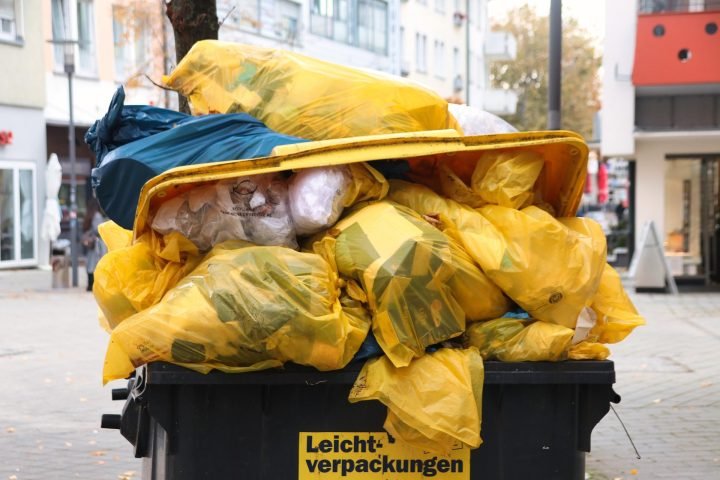
One of these tasks, oddly enough, is waste sorting.
Although at first glance the process seems trivial, any resident of the Bavarian countryside who has tried to correctly distribute waste at a recycling point on a Saturday under the strict gaze of a supervisor knows—it is an entire science. A robot must not simply grab an object but instantly identify its composition, condition, and suitability for recycling. The robot’s program must become the link that allows for the automation of this routine but critically important environmental process, thereby accelerating the sorting and processing of waste.
High Technology Serving Medicine and Industry
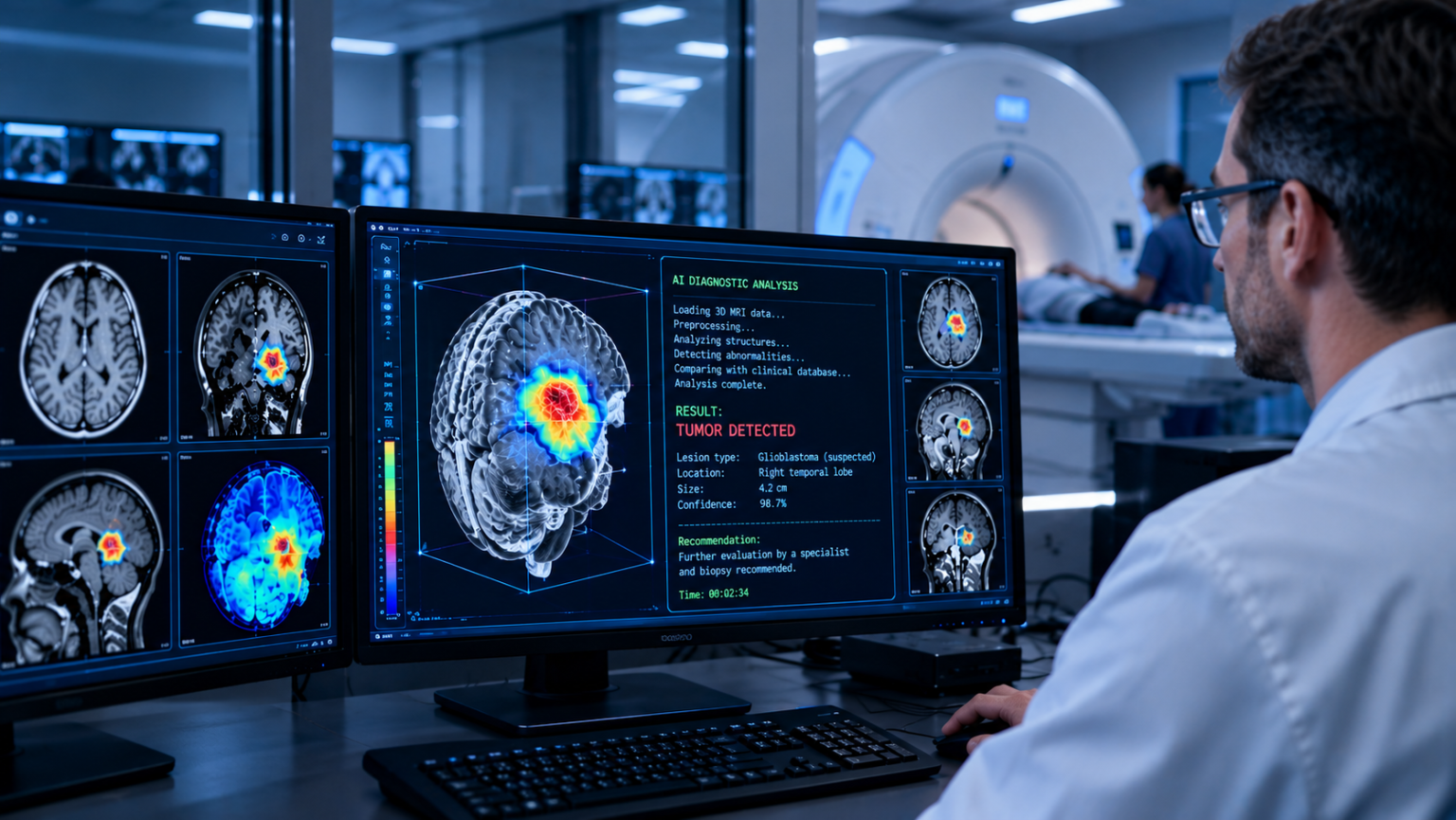
In addition to automating public utilities, high-tech medical research will be a priority for the Bavarian AI base model. One of the most humane and ambitious goals is the creation of digital models capable of partially replacing experiments on living organisms in laboratory tests. Training of this model is set to start this autumn at the Erlangen computing center, for which the Bavarian authorities have allocated significant budget funds.
The technical base of the project will consist of a new supercomputer equipped with specialized processors with a total value of over 50 million euros. Professor Gerhard Wellein from the National High-Performance Computing Center characterized this acquisition as a vital stage for regional science.
Despite the fact that the Erlangen site is smaller in scale than the data centers in Munich or Allgäu, it is here that expectations are concentrated for the creation of practically applicable algorithms for controlling complex mechanical systems.
From “Bayern-GPT” to the Industrial Revolution
When businessmen in the state first voiced plans to create AI with a “Made in Bavaria” label, the Bavarian government immediately saw a chance to gain additional ratings. Science Minister Markus Blume promptly announced it as a government project, calling it “Bayern-GPT.” This was likely intended to create associations in the electorate with the popular (but not necessarily professional) ChatGPT from OpenAI. However, Bavarian scientists were quick to clarify: their goal is not to create a system that speaks local dialects, nor to build a low-quality pop-language model, and certainly not to help a government that has lost the trust of voters.
The scientists’ goal is to develop a powerful industrial tool that will become an indispensable assistant for everyone from researchers to ordinary employees of waste processing plants. To date, the project has united more than 40 research initiatives from 11 leading Bavarian universities, covering fields from biomedicine to complex robotics.
Minister Blume emphasized that AI will become the catalyst for the next industrial revolution, and Bavaria intends to take a leading role in this process rather than being a bystander. An interesting point is the sincere belief of the State government that the developments of Bavarian scientists are the merit of the government and individual ministers rather than the evolution of science. This is coupled with the belief that local industrial development is also their achievement, rather than that of thousands of qualified specialists working in Bavarian companies.
The research base in Erlangen is intended to pave the way for the real sector of the economy, turning academic theoretical developments into ready-made solutions for enterprises. “We are opening the next chapter in the history of our technologies,” stated the minister, pointing to the transition from digital interfaces to physically acting intelligent machines.
Strategic Investments
In recent years, Bavaria has systematically transformed into Europe’s largest high-tech hub. 5.5 billion euros have already been invested in the high-tech industry, which has allowed for the creation of hundreds of new professorial positions and the attraction of world-class talent to universities. The vector of development is clear: neural networks, quantum computing, nuclear fusion, and the aerospace industry.
The next logical step could be the construction of a so-called “AI Gigafactory”—a massive computing center planned for Schweinfurt. The choice of location is due to its proximity to the Südlink power highway, capable of providing the supercomputer’s colossal energy needs using northern wind turbines. The project is awaiting approval from Brussels, but Bavarian universities are already demonstrating their readiness to implement plans of such magnitude.
Technical Equipment from Across the Ocean
The choice of hardware for the new center is interesting. For the needs of the Bavarian neural network, 1.7 thousand high-performance processors from the American company Nvidia are planned to be integrated into a single network. Despite the desire of the EU and Germany in particular for technological sovereignty, it is an interesting fact that this manufacturer’s products are currently the world standard.
Nvidia Vice President Rod Evans praised the foresight of Bavarian scientists, noting that such cooperation opens new horizons for both science and industry in the region.
Conclusions
Investments in specialized neural networks testify to Bavaria’s pragmatic approach to digitalization. Instead of trying to catch up with the US in the field of universal linguistic models designed for the mass market, the region is focusing on what has always been the strength of the German economy—engineering and precision production.
Training robots for waste sorting or modeling biological processes are tasks whose solutions will bring tangible benefits within the next decade. The success of the Erlangen site will show how effectively academic resources can be integrated into the industrial environment of the future, ensuring Bavaria’s status as a leading technological center in Europe.