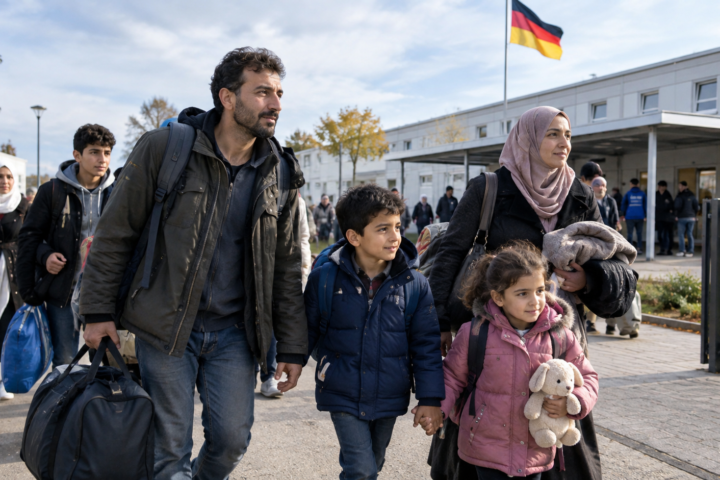
While the Bavarian Association of Cities welcomed the decision citing structural challenges in local communities, organizations such as Diakonie and the Bavarian Refugee Council sharply criticized it as a step backward for humanitarian policy.
Hafiz’s Story Highlights Human Impact of Policy Decisions
In Bavaria, there are currently around 84,000 refugees, according to the Bavarian Ministry of the Interior. Among them is Hafiz, a 29-year-old refugee from Afghanistan who has not seen his wife and three sons for three years. After the Taliban regained power in his home country, Hafiz fled with his family to Iran. However, he was forced to continue the journey alone when it became too dangerous and complicated for his wife and children to travel further.
Today, Hafiz lives in Dorfen, in the Erding district. He previously spent time in Augsburg and Munich and has since completed an integration course, speaks fluent German, works in a bakery, and holds an additional mini-job in cleaning. He has a secure residence status and his own apartment, ready to accommodate his family.
Separated by Borders, United by Hope
His wife and children—aged twelve, eight, and four—remain in Iran. Their reunification has been severely hindered by the closure of the Afghan embassy in Tehran due to the ongoing conflict. Hafiz keeps in regular contact with his family through calls and messages. His children often ask him, “Papa, when are you coming?” but he has no answer. “It is very distressing. I don’t know what to do,” he said.
Franz Leutner, a volunteer refugee support worker in Dorfen, said, “We currently need to support him very closely—so he doesn’t break down.” The emotional burden of the prolonged separation has become overwhelming.
Well Integrated, Yet Family Reunification Remains Uncertain
Although Hafiz is not directly affected by the new legislation—since he does not fall under the category of subsidiary protection—changes in legal interpretation may still indirectly affect his case. Subsidiary protection is granted to individuals who do not meet the criteria for full refugee or asylum status but face a serious threat to life or health in their home countries.
Civil Society Groups Warn of Human Rights Implications
The Diakonie Munich and Upper Bavaria, which supports around 8,000 refugees, voiced strong criticism of the suspension. Legal expert Sarah Weiss called it “symbolic politics” at the expense of affected families. She also pointed to potential violations of the European Convention on Human Rights, which guarantees the right to family life.
According to the Bavarian Ministry of the Interior, more than 36,000 people with subsidiary protection status currently live in the state. Family reunification for spouses and minor children has already been capped at 12,000 cases per year nationwide.
Bavarian Refugee Council Emphasizes Importance of Family for Integration
The Bavarian Refugee Council also condemned the decision. Katharina Grothe highlighted the critical role of family in successful integration and mental well-being: “Anyone constantly worried about loved ones cannot fully focus on learning the language, pursuing education, or maintaining a job.” She said the long separations often lead to serious psychological distress.
Cities Cite Lack of Housing and Services as Grounds for Support
In contrast, the Bavarian Association of Cities expressed support for the measure. Spokesperson Achim Sing referred to the significant logistical issues in many urban areas, particularly in densely populated regions. “Large families often appear at city halls, and we lack housing, childcare, school spots, and integration services,” he said. He added that suspending family reunification provides municipalities with short-term relief.
A Father Waits in Hope
For Hafiz, hope remains his only constant. He said his apartment is large enough, and everything is prepared—except for the presence of his family. “I don’t ask for much—just my family,” he said softly, as he looked at old photos of his sons and wife on his phone.