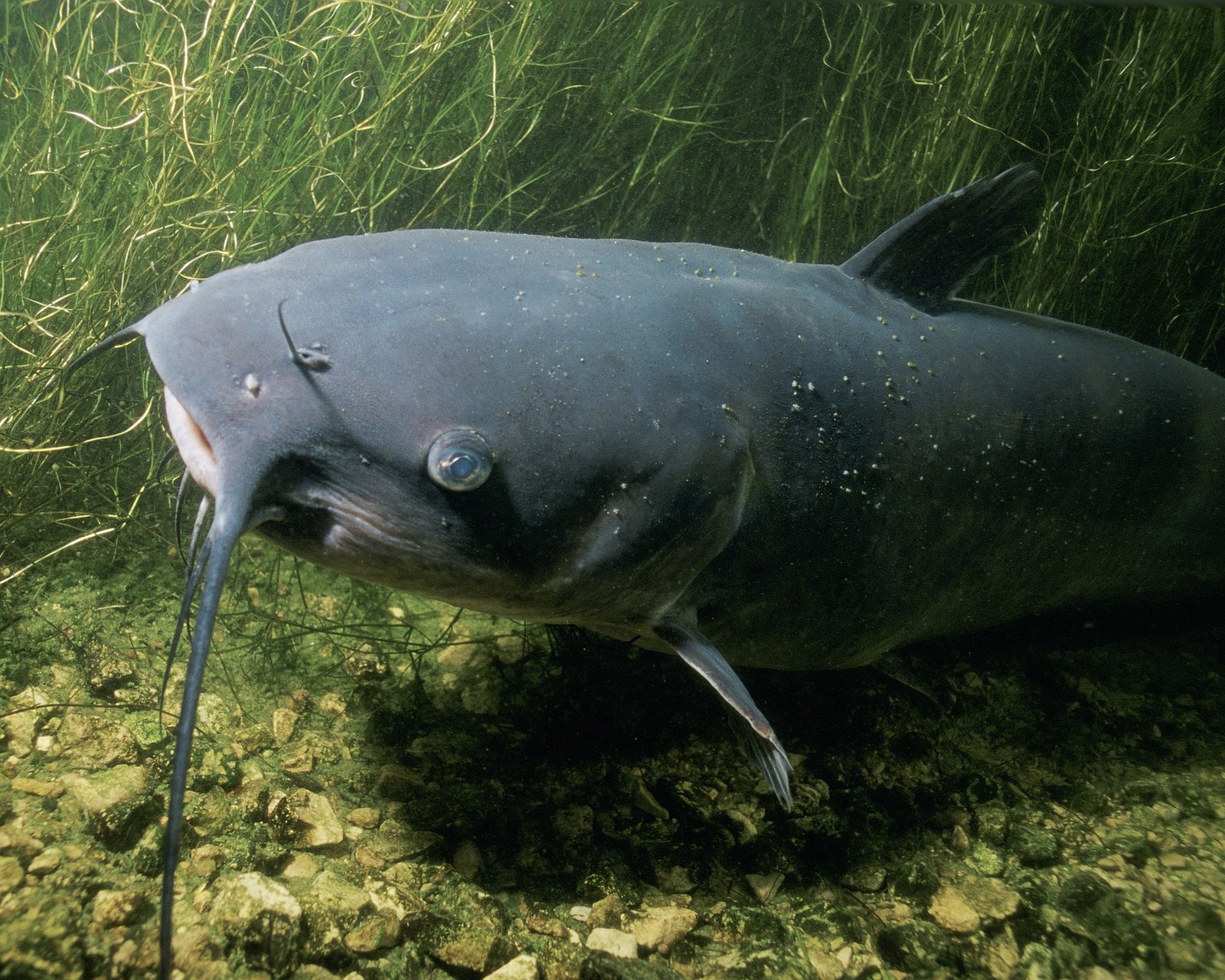

More than fifty years after the release of the classic film Jaws, it is now a freshwater fish making headlines. A police officer recently killed a catfish about two meters long in Brombachsee, Middle Franconia, after the fish had allegedly injured at least five swimmers. This has sparked fears among some that catfish in German lakes may pose a danger to bathers.
Such fears, however, appear to be unfounded. According to Michael Petzold, a police spokesperson from Middle Franconia, the fish’s behavior was highly unusual: “This is absolutely atypical behavior for this species.” Catfish can grow very large but typically do not attack humans—unless they feel threatened or are guarding their nest. Investigators suspect that the fish’s nest was located near the swimmers and that it reacted aggressively to protect its offspring.
Kuno the Killer Catfish of Mönchengladbach
Catfish have repeatedly made curious headlines in Germany. More than two decades ago, in Mönchengladbach, North Rhine-Westphalia, one such fish gained international fame as “Kuno the Killer Catfish.” This enormous catfish was rumored to have swallowed a small wire-haired dachshund.
In 2003, a dead catfish was discovered floating in the same body of water. Many believed it to be the legendary “Kuno.” The fish was preserved and is now displayed in a museum. Catches of catfish measuring over two meters in length are by no means rare. These animals can live for decades and reach enormous sizes.
Catfish: Gentle Giants of the Waters
Catfish, also known in some regions as “Waller,” are generally considered shy creatures. They avoid humans and spend most of the daytime hidden on the bottom of lakes and rivers, venturing out to hunt only at dusk. The catfish is the largest permanent freshwater fish in Europe and is one of the most voracious predators, feeding on almost anything it can overpower.
Its diet includes fish—including smaller members of its own species—as well as frogs, crayfish, and even waterfowl such as ducks or pigeons if it reaches a sufficient size. During hunting, the catfish relies less on its vision and more on its excellent sense of hearing and the many touch and taste sensors located on its mouth, fins, head, and forebody.
Climate Change Boosts Catfish Growth
In recent years, reports of particularly large catfish have become more frequent. Experts believe this is linked to climate change: rising water temperatures favor warm-loving species such as catfish. The warming speeds up the fish’s metabolism, which in turn increases food intake and growth. To limit their spread, it is now forbidden in some regions to release caught catfish back into the water.
Anyone encountering a catfish while swimming should remain calm and slowly move away from the animal. Sudden movements or loud splashing can startle or attract the fish. In case of uncertainty, swimmers are advised to inform the supervisory staff if available. Nevertheless, attacks on humans remain extremely rare exceptions.