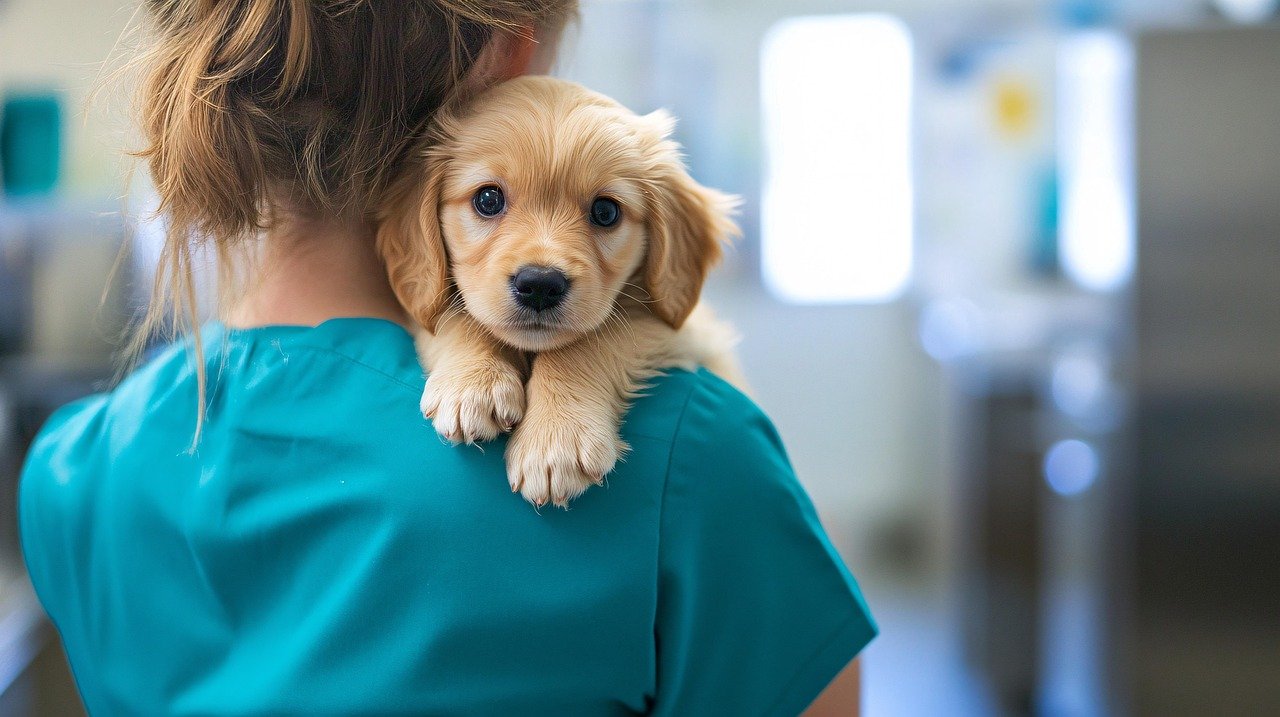

Blood donations can be life-saving for animals in critical condition, and the clinic aims to grow its pool of available canine donors through a new blood typing campaign.
Among the volunteers is Buddy, a lively four-year-old German Shepherd mix, who leaps out of his owner’s car with energy. Parked just outside the specialized veterinary center, his owner, Johannes Baum, explains, “It’s useful for us, too. If Buddy ever ends up in an emergency, we’ll already know his blood type.”
Increasing the Supply of Canine Blood Donors
The campaign was publicly announced in advance, inviting local pet owners to participate. On average, the clinic requires about four blood donations each month, according to the veterinary staff. By expanding the database of registered donor dogs, the clinic hopes to respond faster in emergencies.
Before the blood draw, each dog must first be weighed. Only dogs between one and seven years of age and weighing more than 20 kilograms are eligible. In addition, dogs must be up to date on vaccinations and not on long-term medication.
Dogs Have Unique Blood Group Systems
After passing a health check, a small blood sample is drawn from the dog by veterinarian Scott Seeger to determine its blood type. The sample is then sent to a laboratory, with results expected within a few days.
“Dogs primarily have blood group 1, which occurs as positive or negative. There are additional blood types from 2 to 7, but these are much rarer,” Seeger explains.
Donation Volume Depends on Dog’s Weight
The amount of blood a dog can donate depends on its body weight. A 30-kilogram dog can typically give up to 300 milliliters. Seeger notes that the recipient’s medical needs also play a role in determining the appropriate donation volume. To protect the donor’s health, veterinarians recommend limiting donations to once per year.
Stored Blood Products or Fresh Donations, Based on the Case
In emergency cases, veterinarians must first identify which blood components are required. If a dog collapses, it is often due to a loss of red blood cells, necessitating a transfusion of red blood cell concentrate. “In those cases, we use stored erythrocyte concentrates, which we obtain from Portugal,” says Sebastian Distler of the Veterinary Clinic Nuremberg.
If the dog is suffering from a clotting disorder, such as after ingesting rat poison, fresh whole blood is preferable. This is where dogs like Buddy could come into play—if the blood type matches and the owner can bring the donor to the clinic quickly.
That’s why the Bayreuth veterinary team emphasizes the importance of maintaining a broad database of eligible donor dogs ready to assist when needed.
Prepared to Help When It Counts
After just 30 minutes, Buddy’s blood typing is complete. The process went smoothly for both dog and owner. “Now I’m just curious to find out what his blood type is,” says Baum. “Then we’ll wait and see if we get the call to help save another dog’s life.”