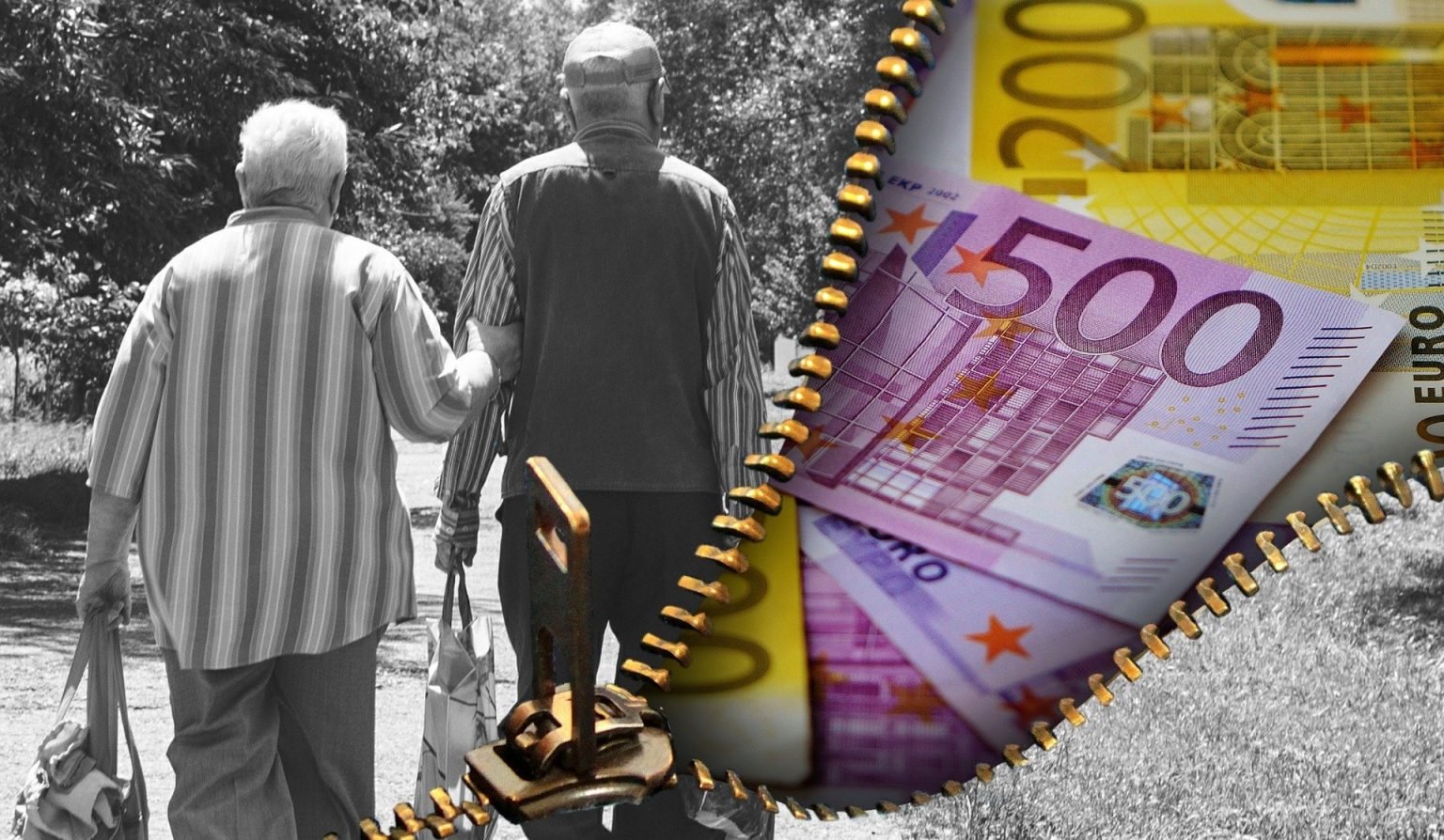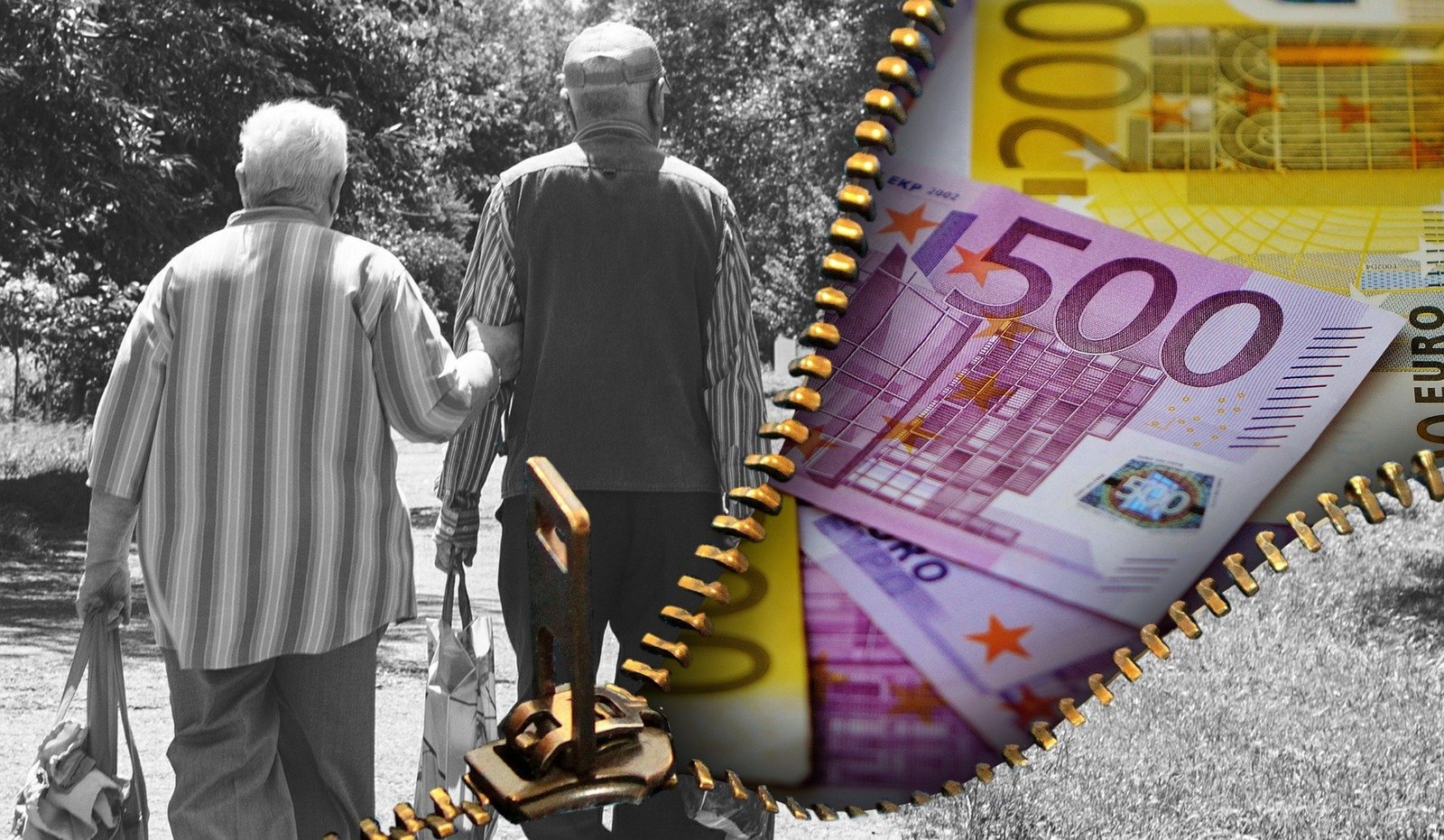

For people like him, the tax reform the German government is preparing for 2027 will bring three effects pulling in different directions at once: he will gain in some respects, lose in others, and simply end up paying differently for old habits in yet others. That variety is really the heart of the change — behind the phrase “relief for millions” lies a compromise, not a gift: some pensioners will genuinely feel it has become easier to breathe financially, while others will find the reform has cost them more than before.
The coalition of the CDU/CSU and the SPD agreed on the reform at a coalition committee meeting on 2 July 2026. The Federal Ministry of Finance estimates the overall tax relief at roughly €10 billion a year — a substantial sum, but one that will be spread very unevenly among taxpayers. Before celebrating headlines about tax cuts, pensioners would do well to work out exactly which part of that statistic applies to them.
What actually changes from 2027
On paper, the package looks simple: three levers the finance ministry is pulling at once.
The first is a shift in the threshold below which the state makes no claim on income at all.
The second is a change in how steeply tax rises as earnings increase.
The third is a shift in the upper threshold above which the top rate applies. Taken separately, each sounds technical and dull, but together they determine how much money actually ends up in a given person’s account — and that part is anything but dull, especially for someone counting every euro of their pension.
The reform takes effect on 1 January 2027, but will only reach full strength a year later: some elements will not be introduced until 2028, meaning the promised relief will be spread out over time, and many people will not feel the first effects for a while yet.
The tax-free allowance, currently €12,348 a year for single taxpayers, is set to rise in two stages to €12,900 — an increase the government presents as the main argument in favour of the reform, though it looks considerably more modest once converted to a monthly figure than it does in news headlines.
At the same time, the threshold at which the top rate of income tax kicks in will shift: instead of the current €69,879, it will apply only to income above €70,600, and the scale between €17,800 and €70,600 will become flatter — in other words, income will no longer be taxed as steeply as it rises as it is today.
Rentenbescheid24, a portal specialising in pension law, insists that most taxpayers will feel some relief. The wording is vague, and that is precisely the problem: it says nothing about who exactly will end up among the lucky ones.
The only calculation the government has published so far has nothing to do with pensions at all: it concerns a family with two children and a taxable income of €60,000 — the ministry estimates that from 2028 such a family will save more than €600 a year. No comparable figures have been given for single pensioners or childless couples, and that silence speaks louder than any official statement: the package was conceived primarily as support for families and working people, with pensioners more of an afterthought than the intended beneficiaries.
The whole arrangement is funded partly by an increase in the tax on very high incomes — the so-called “wealth tax” — which from 2027 will be 45% on income above €250,000, rising to 47% on income above €280,000. In other words, the state is not so much handing out money as redistributing it: what it forgoes from one group, it hopes to recoup from another.
Who will not benefit from the higher tax-free allowance
This reform has a fairly clear dividing line, with real change on one side and none at all on the other. A pensioner living solely on a state pension within the tax-free allowance simply will not notice the reform: their income is already untaxed, so raising the threshold further is rather like raising the ceiling in a room where no one reaches the old one anyway.
The same applies to recipients of minimum social benefits — those living on basic old-age support or on Bürgergeld: their income is already well below the tax threshold regardless of the reform, and the billions the government is talking about simply will not reach their wallets.
But there is a nuance rarely mentioned in public discussion. Since 2005, Germany has applied so-called deferred taxation of pensions: the taxable share of a pension payment rises with each successive year of retirement — a rule introduced gradually so as not to hit existing pensioners all at once.
For those who retired in 2026, 84% of their pension is already taxable, with only 16% remaining tax-free for life. And since pensions were additionally raised by 4.24% from 1 July 2026, some pensioners whose income was previously just below the threshold risk having to file a tax return for the first time in their lives — an effect that could cancel out all the promised relief before the reform even takes effect.
Quite a different story applies to those whose income is not limited to a single state pension. The reform will be felt most by pensioners with additional sources of income: a company pension, rental income from property, private savings, or part-time work. This is the group for whom both effects of the reform kick in at once — the higher tax-free allowance and the gentler tax scale — and they are the ones who should sit down with a calculator first.
The shift in the threshold for the top rate will mainly affect those with above-average total income — for example, pensioners with income from capital or rental property: for them, the new tax brackets could produce quite noticeable savings, since the higher rate will apply to a smaller share of their income.
Mini-jobs and home-improvement tax relief under threat
While some pensioners are working out their potential gains, others need to prepare for extra costs — and here the story becomes less rosy. Many older people in Germany continue to take on part-time work: some out of financial necessity, others simply to stay active and keep the social contacts that often fade after retirement.
The mini-job remains the most convenient format for this — minimal paperwork, flexible hours, only token tax obligations. That is exactly why raising the flat-rate tax on such jobs hits this group particularly hard, even though the pensioner is not formally the one paying it. The new burden falls on the employer, but businesses often respond to rising costs by losing interest in hiring rather than by absorbing the extra expense — meaning some pensioners risk losing their part-time work not through any choice of their own, but simply because employing them has become less worthwhile.
A second painful issue concerns homeowners: tax relief on tradesmen’s services and renovation work is being cut. Under the current rules, Section 35a of the Income Tax Act allows 20% of labour costs for repair work to be reclaimed, up to a maximum of €1,200 a year, based on work costing up to €6,000. Such figures might seem to matter only to accountants, but in practice they determine whether an older person can afford to adapt their bathroom to their changing needs, or has to put it off for another year or two.
Once the relief is cut, the reimbursement will shrink, and it will become noticeably harder to recover the cost of adapting a home — installing grab rails, replacing a bathtub with a walk-in shower, widening doorways for a wheelchair — through the tax deduction. For larger projects the difference can run to several thousand euros, and it will be felt most by those who need such alterations the most.
Few people realise that this relief is available not only to homeowners but also to tenants: they are entitled to claim the labour portion of costs listed on their service charge statement — for example, for a caretaker, lift maintenance, or chimney sweeping. The relevant certificate is issued by the property management company on request, and many tenants are still unaware of this option, missing out on entirely legitimate savings as a result.
What to do now
The reform works like a system of connected vessels — a gain in one place is almost always offset by a loss in another, so waiting until 2027 and sorting things out after the fact is not the best strategy. It makes more sense to map out one’s own income structure now: gather tax notices and pension statements, details of all additional income sources, and rough out any planned spending on repairs or home adaptations. Only by bringing all these figures together can a particular household work out whether the reform will actually benefit them, or instead bring extra costs no one warned them about in advance.
Such calculations are best done together with a tax adviser, who can factor in individual circumstances — from the structure of one’s pension to any renovation plans. And anyone who has already been considering major renovation work using the tradesmen’s-services relief should consider finishing that work in 2026, while the more generous deduction still applies. Experts advise paying invoices for completed work by 31 December 2026, and making sure to keep documentation that separates the cost of materials from labour costs — since it is the latter that qualifies for the refund.
It is also worth bearing in mind that, as of early July 2026, the reform bill had not yet been formally submitted to the Bundestag. The coalition hopes to introduce it before the summer parliamentary recess, after which it must be approved by the Bundestag and the Bundesrat — the upper house representing the federal states. Since the states and municipalities receive a share of income tax revenue, a reduction in the tax burden means lost revenue for them that the federal government will still need to offset. Until the law is finally passed, the existing rules remain in force — so any calculations made today should be treated as provisional rather than final.
Bottom line
The 2027 reform is a compromise, not a one-sided reduction in the tax burden. The higher tax-free allowance will indeed lower taxes for some pensioners, but at the same time renovation tax relief is being cut and mini-job contributions are rising — so a gain in one place is often cancelled out by a loss in another, and by no means everyone will end up feeling like a winner.
The main beneficiaries will be those whose income exceeds the tax-free allowance and comes from several sources at once — pension plus rent, savings, or part-time work. Pensioners living on a state pension alone will barely notice any change, while those who combine part-time work with the upkeep of their own home may well face extra costs at exactly the moment they were expecting to save.
The ultimate effect of the reform on any given person depends not on official wording but on the structure of their income — and it is worth assessing in advance, before the new rules take effect, while there is still time to adjust renovation plans or reconsider the terms of part-time work.