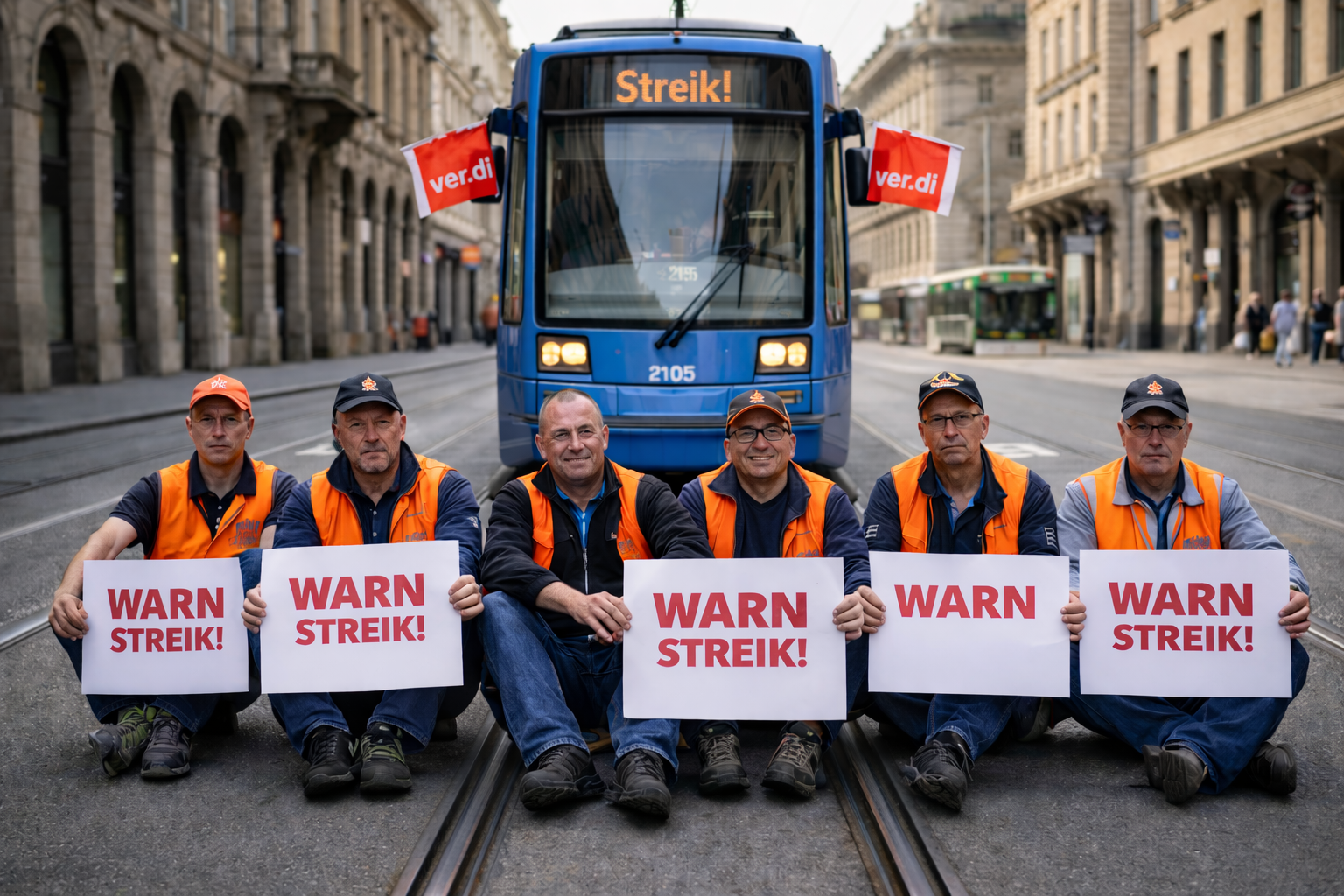

Branches will be closed, call centers will become unavailable, and parcel acceptance will be suspended: yet another warning strike at Postbank will carry consequences for customers. This prediction is made by the financial organization itself, acknowledging the inevitability of a temporary systemic disruption. The Verdi trade union has officially called on employees to hold mass protest actions until Saturday inclusive, which will create a long-term cumulative effect for the country’s entire logistical and banking chain.
After the strike affected exclusively the internal administrative sector of Postbank on Wednesday, the protest measures will inevitably spread to retail branches and service call centers starting Thursday. This action will also be clearly visible at the annual general meeting of shareholders of the Deutsche Bank holding company in Frankfurt. Striking employees intend to join an organized demonstration directly in front of the exhibition hall to draw investors’ attention to social issues. The fact is that Postbank is a wholly owned subsidiary of Germany’s largest financial institution, which places direct reputational responsibility on the parent group. At the same time, for approximately 9,000 employees across the country, a separate, distinct collective bargaining agreement is currently in force, the terms of which have become the core subject of disagreement.
Warning Strike Will Have Consequences for Sending Letters and Parcels
Customers who plan to use the services of brick-and-mortar Postbank branches between Thursday and Saturday are guaranteed to face closed doors or unprecedentedly long lines at those locations that remain operational. The Verdi union has purposefully called for a full-scale strike of employees at 60 key branches located within the territory of Bavaria. According to preliminary estimates by the union itself, critical restrictions and shutdowns will affect more than half of them. This, in turn, will negatively impact customers of the national postal service Deutsche Post, which still provides letter and parcel acceptance and dispatch services in a third of the active bank branches, creating a synergistic crisis effect.
Nevertheless, Postbank’s management retains the legal capability to partially adjust the situation. About 30 percent of the organization’s staff have the special status of civil servants; therefore, they are legally barred from participating in strikes and are required to remain at their workstations. Despite this, the financial organization confirmed in response to an official inquiry from broadcaster BR24 that the protests will entail severe operational consequences: service requests will be processed with significant delays, access to the unified call center will be severely restricted, and interbank transfers will temporarily remain unexecuted. However, technical operations for cash withdrawals at ATMs and digital online banking will continue to function in their usual routine mode.
Wage Compromise Has Not Yet Been Reached
During a tense second round of collective bargaining, Postbank management attempted to improve its initial offer, declaring a fundamental readiness to increase base pay for personnel by 4.7 percent. However, the employer intends to implement this increase in two prolonged stages following a three-month so-called “zero stage” without indexation, while the total term of the new collective agreement is set at 27 months, which does not satisfy the workforce.
An official representative of the financial organization declined to comment on the tactical details of the negotiations and current strikes in a conversation with BR24 journalists, citing the confidentiality of the process. The union’s response to the round that ended without visible results was the immediate announcement of new warning strikes as a pressure tool. Verdi uncompromisingly demands an 8 percent increase in regular pay, but not less than 300 euros per month for each employee. According to union leaders, the employer’s current offer amid inflation means an actual loss of real income for the staff. Official negotiations between the parties will resume on June 15 in Frankfurt.
Employees Anxious About Their Future
Among other things, within the framework of the current case, Verdi seeks to legally secure strict guarantees for the preservation of jobs and the existing branch network. These demands clearly reflect a deep fear among line personnel that the parent group Deutsche Bank may completely liquidate its subsidiary retail structure in the medium term to optimize costs. Like other major European financial institutions, Postbank is systematically implementing a strategy to reduce the number of physical branches in favor of digital platforms. The postal service is also phased out of the long-standing partnership and intentionally plans to provide its logistical services exclusively in its own specialized points and franchise agencies in the future.
Consequently, Postbank employees are already forced to undergo emergency retraining from familiar postal operations to complex banking products. Furthermore, Verdi expresses serious concern over the future of major regional sites in Munich and Nuremberg, where all key back-office administrative work is traditionally performed, including comprehensive account maintenance and the manual processing of problematic transfers. According to verified data from the union, nearly 5,000 people are still employed at these facilities, whereas all retail branches across Bavaria combined employ about 800 staff members, making the administrative sector the most vulnerable in the face of upcoming downsizings.
In conclusion, it should be stated that the current strike at Postbank goes beyond a local labor dispute, exposing tectonic shifts in the structure of German retail banking. For a thinking audience, it is obvious that forced digitalization and Deutsche Bank’s drive to minimize costs inevitably lead to social strain. The ability of the parties to reach a consensus on June 15 will determine not only the income levels of the personnel but also the viability of the traditional hybrid bank-postal service model, which is critically important for conservative segments of German society.