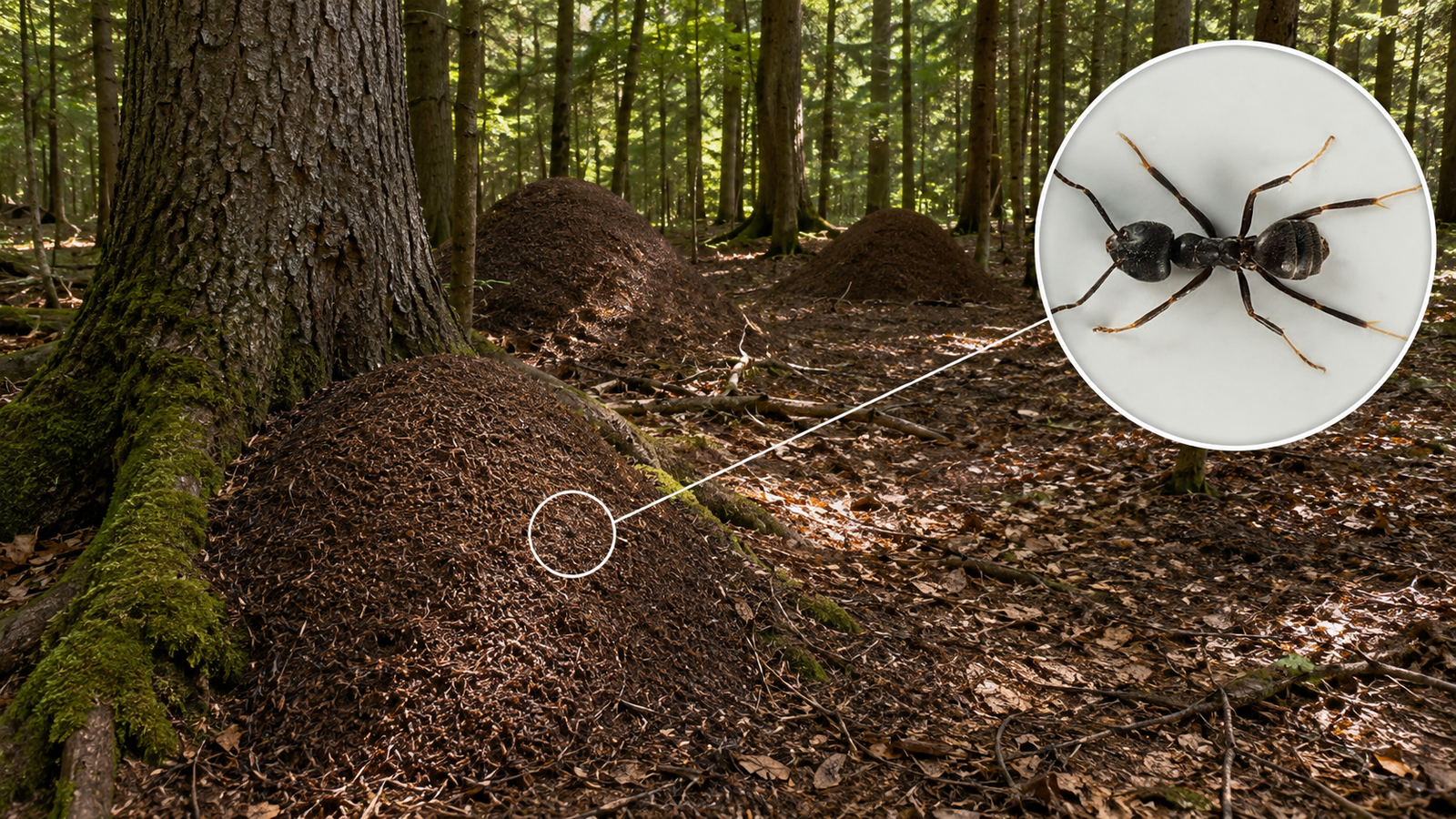

The invasive ant forms colonies on such a scale that they are capable of undermining roads, building walls and power lines. Outbreaks of this species in Bavaria have already been recorded in Aschaffenburg, Hösbach and Nuremberg, and the insect’s range has already begun extending significantly further north across Germany – as far as Cologne and Hanover.
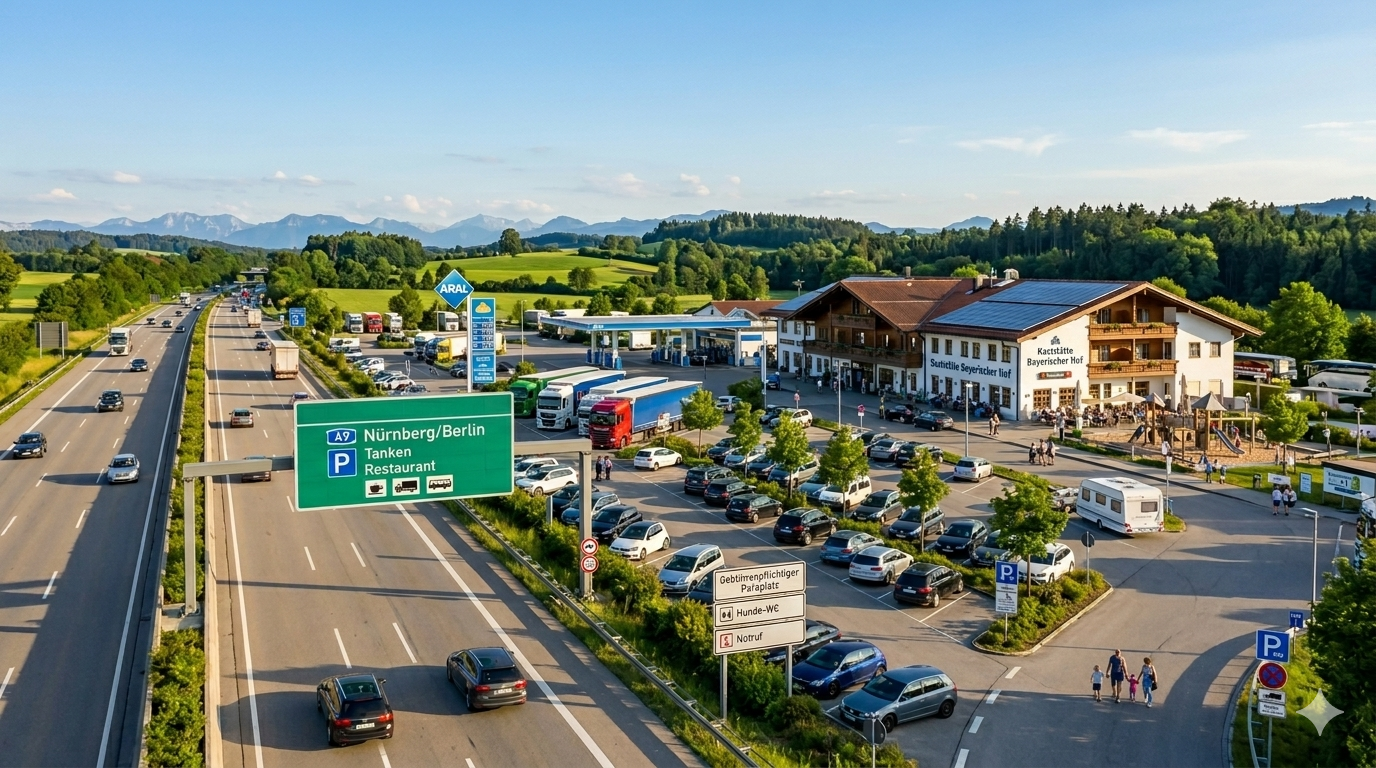
This species originates from the Mediterranean and, according to Germany’s Federal Environment Agency, is classified as a potentially invasive species – although it has not yet been legally designated an invasive species, since the threat to local ecosystems is not considered significant enough. This species of ant readily colonizes areas settled by humans and well-warmed by the sun: roadsides, parking lots, cemeteries, playgrounds and industrial zones. A similar picture is observed outside Germany as well – in France and Switzerland.
Ants are undermining cemetery paths and stonework
The problem has proven especially acute at a cemetery in Hösbach, Lower Franconia. The ants carry soil and loose material from their underground nests up to the surface, causing cavities to form beneath paths, graves and an old stone wall – cavities not visible at first glance.
So far no headstone has toppled, but local authorities consider precisely that scenario the worst-case outcome. If the undermined ground eventually settles, headstones could tilt, and a section of the old masonry could collapse without warning.
Problems have also been recorded on private properties. In one case, ants entered a residential building through a cable duct and old, no-longer-used doorbell wiring. In another building, the insects made their way into the basement, after which damage from these insects spread to the residential apartment on the floor above.
Electrical panels attract the insects with warmth
The ant species favors warm, sheltered cavities, which is why it frequently settles in distribution boxes and electrical panels, bringing in sand and fine soil. This can lead to short circuits and sudden power outages.
The scale of the consequences of this ant species settling in Germany has already become apparent in Baden-Württemberg: in the city of Kehl, ants have repeatedly caused power and internet outages, and one playground had to be closed temporarily. The state government official responsible for environmental affairs called Tapinoma magnum a genuine pest, although the ant has not formally been designated as such.
Beyond the damage to buildings and infrastructure, this species also has a noticeable impact on the ecosystem: it displaces native ants and other insects across large areas, occupying their ecological niche. At the same time, according to the Bavarian State Office for the Environment, the ant does not pose a direct threat to human health.
Super-colonies can number in the millions
Unlike many native species, Tapinoma magnum forms interconnected nests that function as a single network. According to entomologist Manfred Verhaagh of the Natural History Museum in Karlsruhe, these super-colonies contain hundreds of thousands, and at times millions, of worker ants – considerably more than in most other species.
The worker ants are usually black in color, measuring two to five millimeters in length. Within a single colony, a noticeable difference in the size of individual ants can be observed. In summer these ants often form broad, multi-lane trails near their colonies, and small mounds of sand or soil accumulate at the entrances to their nests – a sign by which specialists recognize an infestation even before direct analysis.
When a nest is disturbed, hundreds of insects emerge from underground within seconds. Agitated or crushed individuals release a sharp odor, described as lemony, rancid, or acetone-like. Specialists recommend leaving precise species identification to professionals, since the ant can easily be mistaken for harmless native species by appearance alone.
Imported plants – a likely pathway of spread
According to the Bavarian State Office for the Environment, the ant most often arrives in new areas together with plants and soil imported from abroad. This is precisely why many outbreak sites are located near garden centers, nurseries and industrial zones.
The spread of the species is also facilitated by the transport of soil from already infested sites, including during construction work. The Office for the Environment recommends giving preference to native plants when landscaping, and checking the root balls of purchased saplings for ants before planting them.
How communities are fighting the ants
In Hösbach, for example, the municipal service is using water heated to as much as 120 degrees, injected directly into the underground nests. According to the Bavarian broadcaster Bayerischer Rundfunk, the municipality spent around 30,000 euros on specialized equipment, and the public works department staff underwent training on how to use it.
In Aschaffenburg, a specialized firm is handling a similar problem using hot water and nematodes – roundworms that infect ants.
Specialists consider completely eliminating established super-colonies an extremely difficult task: in some German municipalities, population containment measures have been underway for more than two years without an effective result. For this reason, the goal of the measures being taken is not to eradicate the species, but to weaken the population and contain its further spread.
According to specialists, tackling the ants independently with insecticides is inadvisable: an excess of chemical agents can contaminate groundwater, harm local insects, and, when used indoors, pose a health risk to the people living there. It is recommended that any pest-control measures be coordinated with local authorities or professional pest-control services, and that any suspected infestation of this species on one’s property be reported to the responsible government authority.