
Doctors are far from always able to explain such a difference, and the reason lies in the very nature of the tumor. After all, cancer is not a homogeneous mass but millions of cells, and each behaves in its own way.
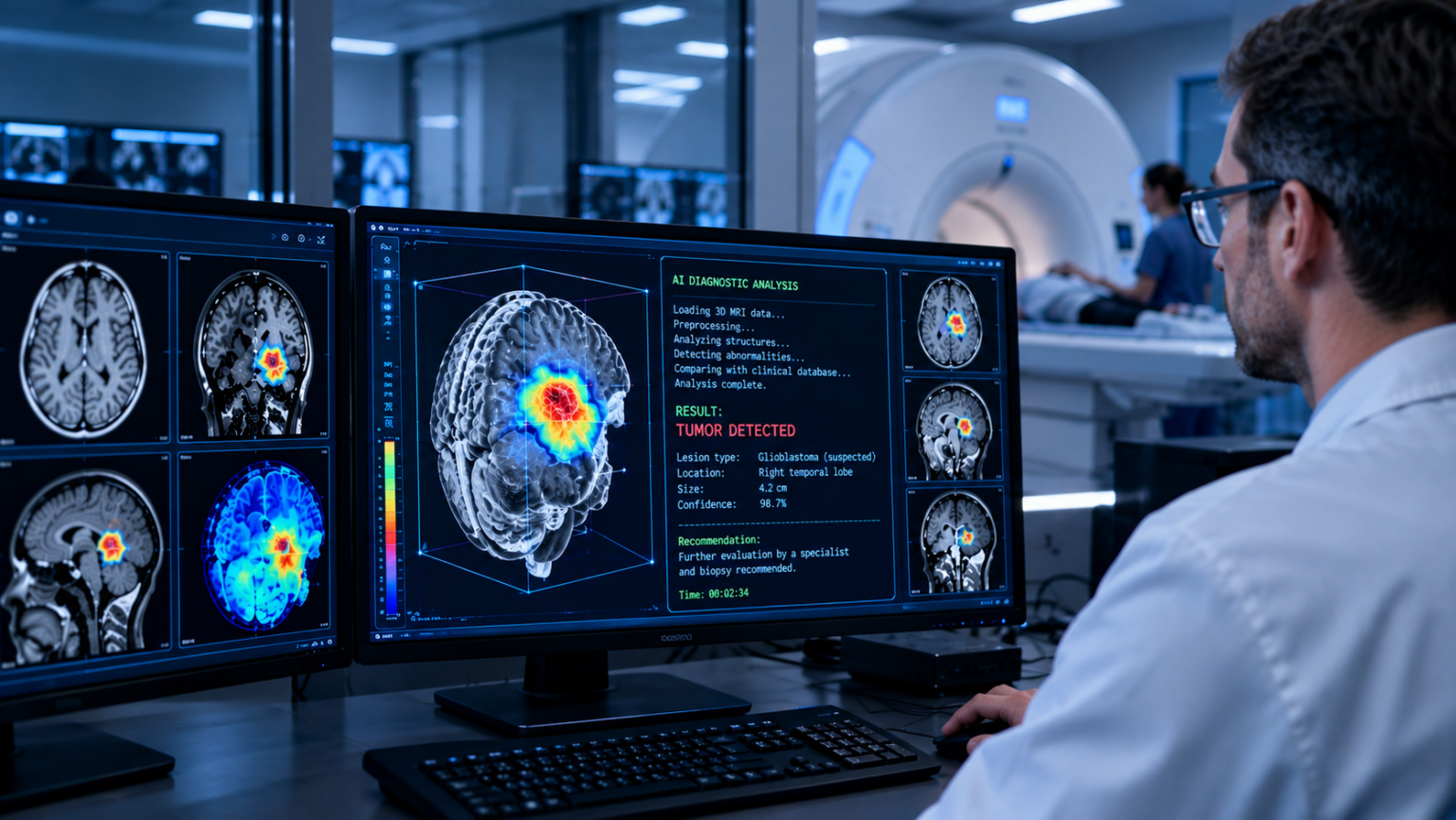
A new tool created by scientists at Ludwig Maximilian University of Munich (LMU) will help peer into this cellular mosaic. They combined single-cell analysis with machine learning. It is expected that in the future such an analytical approach will make it possible to determine in advance which tumor will metastasize and which will not.
An atlas of 2.5 million cells
The basis of the work was the LuCaS+ atlas. It was developed by LMU together with Berlin’s Charité University Hospital and the BIFOLD institute at the Technical University of Berlin. The project was led by Professor Frederick Klauschen, director of LMU’s Institute of Pathology, and the study’s results were published on November 12 in the journal Nature Cancer.
The atlas linked two sources of knowledge. The first is data on gene activity in more than 2.5 million cells. The second is tumor tissue samples from 454 patients with non-small cell lung cancer and their medical histories. It is precisely this combination that oncology has so far lacked: single-cell analysis methods have long been considered cutting-edge, but they have hardly reached the clinic because there were no large databases linking cellular profiles to how the disease progressed in specific individuals.
The stakes here are high. Lung cancer is among the most common causes of death from oncological diseases worldwide. The task is complicated by the fact that even within a single tumor, cells differ greatly in aggressiveness. The conventional classification, which relies on tumor size and lymph node involvement, simply does not notice this heterogeneity.
The voice of each cell
To see it, the scientists used a method that had previously been used on such a scale almost nowhere – single-nucleus RNA sequencing. It makes it possible to read the activity of more than 2,000 genes in each nucleus, even in archived tissue samples. If we compare a tumor to a choir, conventional analysis hears only the overall sound, while this method distinguishes the voice of each singer.
Many groups of cancer cells emerged from the data obtained. Alongside them, cells of the immune system, connective tissue and blood vessels were found, which are also linked to the course of the disease. Then, relying on clinical data, the scientists determined the probability of metastasis for each group of cancer cells.
The practical significance of the work is obvious. It becomes possible to identify patients at increased risk of metastasis while the tumor is still at an early stage of development. It is precisely these people who need special medical attention first and foremost.
Where conventional methods are powerless
Conventional statistics can no longer cope with such a volume of data. Professor Klaus-Robert Müller, director of BIFOLD and a professor at TU Berlin, explains it this way: “When there are millions of cells, classical analysis methods reach their limit. Our machine learning methods, by contrast, recognize even the smallest differences between individual cell types. This allows us to link such patterns directly to the course of the disease in specific patients.”
The tumor and its environment
In the second stage, the scientists took into account the tumor microenvironment – the cells of the immune system, connective tissue and vessels that surround it and interact with it. A tumor does not exist in a void, since whether the disease spreads and whether treatment works largely depends on its neighbors.
A joint analysis of the metastatic potential of cancer cells and their environment produced a universal model. It assesses the course of the disease and refines the prognosis in both directions. The model identifies patients whose risk of recurrence is higher than previously thought, and those whose prospects, by contrast, turn out to be better than expected. The conclusions were confirmed on an independent group of patients as well.
Why this matters
For lung cancer patients, an accurate forecast of metastasis is a chance for doctors to notice earlier those patients who are threatened by metastasis and recurrence. At the same time, it spares unnecessary anxiety for those patients whose prospects are better than standard medical classification by tumor size and lymph nodes allowed one to judge.
This work continues the research of the same team, when a year earlier scientists from Munich and Berlin presented a method that uses artificial intelligence to more accurately assess the risk of lung cancer recurrence. The authors have published the new model for the scientific community. And their main goal for the atlas is to find starting points for new types of therapy.