
That is the conclusion of Samuel Jalalyan, a sociologist at Ludwig Maximilian University of Munich (LMU) who studies inequality in education and wealth distribution. In an interview with tz, the Erlangen native explained where poverty comes from and why the welfare state, for all its strengths, often runs up against its limits.
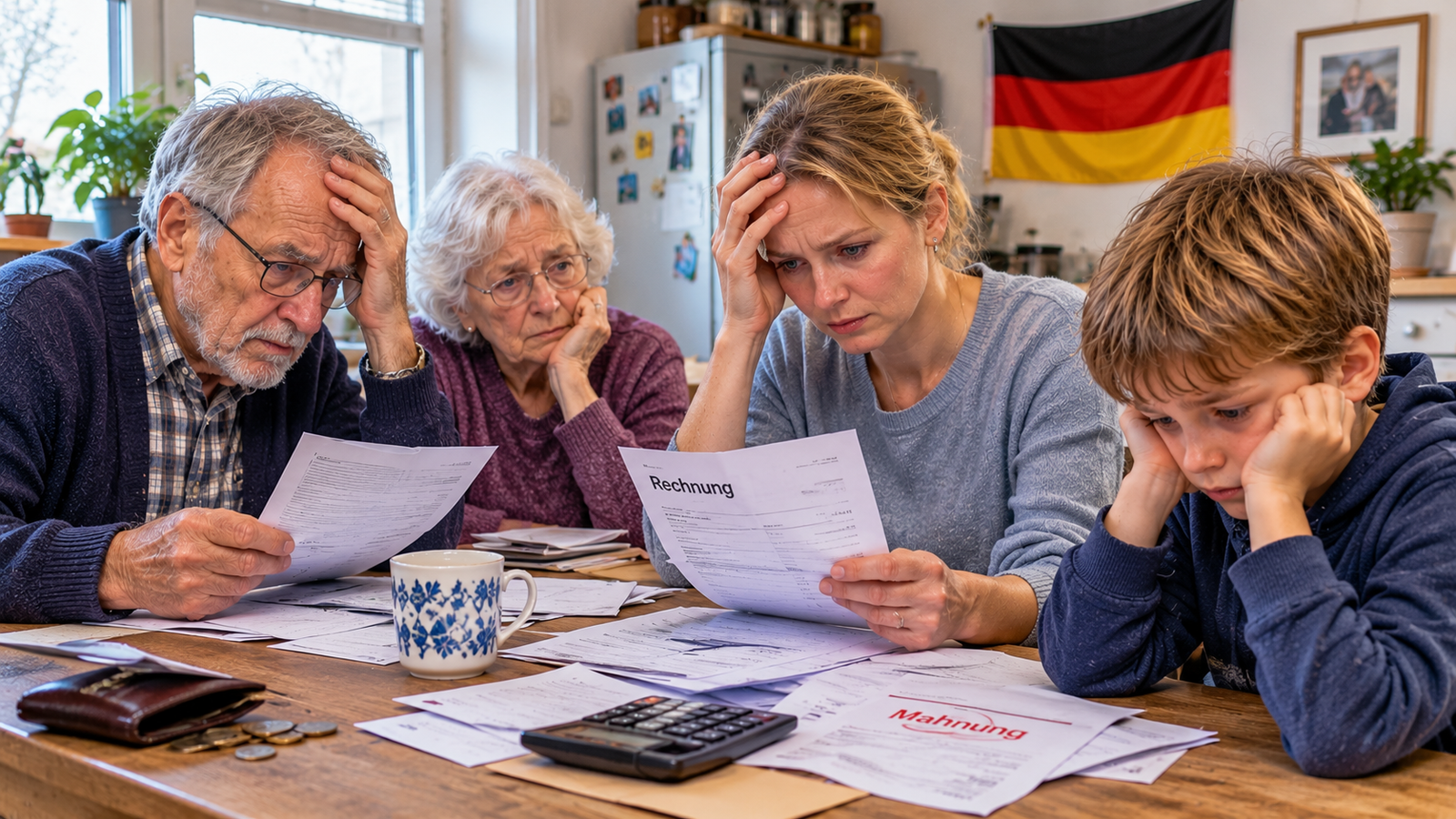
Jalalyan describes a mechanism that many prefer not to notice: poverty in Germany is often passed from parents to children. Children from low-income families are most at risk, as are people who fall ill or lose their jobs. According to the sociologist, education determines the chances of rising out of poverty, and the welfare state cannot guarantee a way out of it.
An undeserved inheritance of poverty
Jalalyan disagrees that poverty arises through a person’s own fault. “We are indeed responsible for our actions, but our opportunities and obstacles in life are also determined by the social conditions in which we live,” he emphasizes.
The sociologist starts with the parental home
In 2024, one in seven children in Germany was at risk of poverty. For children with a migration history, this risk was four times higher than for the native population.
“Anyone who grows up in such conditions, on average, receives less support in the family, has worse chances in education and more often ends up in low-paid work,” Jalalyan explains. In addition, our schools are geared toward the idea that a child born in Germany who speaks German fluently has better chances of a good education starting from primary school than children with an immigrant background. Performance is assessed in primary school, based on knowledge of three subjects, one of which is German. As a result, a migrant child is forced onto vocational tracks at an ordinary secondary school, even with a higher IQ than a child born in Germany. He calls this an undeserved inheritance of poverty.
A person can also become poor for reasons beyond their control: illness, job loss, divorce or caring for relatives. The sociologist regards poverty caused by one’s own fault as a marginal phenomenon. According to his data, in 2024 only 0.4 percent of healthy Bürgergeld recipients were not working although they could.
Education as the key – and the limits of the welfare state
Jalalyan names education as the main lever of social advancement. “A school-leaving certificate, good vocational training or a university degree is a condition for work that secures a person’s livelihood,” he noted.
The so-called “education funnel” of the German Centre for Higher Education Research and Science Studies (DZHW) shows how large the gap is among students. Of 100 children in families with higher education, only 78 begin university studies. In families without higher education, the figure is even lower – 25 percent.
According to the sociologist’s assessment, the welfare state reliably supports people who are struck by illness or job loss. He calls this its strong point. But, Jalalyan continues, it is harder to lift people out of poverty for the long term. In Bavaria, high rents and the cost of living exacerbate this problem. And he adds: “At the same time, it is easy to lose sight of what enormous fortunes are concentrated at the top end of the financial distribution.”