
It is also available to working people who do not receive social benefits. Below are the offers available in Bavaria and the measures applied against non-payers when disconnection is threatened.
Energy has become almost half more expensive
Heating, hot water, cooking: household energy, including electricity, gas and heating oil, cost an average of 48.6 percent more in Germany in October 2026 than the average since 2020. In Bavaria, prices for the same services rose by 45.4 percent over the same period. These data are provided by statistical agencies.
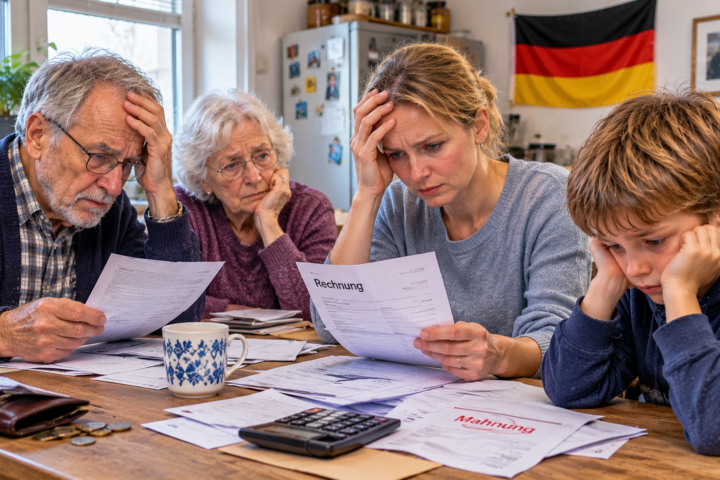
What should you do if there is not enough money for the next advance payment or the year-end supplementary payment? Where can you turn in Bavaria, and what support can working residents of the region who do not receive benefits get? Let us try to sort this out.
Where to start if there is no longer any way to pay for energy
“People should contact their energy provider as early as possible and ask to pay off the debt in installments,” explained one of the specialists at the Consumer Advice Center. If no agreement can be reached, they should start looking for help.
If payment reminders or letters from debt collectors have already arrived, Bugert advises keeping all letters together with their envelopes and recording the date of receipt. The claims must be checked and, where possible, answered immediately in writing.
What help offers exist
In addition to the Consumer Advice Center, charitable organizations, Jobcenters and social services also advise on problem cases. They help arrange installment payments or a deferral of payment. Under certain conditions, Jobcenters also provide financial support, both to benefit recipients and to working people who do not receive benefits.
General social counseling by Caritas helps with financial issues and problems, said Tobias Utters of the Bavarian state association of Caritas.
Debt counseling services also operate when there are financial difficulties; they can contact creditors. In addition, Caritas carries out an electricity-saving check (Stromsparcheck): on site, they explain how to reduce energy consumption and costs.
The Consumer Advice Center Bavaria also helps with problems concerning already issued energy bills, as well as with changing providers and with the problem of price increases. Counseling on these issues helps clarify how to save energy. To a limited extent, counselors also help with communication with the provider.
What can those receiving benefits from a Jobcenter request?
A Jobcenter can cover heating costs, including supplementary payments for past periods. Bills must be submitted to the Jobcenter immediately after they are received. Electricity for the home, by contrast, is included in the standard benefit rate and cannot be paid as additional assistance.
Special rules also apply to electric heating and electric water heating: it is precisely for these that an additional payment can be requested. If debt to the electricity provider threatens disconnection, the Jobcenter can provide a loan that will later have to be repaid.
Can help reach working people?
Yes, support can also be received by working people and by households that do not receive benefits from a Jobcenter. One option is the housing allowance (Wohngeld). This is a supplement to rent that also takes rising energy costs into account.
Another option, which in acute cases often proves more useful, is a supplementary payment from the Jobcenter. Working people with insufficient income can request additional payments. In that case, heating costs are also covered.
Some municipal energy companies, municipalities and social associations offer hardship funds or social tariffs. But these offers must be sought on the official websites of a particular region or city.
When a provider has the right to disconnect electricity
Disconnection is permissible only if several conditions are met at once:
the arrears amount to at least 100 euros;
- the arrears amount to at least twice the monthly advance payment;
- the debtor was warned in writing at least four weeks before disconnection;
- the specific disconnection date was separately announced eight working days before the disconnection itself.
If disconnection threatens health or life, for example because of illness or age, it is not permissible. Additional protection against disconnection applies to children and chronically ill people.