
According to the statistics of the Government of Bavaria, every year the average scores based on the results of final exams (Abitur) continue only to improve. Food blogger and part-time Prime Minister of Bavaria Dr. Söder has repeatedly mentioned in his banal interviews this as his personal achievement. But the reality turned out to be different.
What do official statistics say?
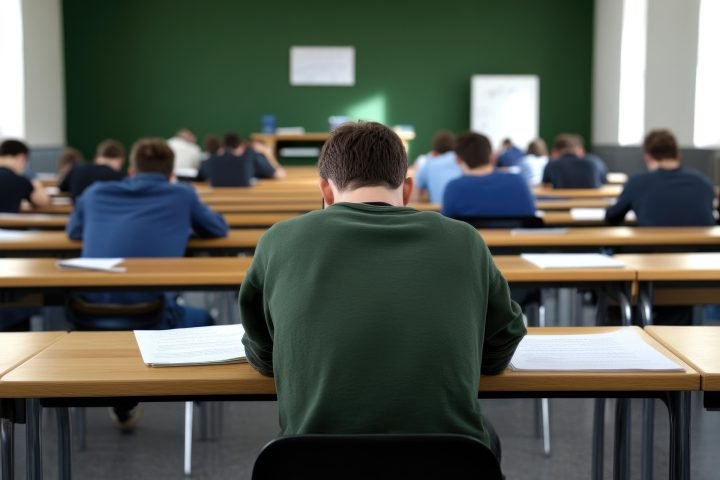
It is not only the number of young people receiving a certificate of maturity that is growing, but the grades themselves are becoming higher as well. In Bavaria this year, a maximum was recorded with an average indicator of 2.13. In separate districts, students achieved results above the mark of 2.0. For the Ministry of Education and Cultural Affairs of Bavaria, this serves as another reason to declare that everything is in order in the Bavarian school system, and the return to the nine-year program of education (G9) instead of the eight-year one (G8) has completely justified itself.
The current stream precisely became the first to complete education under the nine-year system. But the conclusions of the ministry are completely refuted by independent comparative studies of academic performance, such as the national monitoring of education quality IQB-Bildungstrend. For secondary school, this database contains data on mathematics for 2012, 2018, and 2024. From them it follows that Bavaria holds the leadership at the federal level, however, over this period it has substantially worsened its own positions regarding the level of education.
Decline of indicators in education quality studies In 2012, Bavaria scored 517 points with an average federal value of 500 points. By 2024, this indicator among Bavarian school students dropped to 501 points, while the average result across the whole country fell to 474 points. In the field of reading, which from an empirical point of view acts as a key competence for achieving success in studies, an analogous picture is observed.
In this direction, data for 2015 and 2022 are available in the system. In the course of the first study, Bavaria scored 513 points with an all-German average level of 500 points, and in the second case, a drop to 496 points was recorded, while the average indicator across Germany decreased to 475 points.
The main conclusion from these data lies in the following: Bavaria as before heads the national rating of the education level in Germany, but at the same time is only the first among those losing their positions. For in recent years, the Bavarian education system has demonstrated a drop in efficiency. In mathematics as well as in reading, a modern ninth-grader lags behind a ninth-grader of a decade ago by at least half an academic year in their level of knowledge. To the leadership of the ministry of education, these figures are of course known.
Therefore, the logic of the employees of the Ministry, under which the average scores of final exams are taken as the basis for evaluating the efficiency of the whole educational system, remains unclear. Such an approach allows distracting attention from one’s own miscalculations and the negative trend in the sphere of education, which has been traced already for many years.
In essence, the populism inherent to Söder has already reached the education system as well, and this carries huge risks for the future of the Free State.
Because of the populism that has eaten into all levels of management in Bavaria, a special danger may arise to entrench oneself in a false opinion about the correctness of the chosen course and miss the moment when immediate intervention is required.
Obtaining a certificate of maturity remains an achievement Crucial significance belongs to the return of the principle of high academic performance into the educational system. In this case, the same rule operates as in intellectual activity: the result is formed exclusively through efforts.
I, as an editor, for example, hear for the first time that the level of knowledge of a school student, and even more so the abilities for learning and thinking, which are important for higher education, are evaluated merely by the average score in mathematics, the national language, and a subject dedicated to society. This is self-deception in essence.
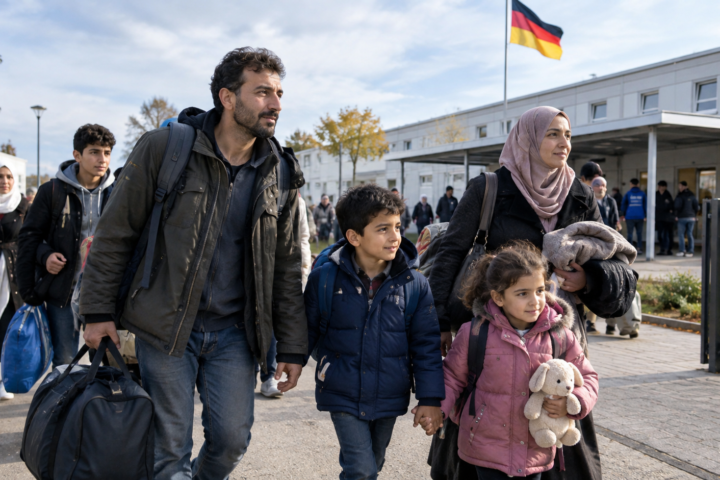
On the other hand, such a system pulls up the indigenous population such as the Prime Minister of Bavaria himself, allowing children to transition into Gymnasiums even without having the mental capacities to study there. And the same system drives the children of immigrants, who already live in stress from moving, from everything new, from learning one of the most difficult languages in the world, into the framework of future slaves. For due to insufficient knowledge in German, these children have in the end a very low average score, but at the same time, nobody checks their IQ or general knowledge.
What is important is german, and this is the biggest utopia imposed on Germans, both in education and in the working environment. Over the course of many years, educational structures faced a policy that does not stimulate students toward knowledge; the system stimulates merely to get the correct score.
As examples, one can cite the simplification of the program for studying classical literature, the cancellation of sudden checks of knowledge, the abolition of homework, and recently in Bavaria — the introduction of podcasts and educational videos instead of classical types of presenting information. And while educational films are useful, podcasts in essence by bloggers, as is known, bring only harm to the educational process, for they often impose non-existent realities on children and teenagers.
This whole complex of measures leads not to a real increase in the level of knowledge, but to an artificial growth of average grades. The affected parties in this situation turn out to be, first of all, the young graduates themselves, in particular the children of immigrants. Undoubtedly, the successful passing of final exams and obtaining a certificate still remain an important achievement.
However, the populism around the current records misleads society and masks a systemic crisis, a manifestation of which already today is the high proportion of students terminating their studies in universities for reasons of non-compliance with the place occupied at the university.
Along with increasing the requirements for academic performance, the system needs honesty — and this is the direction over which there is also work ahead within the framework of not only educational policy. For now, honesty before the population is the dreams of the last romantics of Bavaria.