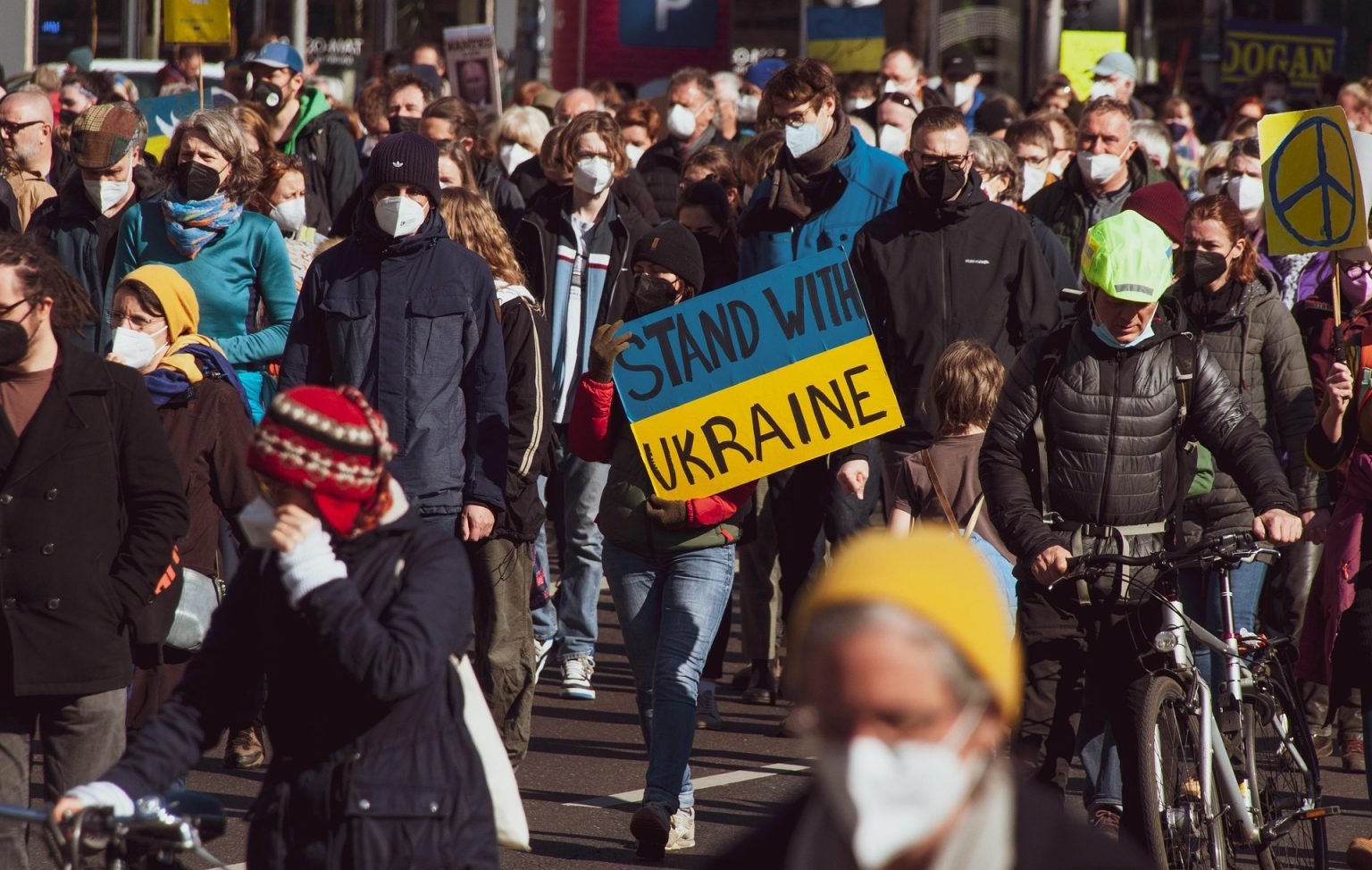

Similar preemptive assertions have been increasingly voiced recently by certain European pro-Russian-minded politicians and are causing stormy discussions in the internet community. Within the framework of the comprehensive fact-checking project, our analysts have found out in detail in exactly what legal and economic form Germany provides support to the country facing a crisis, and whether the funds of German taxpayers can directly enter the Ukrainian social security system to cover the internal obligations of Kyiv.
Main Theses of the Distributed Slogans
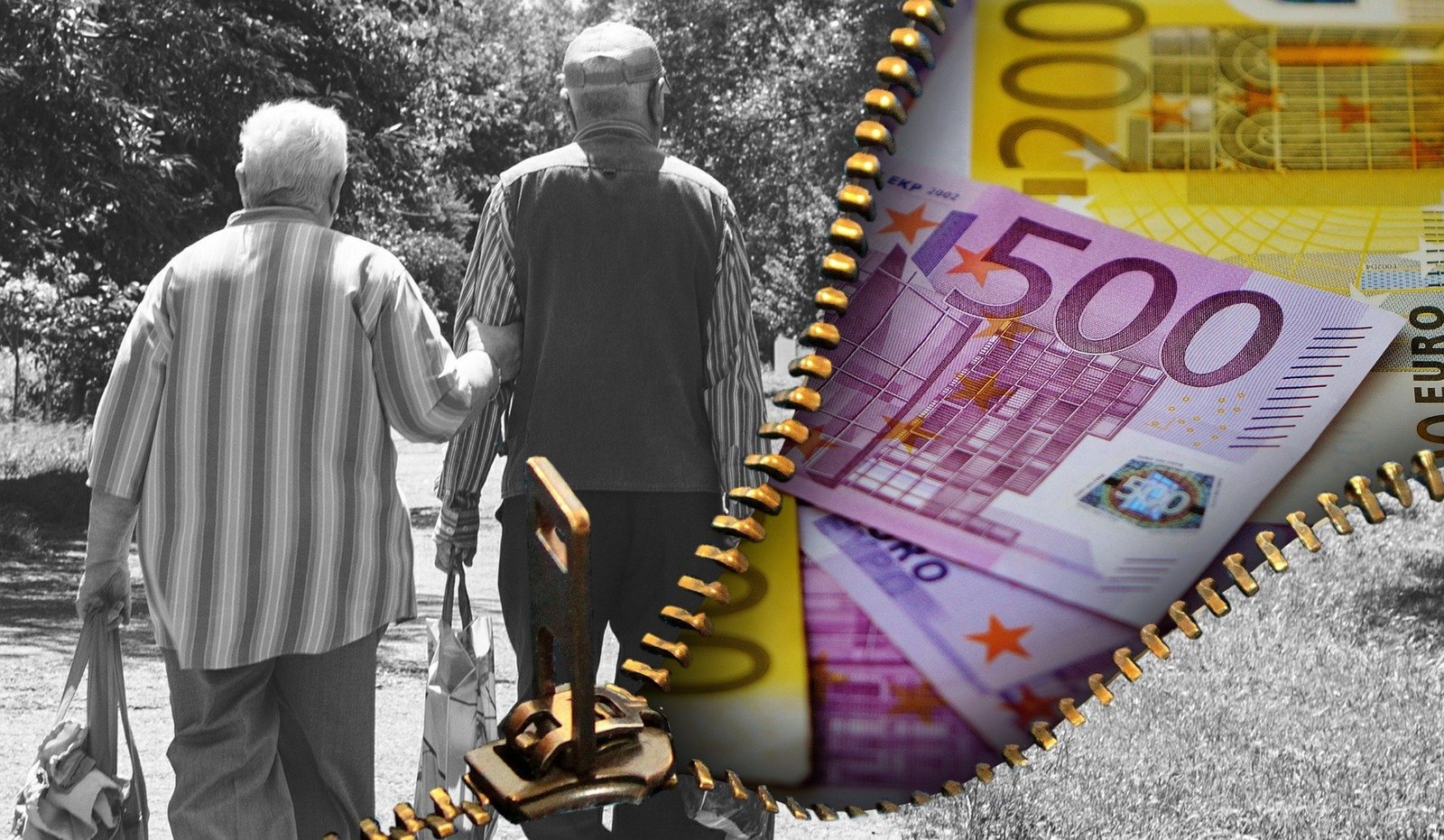
The average pension in Ukraine today amounts to the equivalent of about 130 euros per month. The current planned increase in payments is intended to partially compensate citizens for the high level of internal inflation and, when converted into European currency, represents a modest sum of between 2 and 50 euros per month, depending on the specific category of the recipient.
The greater part of consolidated German assistance to Ukraine has a strict targeted designation. A comparatively small share of funds without a rigid link to humanitarian or defense projects can directly enter the state budget of Ukraine and, thus, only theoretically be used for the co-financing of social obligations and pension payments.
The European Union provides Kyiv with significantly more financial assistance without a fixed targeted designation. However, these large-scale funds mostly represent loans that Ukraine is legally obliged to return in the long term and under very strict conditions.
On what exactly does Ukraine spend the colossal financial assistance received from Germany and the European Union as emergency support? These funds partially have a strict targeted designation and are directed, for example, toward the national defense of the country or international humanitarian projects. However, a certain, flexible part of the support can legally be spent on other urgent state needs, including the maintenance of general macroeconomic stability.
And now let us analyze each slogan distributed on the internet by some politicians and many bloggers.
Assertion: German Money Is Allegedly Going to Ukrainian Pensions
A Member of the European Parliament from the right-wing populist party “Alternative for Germany” (AfD), Petr Bystron, sharply commented on the recent indexation of social pensions in Ukraine. In his official publication on the social network X, he wrote the following: “Pensions in Ukraine have grown by 12 percent! At our expense! While German pensioners are forced to collect bottles.”
To the official request regarding what exact evidence he possesses for the documentary confirmation of his words, Bystron had still not replied at the time of the material’s publication. Perhaps within the framework of a libel case, he will find more opportunities to justify himself.
How economically justified and correct is this loud assertion?
Bystron is right exclusively in that narrow sense that Ukraine indeed has the legal opportunity to use part of the incoming international assistance for current state expenditures, including mandatory pension payments.
The use of a certain share of foreign funds for these social purposes was initially explicitly provided for by such large institutional donors as the European Union and Germany, for the sake of preventing a humanitarian collapse.
However, the opposition politician completely loses sight of the most important economic context, namely the real size of these funds, as well as the ratio of strictly targeted and untargeted macro-financial assistance in the total volume of German support.
The assertion that the large-scale increase in payments in the current year was funded exclusively through direct contributions of German taxpayers is fundamentally incorrect and manipulative, essentially libel.
Journalists conducted a detailed study of the complex mechanism of pension indexation in Ukraine and directly turned to the profile state bodies and to leading specialists to find out to what extent German and European resources can be attracted for this.
In this material, exclusively the funds incoming from Germany and the EU are considered in detail. Other international sources of support (for example, the International Monetary Fund) are not taken into account within the framework of this analysis due to fundamentally different mechanisms and smaller volumes of direct financing.
What Is Behind the Pension Increase in Ukraine?
According to the official regulatory decision of the Cabinet of Ministers of Ukraine, from March 1, 2026, state pensions in the country were indeed increased by 12.1 percent. This percentage of planned indexation is calculated according to a strict, legally established formula, which excludes a subjective political factor.
By half, this macroeconomic indicator depends on the recorded level of inflation for the previous financial year, and by the other half — on the dynamics of the average wage growth across the country over the last three years. Since both of these parameters in Ukraine, for objective reasons, turned out to be quite high based on the results of 2025, the final calculated value amounted to 12.1 percent. Fixed payments grew by a minimum of 100 hryvnias and a maximum of 2,595 hryvnias. When converted into European currency at the current commercial exchange rate, this range represents approximately from 2 to 50 euros.
“The indexation of pensions in Ukraine is a mandatory, legally consolidated mechanism that protects the basic income of the most vulnerable layers of citizens from rapid depreciation due to inflationary processes,” Denis Ulyutin, an authorized representative of the Ministry of Social Policy of Ukraine, separately noted in an official press release.
As of January 1, 2026, there were about 10.1 million pensioners in Ukraine. At the same time, the average size of the monthly payment amounted in equivalent to just under 130 euros per month. It is important to emphasize that more than half of all recipients had a real income of less than 100 euros when converted into European currency, which indicates an extremely difficult humanitarian situation.
Ukraine Subsidizes the Pension Fund from the State Budget, but Can Use Foreign Untargeted Assistance for This
In 2026, the Pension Fund of Ukraine, which besides the payment of basic pensions also carries out the financing of housing subsidies and other types of targeted social assistance, received a large-scale subsidy from the aggregate state budget of the country in the amount of about 3.8 billion euros. This constitutes approximately 16 percent of all aggregate expenditures of the fund. As in Germany itself, own internal collections from insurance contributions of the working population do not cover the current expenditures of the Pension Fund to the full extent. For 2026, the aggregate expenditures of the state budget of Ukraine are planned in the volume of 93 billion euros.
In order to direct the funds of German taxpayers in a targeted manner to Ukrainian pensions, Kyiv must first officially account for German or international financial assistance with the equity participation of Germany as revenues of the state budget, and then directly transfer this money to the accounts of the Pension Fund of Ukraine. This transparent mechanism has never been hidden from the international community: the European Commission regularly stated that macro-financial support from the EU is aimed primarily at maintaining the financial stability of Ukraine, so that the country could uninterruptedly pay basic salaries to public sector employees and pensions.
According to official data from the Center for Analysis of Public Finance and Public Administration at the Kyiv School of Economics, such a movement of monetary funds does indeed occur in practice. Leading analysts of this institute, in response to an official request from journalists, reported that untargeted international budget support is actively deployed for financing current expenditures of the state budget of Ukraine, including the entire social sphere.
“Thus, international budget assistance indirectly but tangibly contributes to the financing of expenditures of the Pension Fund of Ukraine — exactly in the same way as to the financing of other critically important items of the state budget, such as education, healthcare, social protection, or public administration.” At the same time, the Ukrainian government did not reply to a direct request from journalists at the time of the article’s publication.
German Assistance to Ukraine Mostly Has a Targeted Designation
Since the very beginning of large-scale military actions, Ukraine has been receiving various types of support from partners. According to official data from the federal government, Germany, from the beginning of the conflict and as of March 31, 2026, has provided or officially reserved for Ukraine assistance for a total impressive sum of 96.5 billion euros.
About 55.5 billion euros from this sum falls exclusively on military support — for example, the direct transfer of heavy tanks or modern air defense systems from the stocks of the Bundeswehr, as well as the targeted purchase of new armaments from defense enterprises. That is, Ukraine does not physically receive this money.
Into this total sum of support, the government of Germany has also included its internal expenditures, such as the payment of civil benefit (Bürgergeld) for Ukrainian refugees located inside Germany, payment for mandatory German language courses, or state programs for qualification upgrade. For this reason, the share of the Federal Ministry of Labor and Social Affairs amounts to 25.6 billion euros.
Into the Pension Fund of Ukraine can hypothetically flow only that German money which is directed directly to Kyiv and at the same time initially does not have a rigid targeted designation. On the request of journalists, in the government circles of Germany it was clearly explained: “Military and civil assistance are fundamentally tied to specific goals, for example, are provided in the form of strict financing of projects or certain international organizations.”
This means that the main part of German funds physically does not get directly into the Ukrainian state budget for free distribution. For example, the Ministry of Foreign Affairs of Germany directly finances the purchase of industrial electrical generators, and the Ministry for Economic Cooperation and Development supportively addresses the creation of modern prosthetic workshops and rehabilitation centers for the wounded in a targeted manner.
The Volume of German Assistance Without a Targeted Designation Is Significantly Smaller
Financial assistance which Ukraine can dispose of freely on the internal market and which it at the same time is not required to return to donors has much smaller volumes than opposition politicians assert. As officially reported in the Ministry of Foreign Affairs of Germany: “Financial assistance for ensuring the capability of the state apparatus, provided up to the present time in the form of non-repayable subsidies, amounts to about 1.34 billion euros.”
This data on the whole fully coincides with the independent data of the social project Ukraine Support Tracker of the Kiel Institute for the World Economy.
Researchers of this center continuously gather information about all real volumes of support for Ukraine. According to their databases, by June 2026, only 1.65 billion euros of untargeted financial assistance has been recorded in Germany, a certain part of which was provided in the form of returnable loans.
“On the whole, our indicators practically completely correspond to the official statements of the German government. If one considers exclusively non-repayable subsidies, then our final figure amounts to about 1.3 billion euros,” noted the head of the project Ukraine Support Tracker, Taro Nishikawa, in a conversation with journalists. For this reason, on the basis of these figures, it is impossible to determine with mathematical precision what exact sum could have gone specifically to pensions.
If one relies in detail on the official statements of the German authorities, the following picture emerges: out of almost 97 billion euros which Germany, by its own calculations, has allocated for the support of Ukraine since 2022, only about 1.3 billion euros could theoretically have been partially directed to the payment of Ukrainian pensions.
Even When Using Untargeted Assistance Ukraine Is Obliged to Fulfill the Conditions of Donors
There are very weighty economic reasons for which part of international financial assistance is provided in a more flexible form, explains Taro Nishikawa. Ukraine is now under serious financial pressure and is currently forced to spend more than 56 percent of its state budget on national defense. In such extraordinary circumstances, it is critically important to maintain the overall liquidity of the banking system and ensure the basic work of state institutions. “Therefore, international donors deliberately allow a certain flexibility in the use of funds — not out of abstract generosity, but out of considerations of rigid macroeconomic necessity.”
At the same time, similar flexibility by no means means the absence of total control on the part of partners.
The expenditure of funds is rigidly regulated by complex mechanisms of monitoring by EU commissions and transparent reporting, fully corresponding to strict international standards.
“There are rigid conditions which Ukraine is obliged to observe, otherwise the receipt of further financial tranches will turn out to be under direct threat.”
(In more detail, this economic mechanism is discussed below. — Ed.)
Assistance on the Part of the EU Consists Predominantly of Loans, and Not Direct Payments from the European Budget
Significantly larger volumes of direct financial assistance Ukraine received on the part of the European Union. Here targeted support is also present, for example, for the purchase of modern armaments. However, within the framework of macro-financial assistance (MFA) programs, about 43 billion euros has been aggregates-wise paid to Ukraine since 2022 in the form of loans and subsidies, which the country can legally use for covering the deficit of the state budget.
Through the special fund Ukraine Facility, created for the long-term recovery of the country, according to official data from the European Commission, on the order of 29.5 billion euros of untargeted funds has entered by now. In addition, in 2026 and 2027, Ukraine must guaranteed receive another 30 billion euros for budget needs. Thus, the total volume of financing along this line of the EU for the indicated period will amount to no less than 103 billion euros.
Financial assistance for 2026 and 2027 also initially does not have a rigid targeted link inside the Ukrainian budget, confirmed well-known economist Harry Polushkin in a conversation with journalists.
“In the case of this financial assistance, Ukraine can in general terms independently determine priorities, whether to direct the funds of the European Union to social support of the population or to the stimulation of economic policy.”
Polushkin coordinates projects on Ukraine in the consulting company Berlin Economics, which advises foreign governments on economic policy issues within the framework of a project directly financed by the Ministry of Economics of Germany.
The European Commission officially confirmed upon the request of journalists that these regular payments represent general budget support.
In the European Commission it was noted: “Such forced flexibility guarantees that Ukraine can dynamically allocate resources for meeting its most urgent social needs.”
Reforms in Ukraine Are a Condition for the Allocation of Funds
Although these large-scale funds on the part of the EU do not have a rigid targeted designation, they are not provided to Kyiv unconditionally. A mandatory legal condition is the ensuring by Ukraine of the stable work of democratic mechanisms, strict observance of the rule of law and human rights, pointed out in the European Commission. In the reply to the request of journalists, representatives of the structure emphasized that the allocation of each tranche is accompanied by strict measures for combating fraud.
Within the framework of the agreed plan of reforms (Ukraine Plan), Kyiv took upon itself clear obligations before the EU for conducting deep structural transformations in exchange for receiving financial assistance. A special monitoring body independent of Ukraine carefully checks that the allocated European resources are not used for fraudulent or corrupt schemes on the ground.
Financial assistance is paid strictly in shares (tranches) in direct dependence on real progress in conducting reforms, explains Polushkin. If the planned transformations are not carried out on time, the payment of the next tranche is immediately suspended.
For example, the Ukrainian edition Kyiv Post reported that the EU is temporarily delaying the allocation of funds, since a staff of qualified employees for the specialized anti-corruption court has still not been formed in sufficient numbers in Ukraine.
European Loans Were Raised on the Capital Market
Does real money of German taxpayers enter the Ukrainian pension system through EU channels in such a case?
Only in part. Within the framework of the Ukraine Facility program, about 5.2 billion euros was paid to Ukraine, which is not subject to return. These funds come directly from the general budget of the EU, reported in the European Commission. The budget of the union is formed predominantly through the contributions of member states, accordingly, Germany participates in this process indirectly, proportionally to its share.
However, the predominant part of financial assistance to Ukraine is initially physically not taken from the current budget of the EU. For example, for macro-financial assistance programs, the European Commission independently raised large loans on the international capital market and then transferred these funds to Kyiv. The EU budget and solidarity guarantees of member countries act in this case merely as a general guarantee for these loans.
A similar mechanism operates for the Ukraine Facility programs and the general loan in support of Ukraine (Ukraine Support Loan): the EU takes loans on the open market and redirects them to the Ukrainian side. Up to this point, the funds of German taxpayers do not enter Ukraine directly through EU institutions.
European Loans: Various Types of Conditions for Ukraine
In theory, these loans must be over time completely returned by Ukraine. Since financial assistance from the EU came in stages and in separate parts, specific conditions for the loans differ significantly. For example, the European Union partially takes upon itself expenditures for the payment of interest for some Ukrainian loans, covering them from the EU budget. In this financing, Germany and other member states again take an indirect part.
Since 2024, these loans are also indirectly repaid at the expense of Russia: for this, revenues from Russian assets blocked on the territory of the EU are used.
The largest package of assistance from the EU to date for a total sum of 90 billion euros is arranged so that Ukraine must begin the repayment of the loan only after it receives war reparations from the Russian Federation to the full extent.
What Will Happen if Ukraine Cannot Return the Funds?
But what will happen in the long term if Ukraine cannot or will not have to return the EU loans — for example, if Russia never pays reparations?
“If reparations are not paid, the Union reserves the legal right to use frozen Russian assets for the repayment of the loan in full compliance with European and international law,” replied the European Commission to the official request of journalists.
Nevertheless, complex geopolitical scenarios are fully probable in which frozen Russian resources turn out to be temporarily or completely unavailable for the repayment of the debt. This can happen in the case of a lack of consensus inside the EU, if the funds are returned to Russia based on the results of peace negotiations, or if international judicial instances prohibit their use.
Well-known economist Friedrich Heinemann from the Center for European Economic Research (ZEW) in Mannheim, in an interview with the publication Die Welt, noted: due to the securing of loans through the pan-European budget, an indirect solidarity responsibility of the EU member states ultimately arises, and means, also of Germany itself. It is worth noting that Slovakia, the Czech Republic, and Hungary did not participate in the provision of this specific loan.
As of today, it is impossible to conclusively answer the question of whether it will be necessary to deploy direct money of German taxpayers for the repayment of these loans, believes Taro Nishikawa from the Institute for the World Economy in Kiel. “There is too much macroeconomic uncertainty, therefore at this stage experts do not have a final answer.”
Results of the Check
Summing up the results of the comprehensive analysis, it can be asserted that the assertion regarding the possibility of Ukraine using international assistance without a targeted designation for its state budget — and, accordingly, for the payment of pensions — completely corresponds to reality, but is skillfully manipulatively twisted.
But, the support that Germany has provided directly so far bears a predominantly strictly targeted character. Out of almost 100 billion euros allocated since 2022, only about 1.3 billion euros entered Ukraine in the form of non-repayable untargeted subsidies and could hypothetically be directed toward pension provision.
Significantly larger volumes of funds for general budget needs Ukraine received on the part of the European Union. Since a certain part of this money passes in the form of subsidies through the general European budget, Germany co-finances them indirectly.
The main mass of EU assistance is loans that Kyiv is obliged to return. Since the EU takes upon itself the payment of interest on a number of loans, the funds of German taxpayers are also indirectly deployed here. In addition, the risk remains that the EU and, accordingly, the member countries will be forced to independently cover these loans if the Ukrainian side cannot execute the payments in the case of frozen Russian assets not being deployed in post-war reparations.
Sources
Interviews and Official Requests:
- BR24 interview with Taro Nishikawa, head of the Ukraine Support Tracker project at the Kiel Institute for the World Economy.
- BR24 interview with Harry Polushkin, consultant and coordinator of projects on Ukraine of the German analytical group German Economic Team.
- Official request of BR24 to the government of Germany and the Ministry of Foreign Affairs of the FRG.
- Official request of BR24 to the European Commission.
- Official request of BR24 to the Center for Analysis of Public Finance and Public Administration of the Kyiv School of Economics.
- Official request to the government of Ukraine (remained without response).
Publications and Documents:
- The procedure for recalculating pensions in accordance with part two of Article 42 of the Law of Ukraine “On Mandatory State Pension Insurance”.
- On indexation of pension and insurance payments and additional measures for increasing the social protection of the most vulnerable layers of the population in 2026.
- Press release of the Ministry of Social Policy of Ukraine.
- Bilateral measures of support for Ukraine and citizens of Ukraine on the part of the federal government of Germany (as of March 31, 2026).
- Publication of the edition Kyiv Post dated June 9, 2026, about the risks of delaying EU assistance due to non-fulfillment of obligations on reforms.
- Database Ukraine Support Tracker — 29th release (period from January 24, 2022, to April 30, 2026).