
This initiative is a key part of a broader plan to create a unified, passenger-friendly space in southern Germany. The districts of Altötting and Traunstein have also officially expressed their interest in joining, seeking to improve transport accessibility for their residents. Meanwhile, the realization of another major logistics project is being postponed indefinitely due to unresolved financial disagreements between municipalities.
Territories such as Garmisch-Partenkirchen, Weilheim-Schongau, and Landshut only recently became full members of the association; however, the network leadership considered this stage insufficient for the full development of Bavaria‘s transport infrastructure. MVV is firmly intent on growing further, methodically advancing in both western and eastern directions.
The district of Ostalbgäu and the independent city of Kaufbeuren, after lengthy consultations, have already made the final decision to apply for membership in the transport union starting January 1, 2027. The process of territorial integration does not stop there: last October, the city of Kempten and the district of Oberallgäu, together with the towns of Sonthofen and Bad Hindelang, also spoke in favor of joining the unified Munich tariff grid as part of a fundamental decision aimed at encouraging a shift away from private vehicles.
Furthermore, the Traunstein district is actively striving to become part of the expanding union’s territory. This information was reported by MVV head Bernd Rosenbusch during a recent presentation of the transport organization’s annual results.
A corresponding feasibility study has already been commissioned, and structural checks will begin in the coming weeks, with completion scheduled for the end of the current year. Municipal policy changed radically following a leadership change in the local administration — in 2025, Andreas Danzer, representing the Free Voters party, replaced a representative of the conservative CSU bloc as district administrator (Landrat).
“The current Landrat shows great interest in MVV and sees serious development prospects in this step,” noted Rosenbusch. Simultaneously, the Altötting district administration is carefully studying the possibilities of full membership, which could tentatively occur in early 2028.
From the perspective of passengers regularly traveling within the Munich metropolitan area, such expansion will be highly relevant primarily in the absence of the national Deutschlandticket. In such a case, prices for standard single tickets to the Allgäu region or, for example, to the famous pilgrimage site in Altötting could decrease significantly due to the elimination of zonal surcharges.
Precise mathematical calculations are not yet publicly available as tariff zones have yet to be formed. However, the main economic benefit of the expansion will primarily be felt by regional train passengers within the joining districts: daily commutes to work or study in neighboring municipalities will become noticeably cheaper for the local population.
Merger with Augsburg’s AVV union becomes complicated
In contrast, the realization of another anticipated infrastructure project has been officially postponed: the merger of MVV with the Augsburg Tariff Union (AVV) has encountered insurmountable obstacles at this time. “This issue has been moved,” explained Bernd Rosenbusch to the press. The main reason for suspending the months-long negotiations was the persistent uncertainty regarding funding sources.
If the more passenger-friendly MVV tariffs are applied in the current AVV zone, the union itself and, ultimately, local transport companies will incur inevitable losses due to the downward adjustment of the basic tariff grid. Someone must fully compensate for these lost revenues of the transport enterprises. The municipal districts within AVV are not ready to bear these colossal costs alone, fearing an excessive burden on local budgets, and the financial offer from the Free State of Bavaria in this specific case was deemed insufficient. “We are talking about several million euros per year required to cover the tariff difference,” emphasized the head of the transport association.
Results of the Alpine Bus operation
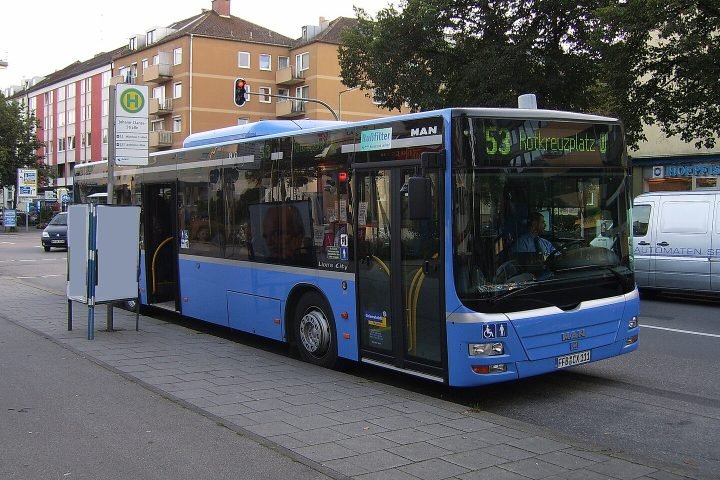
The Alpine Bus project is a brand-new logistics offering from the transport union, designed to improve tourism and daily mobility in the southern districts without the need for cars. Since mid-December, three specially launched bus lines have provided direct transport links from the community of Murnau along the picturesque foothills of the Alps to Rosenheim.
After the press published materials about the rather subdued start of these inter-district express routes, the transport department provided the first official figures, fully confirming the journalists’ initial observations. Nevertheless, the potential for long-term passenger growth remains significant.
For instance, on line X380, connecting Bad Tölz and Rosenheim, an average of 15 passengers travel daily. In the X990 buses running on the Murnau – Tölz route, the average figure is 12–13 people, while on line X381Tölz – Miesbach, the load remains minimal — only three to four passengers per trip, making these journeys unprofitable at the initial stage.
Bernd Rosenbusch expressed hope that with the arrival of the warm season, the start of the holiday period, and the influx of tourists, demand for these routes will increase manifold. According to his professional experience in transport planning, a certain amount of time is always required for adaptation before a new logistics line becomes truly well-known and in demand among the local population and visitors to the region.

Latest Posts