
The reason for the sharp change in the traffic pattern served as a mismatch of safety parameters with modern construction standards, namely — the insufficient height of bridge railings. In the developing situation, the administration of the Bavarian capital and municipal services are forced to initiate complex consultations with the service for the protection of architectural monuments, since any technical modernization of the historic ensemble is strictly regulated by legislation.
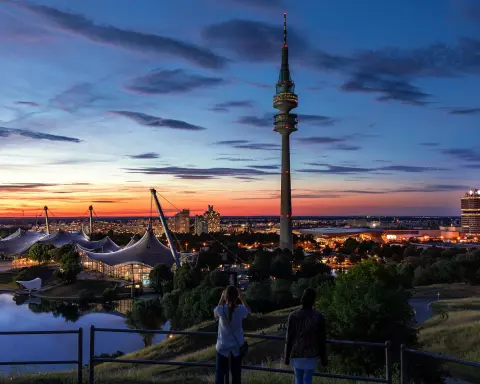
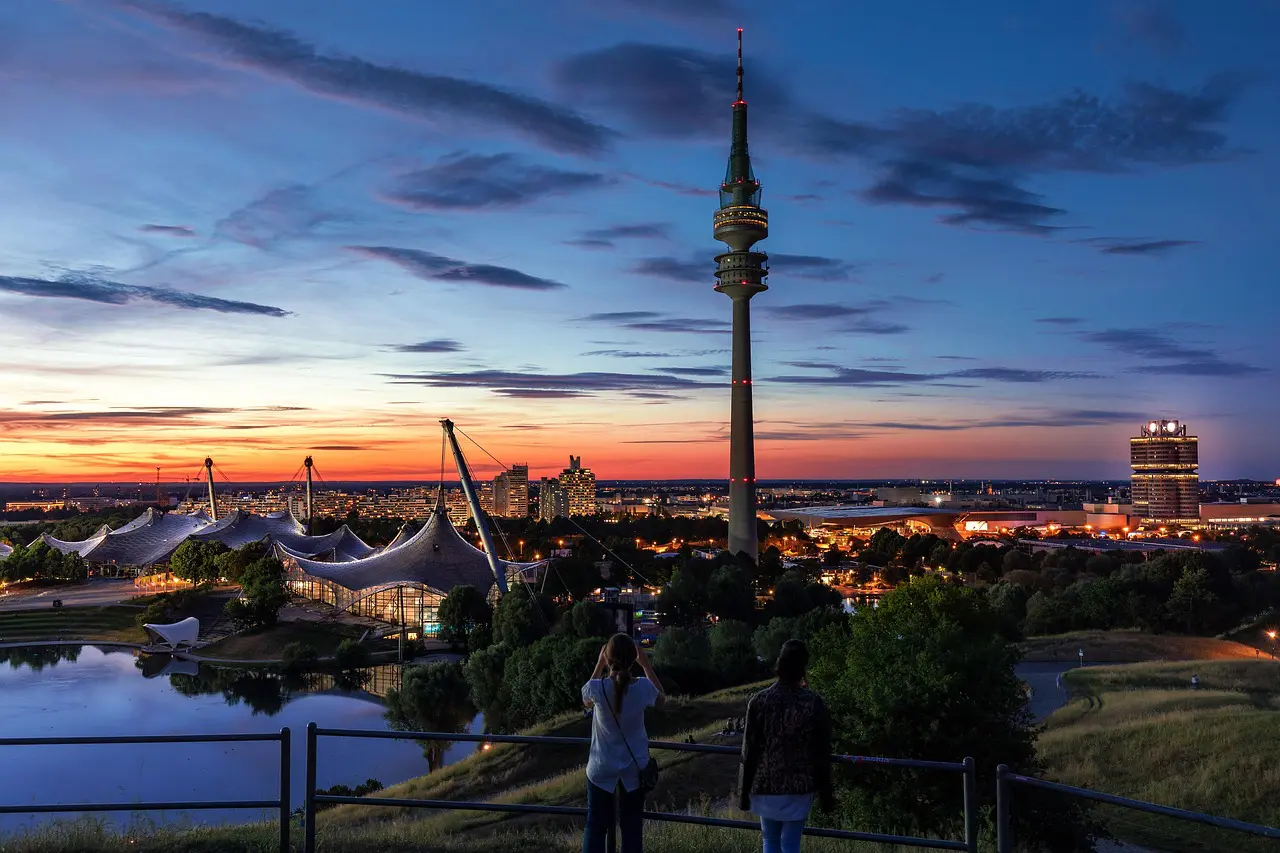
As it became clear in the course of expert proceedings, a distance of a mere twenty centimeters separates the legal use of the infrastructure from a complete ban on passage. This legal precedent became obvious in the Olympic Park after a planned technical inspection of engineering structures was conducted in March of the current year. Inspectors recorded that the existing bridge railings are too low compared to current regulations and are not capable of guaranteeing the safety of citizens during a fall from a bicycle.
This incident received publicity in the information space thanks to the vigilance of one of the users of the “Reddit” platform, who turned attention to the new road signs prescribing movement exclusively to pedestrians, and directed an official request to the Department of Mobility of Munich for explanations.
According to the received response, the restrictive measures affected five artificial structures of the park, including the Hans Braun Bridge, which performs an important logistical function and leads directly to the Olympic Hall and Stadium. On these objects, transit movement on bicycles is now officially prohibited — at least until the development of a compromise engineering solution.
In the Olympic Park, Has Movement on Bicycles Been Prohibited?
Giving official explanations upon the request of citizens, representatives of the Department of Mobility explained that during the design of the objects and the holding of the summer Olympic Games of 1972, completely different technical regulations and construction standards were in force in Germany. Yes, and cyclists behaved more law-abidingly and cautiously.
State safety rules were substantially tightened in March 2003, and from that moment, the regulated height of bridge railings on bicycle routes must constitute no less than 1.30 meters. For old engineering structures erected before the reform, legislation permits a minimum threshold of 1.20 meters; however, any structural elements below this critical parameter are recognized as unsafe and not corresponding to active regulations.
This information, upon the request of the Munich editorial office of the news portal t-online, was confirmed also in the Munich City Utilities (SWM), which bear direct legal responsibility for the technical maintenance and operation of the infrastructure of the Olympic Park. “Out of seventeen bridges located on the territory of the complex, five objects were officially closed for bicycle transport because of too low railings and, as a consequence, the presence of a high risk of falling from a height,” it is communicated in the written response of the department.
The Movement of Cyclists in the Olympic Park Was Initially Not Planned
The reason for which bicycle movement transformed into a legal and technical problem more than fifty years after the conclusion of the Olympics was explained in detail by the managing director of the management company Olympiapark GmbH, Marion Schöne.
According to her, at the end of the 1960s, this park complex was not designed by landscape architects at all with a calculation for an intensive flow of cyclists, and, accordingly, the geometry of the bridges was never adapted for the needs of this type of transport. In the city utilities, to the request of journalists, they also responded: “The use of these bridge crossings by cyclists in the original urban planning concepts, by all appearances, was not presupposed.”
Marion Schöne evaluates the developing situation pragmatically, pointing to the priority of safety: “Throughout fifty years of operation of the park, nothing extraordinary occurred in this context, however today we are legally obliged to strictly observe the existing federal rules. If an insurance case or an accident with injuries occurs, huge legal problems will arise for the operating organizations.”
Safety specialists also emphasize that in the case of a real toppling over the low railings, a cyclist risks falling into a creek or, what is far more dangerous, onto the asphalt surface of the busy city highway Mittlerer Ring. On the remaining twelve bridges of the park, the structures either initially have a sufficient design height, or beneath them is situated a gentle earthen slope, which completely excludes the risk of critical traumatism during a fall.
The Service for the Protection of Monuments Has Connected to the Solution of the Issue
In the city utilities of Munich, they explained that as an operational measure, well-visible prohibiting signs were installed on the corresponding bridges, which clearly indicate that these objects, until further notification, are open exclusively for pedestrian movement. (As practice showed near the Laim pedestrian tunnel, even the installation of a dozen huge warning and even prohibiting signs on an area of 100 square meters does not affect cyclists. Perhaps it is time to apply other measures, I myself as a cyclist would want this? — Ed.)
Because of the haste of the innovations, an organizational mismatch arose: the previously installed white-and-green pointers denoting through city bicycle lanes still lead along the former route, virtually running into the new local bans. From a purely technical point of view, the problem can be solved by a simple increase in the height of the railings. However, the entire Olympic Park is under strict state protection as a historic and architectural monument of the modernist era, which imposes a rigid veto on changing the visual appearance, erecting any unauthorized additions, and changing the original bridge railings.
“At the present time, specialists of the utilities and the leadership of Olympiapark GmbH are conducting intensive negotiations with representatives of the agency for the protection of architectural monuments with the goal of searching for a compromise and aesthetically acceptable practical solution,” representatives of the city services communicated.
Marion Schöne also confirmed this fact and expressed confidence in that it will be possible to return the bridges to the general transport network for two-wheeled transport in the foreseeable future. At the given moment, the most promising variant is seen as a reversible and visually light superstructure of the existing bridge railings with transparent or mesh materials. “However, what concrete engineering solution they will adopt in the end and whether specialists on heritage protection will coordinate it, time will show,” Marion Schöne concluded.

Latest Posts