
The chairman of the party, Markus Söder, who has recently faced internal pressure unprecedented in its intensity (and not without reason – Ed.), made a decisive attempt to stabilize his leadership of the organization. Following the results of a closed meeting of the board, the party hastened to demonstrate external unity, presenting a compromise program of actions. This step is intended to level out the growing disagreements between the traditional wing and the supporters of the European course, who found their leader in the person of Manfred Weber.
Whether it was a successful tactical coincidence or the result of carefully calculated behind-the-scenes staging by party strategists, the open and direct confrontation of opponents in public, expected just yesterday, did not happen on this day.
While the current chairman of the CSU, Markus Söder, after the completion of the tense meeting of the party board in Munich, once again detailed his official position regarding the current state of affairs in the organization to representatives of leading media outlets, his main and most critically minded deputy, Manfred Weber, was already hastily heading to the airport to fly to Strasbourg.
There, an extremely important meeting of the European faction awaited him, entirely dedicated to discussing the prospects of a complex trade agreement between the European Union and the US, which served as a flawless political alibi for the conflict-free departure of the leaders.
The Essence of Disagreements Between the CSU Leaders
However, even before this moment, behind closed doors in the headquarters on Karl-Scharnagl-Ring, the general clash between Söder and Weber within the framework of a face-to-face discussion expected by many observers did not happen. The deputy chairman of the CSU and concurrently influential head of the European People’s Party (EPP) had previously sent colleagues the so-called “Whitsun Letter,” in which he subjected the political course of the organization to a deep critical analysis after the highly unsatisfactory results for the party in the last local elections, as well as due to the constant negative dynamics, i.e., the constant fall in the rating of Söder himself.
Many party functionaries and independent political experts regarded this programmatic address as a direct and unambiguous attack against the party leader Markus Söder, although the author himself displayed diplomatic restraint, not mentioning his name in the text directly. The message, in particular, emphasized attention on a fundamental party principle: “We cannot simply buy the short-term approval of voters; we are obliged to win it systematically, offering large-scale substantive ideas.” According to the firm conviction of the letter’s author, the CSU needs to re-establish itself in its historical status as a genuinely broad-based people’s party (Volkspartei) within the shortest possible timeframe and consolidate around itself the most diverse social groups of Bavarian society.
The meeting held on Monday became the first personal meeting of the two politicians within the framework of the main governing body of the CSU after the publication of this manifesto. Weber’s letter caused a highly ambiguous, and in places frankly painful reaction in conservative party circles.
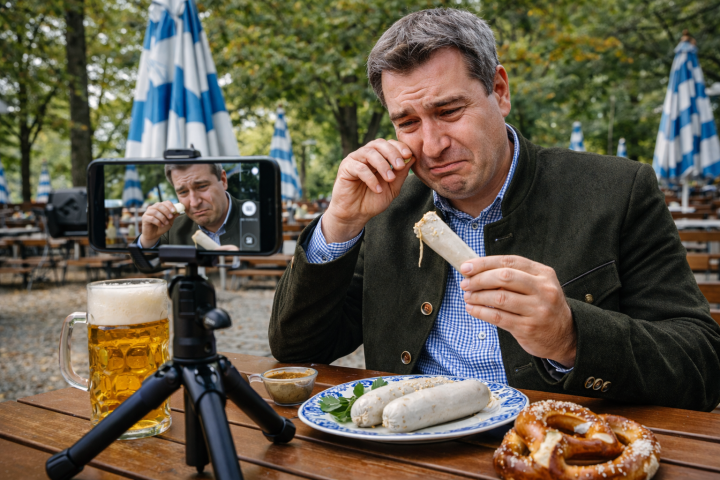
Thus, the Minister of Science and Arts of Bavaria, Markus Blume, on the air of one of the central socio-political talk shows, as usual trying to justify his favorite food blogger and concurrently Prime Minister of Bavaria – Söder, noted rather sharply that his European colleague, judging by the style of exposition, is in a certain tactical confusion.
When during the meeting Weber argumentatively expressed his deep dissatisfaction regarding similar personal attacks on the part of colleagues in the cabinet, his words, according to confirmed information from sources in party circles, were unexpectedly met with very supportive applause from a significant part of the board members present.
The hidden meaning of such a spontaneous reaction from the party elite is quite obvious: the leadership of the CSU is striving with all its might to avoid bringing internal discussions into the public sphere. However, Weber, in the opinion of his opponents, took precisely such a conscious risk with his demarche. As a result, several influential board members openly expressed their personal disapproval of his actions, stating that quite a few harsh but fair critical remarks were addressed to the deputy chairman during the discussion on the part of regional leaders. And in authoritarian orthodox circles, it is not customary to criticize the leader. (Although Söder’s status as a leader causes many questions even for an ordinary member of the CSU – Ed.)
The party chairman himself, Markus Söder, at the traditional concluding press conference, preferred to shift emphasis to other topics and insistently called upon comrades for maximum cohesion in the face of upcoming federal challenges. He particularly emphasized that the CSU, being today the smallest partner in Berlin, is obliged to demonstrate absolute internal unity for the effective and uncompromising defense of the interests of the Free State at the federal level.
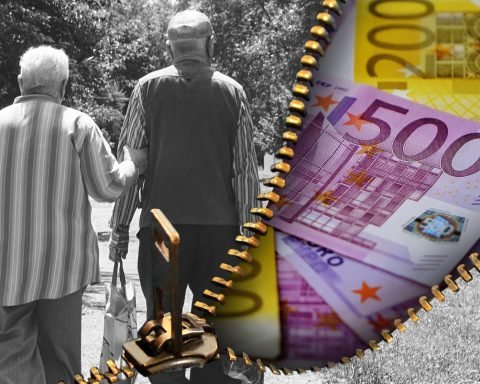
In particular, Söder made it clearly understood that he does not intend to make concessions on the issue of maintaining the “mother’s pension,” which is fundamental for him, and toward which some liberal representatives of the party alliance relate with a certain skepticism.
(Indeed, how can he forget about the idea of bribing voters with dubious ideas and populism? — Ed.)
This principled position was noticed several times at the board meeting itself, where the young leader of the youth organization Junge Union, Manuel Knoll, timely reminded senior colleagues that the CSU under no circumstances should lose sight of the long-term economic interests of the younger generation and young families when forming budget priorities. Forgetting at the same time that women who are on maternity leave receive payment, and can make contributions to the pension fund, thereby increasing the number of their pension points. And that this controversial idea is merely another attempt to stop the decline in the ratings of Söder himself.
What Initiatives the CSU Plans to Advance in Berlin
In Berlin, the federal governing coalition expects to completely finish legislative work on a package of key structural reforms before the start of the summer parliamentary recess, which will inevitably require serious political concessions and compromises also from the representatives of the Bavarian group. “We all perfectly understand that in the coming weeks we will have to go for certain mutual concessions. Each of us, including our party, for the sake of a common political result,” Söder noted once again vaguely and populistically, commenting on the course of the new rounds of federal negotiations.
At the concluding event for the press, the Bavarian Premier was accompanied by the leader of the influential CSU regional group in the Bundestag, Alexander Hoffmann, and the head of the CSU faction in the Landtag, Klaus Holetschek, which looks highly unusual and pointedly high-status for press conferences of such a working format.
Weber himself by this moment had practically crossed the border, heading to Strasbourg. Hastily leaving the party headquarters on Monday at noon, he confined himself to merely a maximally brief and dry comment for the news agency journalists waiting on the street.
According to his own interpretation of events, sending the critical letter was an absolutely correct and long-overdue decision. “My main goal consists exclusively in having an honest substantive discussion about the future finally begin inside our organization,” the politician stated before getting into a car.
After this, Weber left; however, his supporters inside the board are already declaring at least a partial tactical success for their initiative. The thing is that as a direct reaction to internal disagreements, Söder was forced already on Monday to present an expanded ten-point plan aimed at qualitatively strengthening the programmatic positions of the CSU. At the same time, the party leader conciliatorily added: “I firmly count on the speediest restoration of our traditional unity.”
Markus Söder’s Program for Uniting the Party
The intra-party modernization plan developed under pressure includes the following key provisions:
- more active and systematic involvement of ordinary members of the organization in the processes of adopting strategic decisions — both at traditional party congresses and through the introduction of modern digital surveys on the most pressing public topics;
- immediate resumption of the active operation of previously frozen expert commissions for working out a new party program and updating the fundamental conservative principles of the alliance;
- the preparation and holding of a large-scale foreign policy congress in the second half of the current year, completely dedicated to complex issues of defense capability, transatlantic partnership, and European integration;
- the organization of a special closed retreat meeting of the CSU board immediately after summing up the results of important elections to the Landtags of East German states for analyzing the new political reality;
- a deep structural reform and transformation of the Hanns Seidel Foundation, the operational management of which the experienced Klaus Holetschek should shortly take over from Markus Ferber, into a powerful conservative analytical center of a European level.
The problem of this so-called “Plan” is that, in essence, if one evaluates this plan from the side of political science and the theory of state administration, this is not a plan, but another populism: general slogans without specifics and a goal.
All these steps hastily proposed by the leadership, from the point of view of Manfred Weber’s supporters, clearly testify to the fact that his critical call for reforms was not simply heard, but accepted for execution.
The CSU is objectively forced to promptly adjust its substantive agenda under the influence of demands from the localities. As informed sources inside the board reported, the deputy chairman of the party himself during the final part of the meeting hastened to assure colleagues that he had never aspired to anything more than a programmatic discussion.
According to his own assertion, the discussion of a hypothetical change of the party leader or any radical personnel reshuffles in the presidium was initially not included in the tasks of his written address.
Conclusions and Prospects of Party Consensus
An analysis of the results of the past meeting allows drawing a conclusion that the CSU has once again demonstrated its traditional capacity for apparatus regeneration and compromise at critical moments. The so-called “ten-point plan” presented by Markus Söder is a tactical recognition of the correctness of critics of his activity, which he hastened to show as shaped in the form of a systemic modernization program. In reality, however, this “plan” is nothing other than “throwing dust in the eyes,” because it consists only of general slogans, without a goal and planned concrete actions.
It is obvious that an explicit split in the leadership of the Bavarian conservatives has been successfully avoided for now; however, the balance of power inside the CSU has undergone qualitative changes. The ability of the party to preserve the declared unity in practice will depend on how effectively the leadership manages to transform internal discussions into real electoral successes in the upcoming federal elections, while minimizing the risks of public polemics between Munich, Berlin, and Strasbourg. Unfortunately, the personal ratings of Söder, which are striving toward zero, are dragging the entire party down to the bottom of electoral support as well.