
An impressive demonstration of cutting-edge achievements has unfolded across the expanses of the exhibition complex: from promising fighter jets of the future and mobile air defense complexes to ultra-modern commercial launch vehicles. More than 120 specialized participants from the Free State are currently actively working at the exhibition grounds in Berlin on concluding major international contracts capable of determining the vector of development of the European military industry for decades to come.
How Does It Look From the Outside?
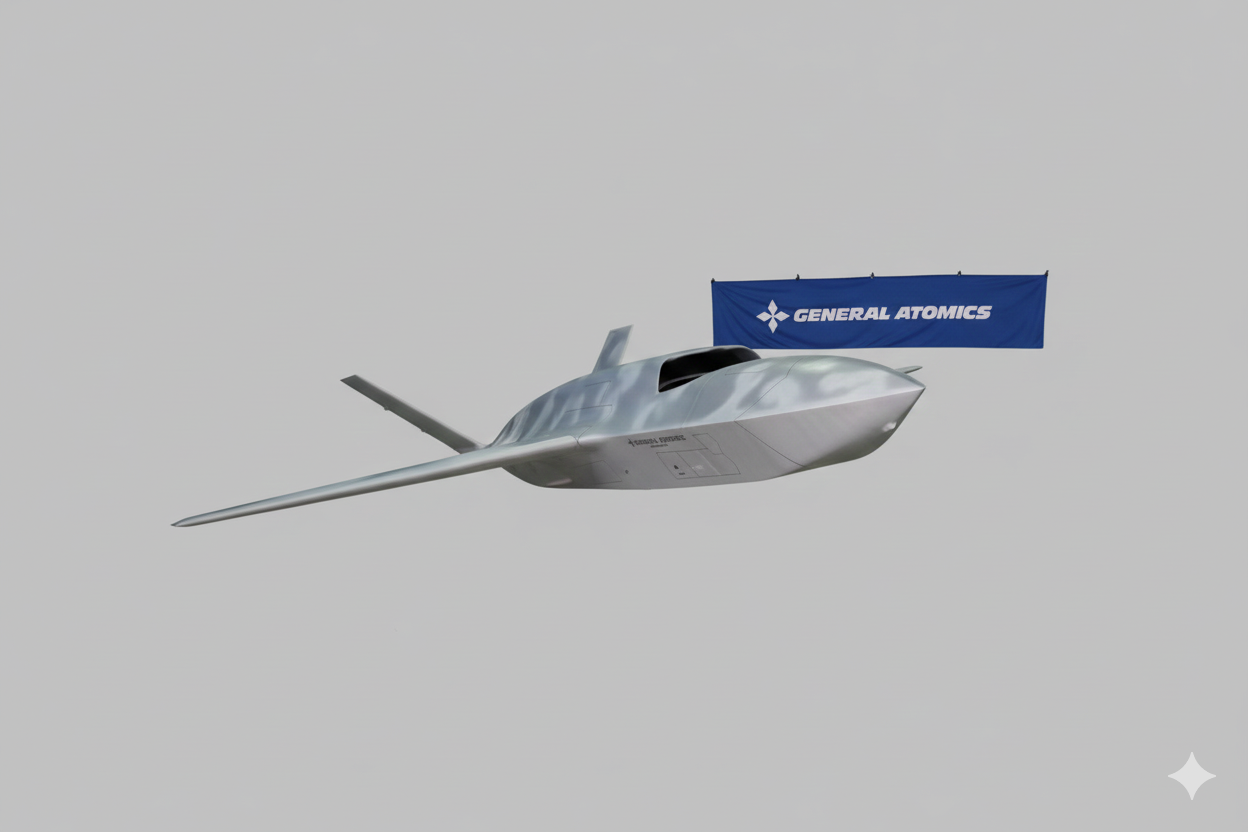
In the current year, bypassing the Bavarian stands at the International Aerospace Exhibition (ILA) with close attention is indeed difficult even for sophisticated analysts. Immediately beyond the eastern entrance to the territory of the complex, visitors inevitably pass by the central pavilion of the Free State of Bavaria, which emphasizes the status of the region as a leading technological hub. And those specialists who enter the site from the western side immediately notice both a new aircraft from Oberpfaffenhofen and a conceptual model of an unmanned fighter from the Munich high-tech startup Helsing.
In total, more than 120 out of 750 aggregate participants of the exhibition represent the Bavarian region, Andreas Gundel, the managing director of the industry platform Bavaria, reported with pride in his voice. His expert assessment of the interim results of the event is exclusively positive: no matter which industrial stand he visited during these days, absolutely all representatives of Bavarian companies expressed extreme satisfaction with the commercial results, the intensity of negotiations, and the quality of the attracted audience.
Interest in the Aerospace Industry Has Grown Significantly
According to Andreas Gundel, it was unprecedentedly easy for Bavarian enterprises this season to strengthen existing long-term business ties or forge new strategic contacts. This was largely facilitated by the general macroeconomic context and the rethinking of defense doctrines in Europe.
“A multitude of both the largest international and national players are simultaneously present at the Berlin site, who are purposefully looking for long-term partnerships and are deeply aimed at practical cooperation,” the head of the platform emphasized.
In conditions of rapid and diversified growth of this industry, it is pleasant to see that exhibition participants at such prestigious events as ILA get a real opportunity to turn their innovative projects, which in some cases required many years of preliminary design work, into a tangible and commercially successful business, the head of Bavaria added. Consumer demand from state and private customers is currently outpacing supply.
Plans to Create a German Fighter Jet
At the start of the exhibition’s work, the main and most discussed news predictably came from the defense sector: the governments in Berlin and Paris officially announced the completion of another important stage of the joint Franco-German project to create the combat complex of the future, FCAS. Right on the sidelines of the exhibition, eight German, predominantly Bavarian companies, traditionally concentrated around the military division of the Airbus corporation in Manching, came forward with an initiative to create a European combat aircraft under strict German industrial leadership.
Recognized world-market manufacturers such as Hensoldt, MTU, and Liebherr are taking part in this ambitious project. The industrial initiative has already received official support from influential works councils and key trade unions. However, Kevin Thiele, a leading analyst at the consulting company Accenture, looks at these grandiose plans from more critical and pragmatic positions. In his opinion, in addition to long-known traditional corporations, the aerospace industry today increasingly requires flexible young enterprises capable of bringing the necessary dynamics through the introduction of new technologies in the field of unmanned vehicles and artificial intelligence.
In addition, from the point of view of the Bundeswehr command and ordinary taxpayers, it is necessary to ask a strategic question already today: will European security still acutely need such expensive-to-produce manned fighter jets in 15 or 20 years, or is it economically and tactically more expedient to place a full bet on autonomous drones, Thiele noted in his extensive interview with the BR broadcasting company.
Air Defense Modernization and New Cooperation
However, the current activity of Bavarian defense enterprises at the Berlin exhibition is by no means limited to the complex topic of 6th-generation fighters. The military division of the Nuremberg-based Diehl group demonstrated at its site the latest modification of its Iris-T air defense system, which became highly sought after on the world arms market after demonstrating high efficiency in real combat conditions in Ukraine.
Harald Buschek, a member of the company’s top management, in a conversation with the press particularly noted that for the first time, engineers successfully managed to place all key constituent elements of the system — a highly complex radar station, a mobile control point, and anti-aircraft missiles — on the base of a single truck. Thanks to this technological breakthrough, the complex became fully mobile and can now, for example, promptly move as part of transport columns to ensure their continuous protection from aerial threats.
On the other hand, specialists have forgotten that the separation of air defense parts is carried out to reduce the enemy’s ability to hit the entire anti-aircraft missile complex. For it is easier to replace one part of the complex than to put the entire complex into service in return for a destroyed one. In modern armaments, mono-complexes of air defense are usually small and mobile, and only a few such air defense systems resemble the new idea of this company — the Russian TOR and Pantsir complexes. Observations of the military operations in Ukraine, or more precisely, strikes by the Ukrainian defense forces on the military-industrial complex of Russia, have shown the impracticality of large mono-systems of air defense.
The defense company MBDA Deutschland from Schrobenhausen also places its bet on air defense and advanced missile technologies. At the exhibition, the enterprise officially announced the beginning of strategic cooperation with an Ukrainian firm, including in the field of joint development of technologies for combating unmanned aerial vehicles.
In parallel with this, Bavarian high-tech startups, such as Helsing and Quantum Systems, vividly demonstrated concepts of promising combat aircraft that will function either fully in an unmanned mode or with the possibility of both manned and autonomous digital control.
Launch Vehicles From Bavaria on the Way to Orbit
Exceptionally high investment activity was also observed these days at numerous stands in the specialized pavilion of space technologies. One of the main topics for behind-the-scenes discussions there was expectedly the recent stock market launch and the unprecedentedly dangerously overstated market valuation of the American company SpaceX. In the long term, two leading Bavarian rocket hardware manufacturers representing the New Space sector also plan to successfully capture this commercial potential.
The innovative startups Isar Aerospace and Rocket Factory Augsburg officially announced the execution of the first test launches of their light launch vehicles in the near future. At the company Isar Aerospace — after several unfortunate recent postponements — the launch from the spaceport may take place in just a few days.
Their direct competitors from Rocket Factory Augsburg firmly count on carrying out their first full-fledged launch before the end of the current year, which marks the beginning of a new era in German astronautics.
Conclusions and Industrial Prospects
Summing up, it can be stated that the International Aerospace Exhibition in Berlin has vividly demonstrated the structural transformation and high potential of the Bavarian industrial cluster. The State of Bavaria has successfully established itself in the role of a key player not only in the traditional defense sector but also in the avant-garde spheres of artificial intelligence, unmanned aviation, and commercial space.
The obvious success of Bavarian companies confirms that the combination of the experience of recognized industrial giants and the flexibility of technological young startups allows the region to effectively monetize long-term scientific developments, ensuring the high competitiveness of German technologies on the global market.