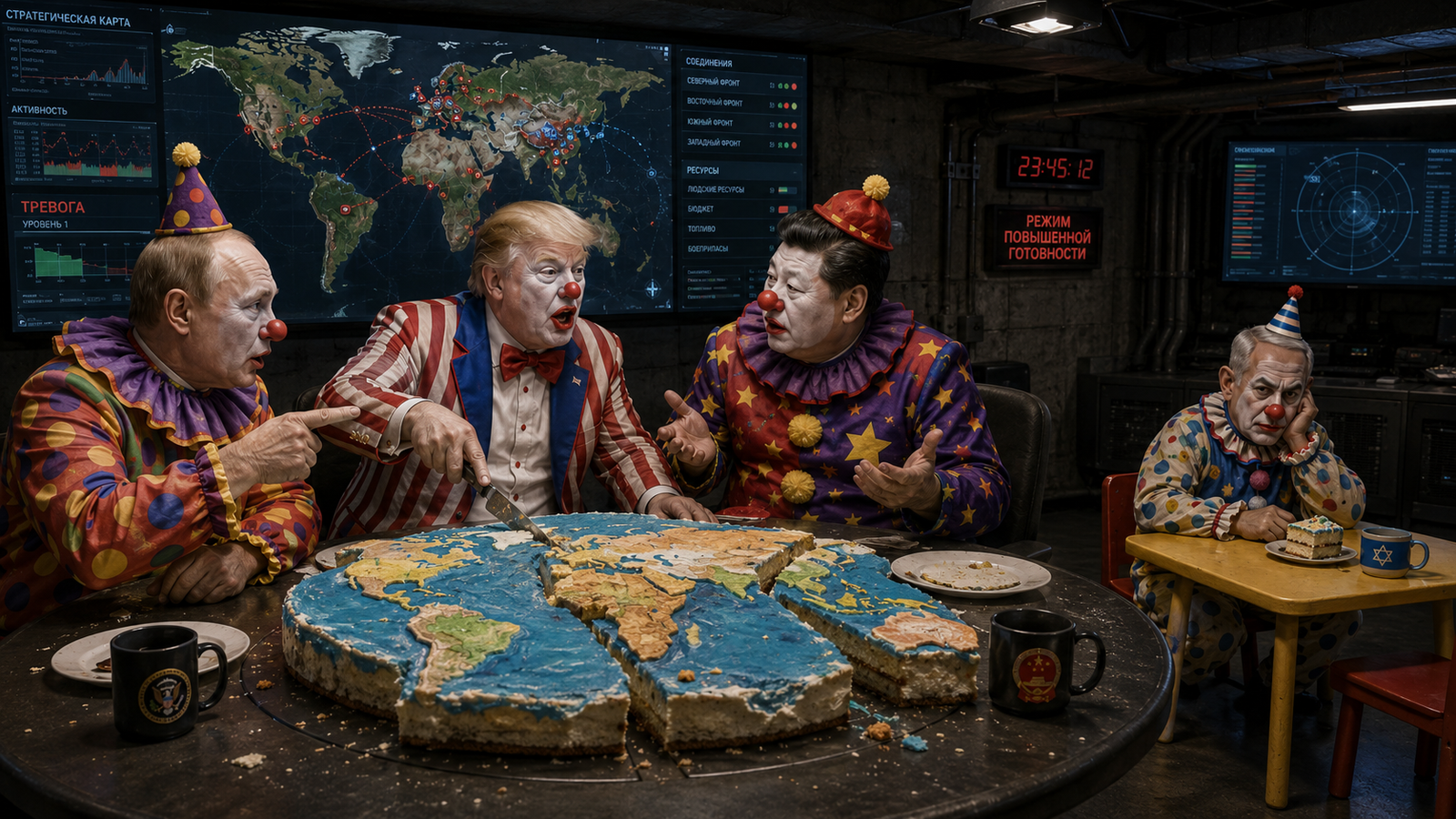

The international order that formed upon the conclusion of the Second World War has approached its historical end.
Federal Chancellor Friedrich Merz, within the framework of the Munich Security Conference in February 2026, stated: “This order, which remained imperfect even in its best periods, no longer exists in its former form.” This testifies to tectonic shifts in global politics, where old security institutions are losing their legitimacy and capacity to act, leaving European states facing uncertainty.
Interlocutors in the Asian region not infrequently express bewilderment regarding the concern of some Europeans.
Former Singaporean diplomat Bilahari Kausikan, in a conversation with a DW correspondent on the sidelines of the Asian security forum “Shangri-La Dialogue,” noted: “I believe that rivalry and conflicts act as fundamental characteristics of international relations.
These unchanging, harsh truths remained hidden only throughout a short historical segment — approximately twenty years, from the day of the fall of the Berlin Wall to the beginning of the global financial crisis. That was an exceptional stage in world history.”
He also added: “Europe mistakenly deemed the geopolitical jungle finally tamed, in connection with which it faced a serious shock.”
This dualism of perception emphasizes that the long absence of major military clashes on the European continent created an illusion of eternal stability, whereas the rest of the world continued to live in conditions of harsh geopolitical competition.
The United States of America Will Not Return to the Former Role
Political scientist and head of the Asia-Pacific regional office of the Friedrich Ebert Foundation, Marc Saxer, explained in an interview with DW that the difference in views between Europe and Asia is conditioned by different historical experiences. Europe had the opportunity to count on the implementation of the concept of a liberal world order, being under the protection of the American defense umbrella. For Asia, a similar scenario remained unthinkable, since the region over the course of decades balanced between local conflicts and the harsh rivalry of nuclear powers.
Marc Saxer considers the attempts to establish a liberal world order to have suffered a failure, while he emphasized: “The return of the USA to the role that they performed until the 2010s appears impossible in view of structural factors.” The period of the unipolar world has concluded. The United States has faced a strategic overextension of forces due to simultaneous involvement in crisis zones in Europe, the Middle East, and the Asia-Pacific region. Internal economic problems and political polarization within the USA themselves also undermine their ability to act as an alternative-free global guarantor of security.
Concepts of the Great Powers
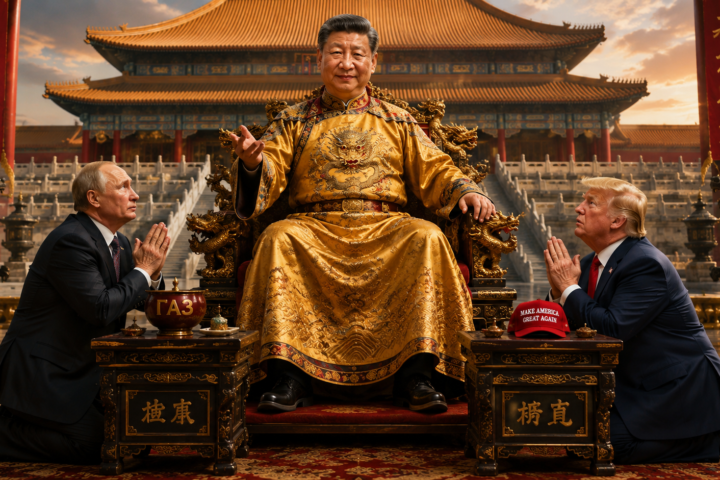
Thomas Kleine-Brockhoff from the German Council on Foreign Relations, in a conversation with a DW correspondent, characterized the actions of Washington not as an overextension of forces, but as the realization of an imperial project. According to him: “The USA strive to lay the foundations of a hegemonistic world of great powers — a kind of global directorate with the participation of Russia and China.”
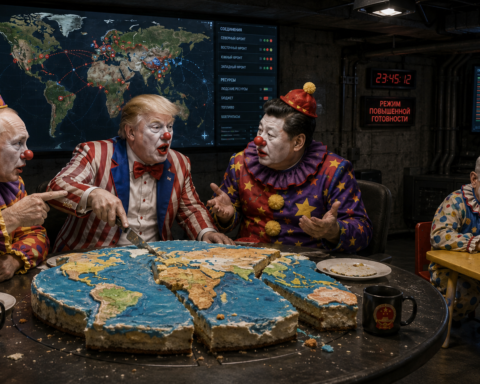
They want to build a system relying on the division of spheres of influence between key players. This means a transition from a value-oriented policy to a pragmatic division of the planet into zones of responsibility, where the interests of medium and small countries are practically not taken into account.
As a result, international law and multilateral institutions, including the United Nations, are subjected to destruction on the part of the USA, China, and Russia, with each subject pursuing its own goals and being guided by personal motives. The UN Security Council is more and more frequently found to be paralyzed by mutual vetoes, which deprives the international community of the main instrument for preventing large-scale crises.
The consequence of these processes, in the opinion of Marc Saxer, who published a book under an analogous title, becomes the formation of a “wolf world” — a reality in which the right of the strong prevails over the strength of law. In such a system, small states are forced to seek protection from large nuclear powers, sacrificing a part of their sovereignty for the sake of elementary survival.
Counteraction Is Outlined from Asia to America
The majority of the other states of the world are naturally not interested in such a development of events. What responsive measures are being outlined now?
Thomas Kleine-Brockhoff isolates three concrete variants of response, the choice of which depends on the geographical position of the country and its strategic environment.
Japan, being in the immediate proximity of an intensifying China and disposing of a limited number of like-minded entities in the Asia-Pacific region, is forced to move along the path of deepening interaction with the USA. Tokyo is actively building up its defense budget and modernizing its army, striving to become a key military ally of Washington in the region for the containment of Beijing’s ambitions.
Europe, possessing geographical unity and a high degree of political integration, places its stake on the so-called “strengthening of its own economic and military potential,” noted Thomas Kleine-Brockhoff.
At the same time, European states strive to hold the USA within the framework of common obligations throughout the transition period for as long as possible in order to ultimately, if this succeeds, acquire strategic independence. This requires from the EU not only large-scale investments in the defense sector, but also the overcoming of internal disagreements between the eastern and western members of the union.
The third model — a kind of coalition of medium powers — was formulated by Mark Carney in his report at the World Economic Forum in Davos in 2026: “The former order will not return. We should not express regret regarding this. Nostalgia cannot serve as a strategy. However, in the place of former rifts, we are capable of building a more effective, durable, and just system. Precisely in this lies the task of medium powers.” Such countries as Canada, Australia, South Korea, and Indonesia can combine efforts for the protection of shipping, global trade, and climate agreements without a direct look back at the superpowers.
Revision of Positions in Multipolar Realities
Marc Saxer, who shares the position of Mark Carney, points to a key feature of the current process of transformation: the composition of the discussion participants is expanding. “For the first time in several centuries, non-Western powers are taking a defining part in forming the contours of the future world order.” “In contrast to past epochs, the concept of an international order will no longer be identical to the concept of Westernization,” stated Marc Saxer.
The West is losing its monopoly on establishing global rules of the game, and this requires the development of a new diplomatic language.
Political concepts will be forced to take into account both the approaches of China, where rules serve in the first place the interests of the collective and not the individual, and the basic principles of the Muslim world, relying on the community of believers. Along with this, inside these ideological systems, there also exist internal contradictions, an example of which serves the rivalry between the Shia and Sunni directions in Islam. Attempts to impose universal Western standards in such conditions only deepen the rift; therefore, future stability depends on the capability of systems for peaceful coexistence.
Survival Strategy in Conditions of a “Wolf World”
For successful functioning in the current realities, Marc Saxer isolates three directions supplementing the theses of Mark Carney:
First, it is necessary to attract smaller states to the processes, such as Ukraine, New Zealand, Norway, or Singapore. Any subject demonstrating a readiness for a constructive solution to problems brings benefit. Small countries frequently possess a unique diplomatic flexibility, as well as unexpected capabilities (as in the case with Ukraine) and can act as effective mediators in negotiations.
Second, interaction must be built not in the format of rigid alliances, but on the basis of so-called “partnerships of the center,” which will allow avoiding the formation of opposing blocks. Such flexible coalitions are created for concrete tasks, whether it be food security or the regulation of artificial intelligence.
“Third, the process of overcoming global challenges in conditions of limited resources cannot rely exclusively on coalitions of democratic states. Partnerships in the center must unite all countries aimed at a result, regardless of the specifics of their internal structure,” noted Marc Saxer. “In conditions of a climate crisis or the threat of new pandemics, a rigid ideological selection of partners becomes an impermissible luxury.”
The Concept of “Helsinki 2.0”
Such a pragmatic approach presupposes a rejection of a policy based exclusively on a commonality of values and the search for like-minded partners. In the place of value orientations come common interests. Instead of confrontation or a detached existence, states develop cooperation in those spheres where their interests coincide, and suspend it at the points of divergence. This mechanism is implemented with obligatory compliance with basic principles, including human rights, which allows preserving minimal humanitarian standards even in the absence of political trust.
For the realization of this task, Marc Saxer proposes to use the model of “Helsinki 2.0.” At the beginning of the 1970s, during the period of confrontation between East and West, the USA and the USSR, with the participation of European countries — members of NATO and the Warsaw Pact Organization in the course of the Conference on Security and Cooperation in Europe, coordinated mutual obligations that did not have the status of an international treaty. The Final Act, which became known as the Helsinki Accords, regulated key questions of security on the continent and boiled down to the formula of the so-called “universalism without interference in internal affairs.” In the opinion of the political scientist, this experience is again acquiring relevance, as it allows fixing the inviolability of borders and the rules of de-escalation between rival blocks in the conditions of a new cold war.
Coexistence of Different Systems
Thomas Kleine-Brockhoff expresses skepticism regarding the stability of similar constructions, pointing to a deficit of influential guarantors of order in modern conditions. “Any system needs forces capable of ensuring control, and a minimal respect for the established rules.”
The concept of flexible partnerships, the participants of which interact in the sphere of climate policy but oppose each other in questions of security, remains unstable. Assessing the theses of Mark Carney, Thomas Kleine-Brockhoff noted: “I see the presence of counteracting forces, but I do not see factors capable of uniting them.” Medium powers are too heterogeneous and pursue various goals, which makes the coordination of their actions on a permanent basis difficult.
Instead of this, the analyst states the formation of a multi-level world characterized by the parallel existence of different models of order with a limited depth of influence. A possible scenario appears to be the creation of a detached system of like-minded states, including the EU, Japan, and Australia, whose influence at the same time will close predominantly upon themselves. This will lead to a fragmentation of the global space, where economic and technological standards will differ strongly from block to block.
Risks to Global Stability
Current tendencies substantially complicate the protection of global public goods. Tasks for the containment of climate changes, the minimization of international risks in the sphere of healthcare, including pandemics, as well as the ensuring of security become difficult to perform. The absence of a single coordination center leads to the fact that international agreements on ecology and arms control are systematically sabotaged by key players because of momentary benefits.
In connection with this, Thomas Kleine-Brockhoff forecasts the onset of an era of long-term unilateral extraction of benefit. Instead of joint work on overcoming global challenges, individual international actors will to an increasing degree orient themselves toward achieving their own advantages, shifting the costs onto neighbors in the region. A good example serves the relations between Hungary and Ukraine, as well as between Ukraine and Poland.
For the prevention of such a scenario, Marc Saxer considers the development of interaction between partners on the basis of pragmatism to be alternative-free. The concept of transformational realism formulated by him, in his opinion, provides the optimal opportunity for the integration of various approaches to the world order after the conclusion of the liberal era, allowing the solution of concrete global tasks without sliding into block confrontation. The world is entering a period of complex maneuvering, where survival will depend not on ideological purity, but on the ability to come to an agreement in conditions of a permanent crisis.
Source: DW

Latest Posts