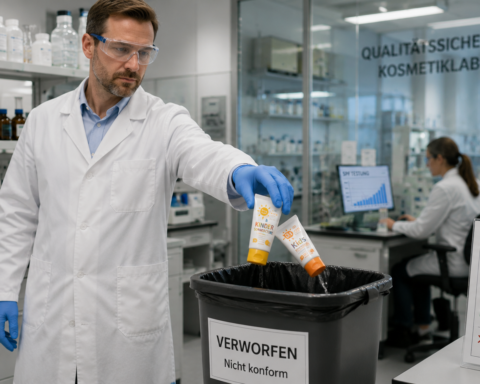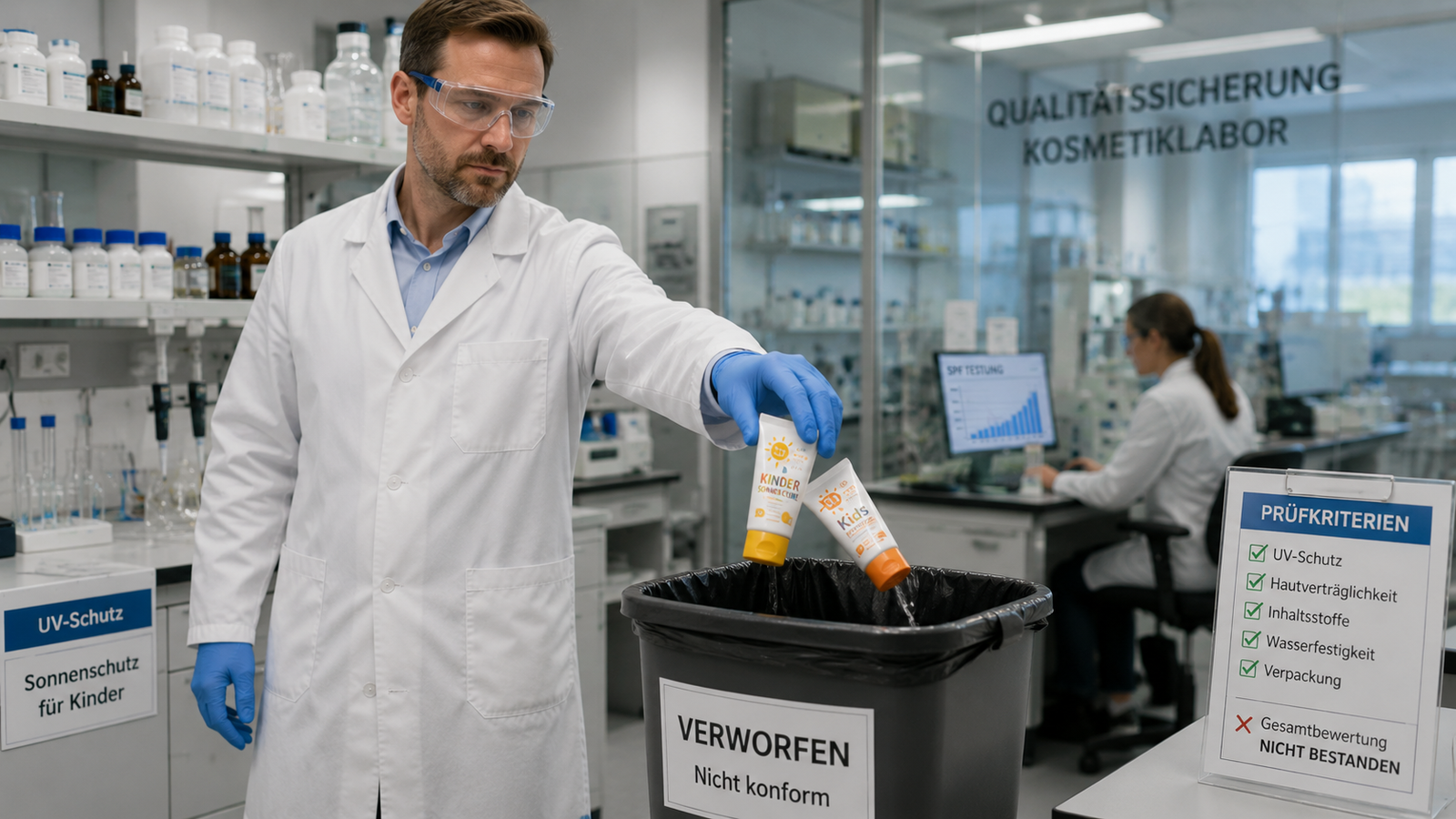

The situation is aggravated by the fact that in three tested products, independent experts discovered dangerous chemical components that are officially classified as “representing a threat to reproductive health.” This fact caused serious concern among profile specialists and the parental community, since children’s skin possesses an increased permeability for toxic substances.
In the course of conducting a comprehensive comparative analysis of sun protection means developed specially for sensitive children’s skin, the greater part of the products presented on the market nevertheless demonstrated high indicators in terms of the effectiveness of filtering ultraviolet radiation.
“The leaders of the testing cost less than three euros per 100 milliliters and are freely sold in ordinary supermarkets, discounters, and major drugstore chains,” representatives of the Stiftung Warentest institute reported. This proves that a high price does not always guarantee reliability. Nevertheless, five tested samples received a final unsatisfactory rating, with the most expensive protective means within the framework of this study turning out to be among the clear outsiders, which places in doubt the marketing policy of premium brands.
According to the official statement of the employees of Stiftung Warentest, all rejected goods either categorically do not correspond to the sun protection factor (SPF) indicated on the packaging or do not provide a sufficient degree of protection from long-wave ultraviolet rays of spectrum A (UVA), which penetrate into the deep layers of the dermis and are capable of causing long-term cell damage.
“Children’s skin differs by a particular thinness and is practically incapable of independently producing the protective pigment melanin in the necessary volumes to withstand the aggressive effects of solar radiation — in questions of children’s health, compromises are inadmissible,” the head of the research project Tim Quinders explained.
First place with a high rating of “good” (1.7 points according to the German system, where a smaller point means a better result) was shared by the affordable products “Lidl Cien Sun Kids Sonnenspray” and “Tabaluga Sonnenspray für Kinder, sensitiv.”
Immediately following them are the private labels of the well-known European chain DM — “Babylove Sonnencreme Ultra Sensitive” and “Sundance Kids Sensitiv Sonnenspray,” which also received a “good” rating with an average point of 1.8.
Analogous high results were demonstrated by other goods under the private brands of the Rossmann drugstore chain, as well as classic products of the international brand Nivea, confirming compliance with strict safety standards.
List of Sunscreens That Received an Unsatisfactory Rating
An “unsatisfactory” rating was received, in particular, by the popular lotion “Sonnenlotion Sensitiv” from the well-known manufacturer Bübchen costing 6.95 euros, as well as the expensive specialized means “Cosmetic Baby & Kids Sonnencreme” of the Eco Cosmetic brand, the retail price of which constitutes 19.99 euros, and “Baby & Kids Sonnencreme” from the Mayben trademark costing 14.95 euros. The failure of these brands in laboratory conditions indicates systemic problems with quality control in production.
In total, the specialists of the institute thoroughly tested 23 children’s products, including creams, lotions, sprays, and roll-on means with a declared high degree of protection 30, 50, or 50 plus. Such a wide coverage allowed the experts to compile an objective picture of the state of the market for children’s cosmetics.
Part of the studied samples belongs to certified natural cosmetics, the manufacturers of which declare a refusal of synthetic chemistry; another part is represented by traditional mass goods from chain stores of household chemicals and cosmetics.
In addition to the reliability of direct protection from ultraviolet, the scientists evaluated consumer properties and convenience of use; in particular, it was thoroughly checked whether the means leave an unpleasant feeling of stickiness or dense white traces on the skin covering after application.
Results of the Evaluation of Ecological Indicators Cause Disappointment
The institute for the first time included strict ecological criteria into the general evaluation system and characterized the data obtained in 2026 as sobering. Representatives of the laboratory stated: “Practically all studied products contain polymeric substances that degrade with difficulty or are not biologically degradable at all, which are washed off the skin during bathing and unhindered enter lakes, rivers, and seas, inflicting damage on aquasystems.”
Only three certified natural cosmetic means did not contain similar ingredients critical for the environment; however, these eco-friendly samples, unfortunately, could not show convincing results in other key parameters of the check, failing the tests for basic sun protection.
Furthermore, in three products, researchers discovered a dangerous industrial plasticizer, which is officially considered to represent a long-term threat to the endocrine and reproductive systems of humans. The discrepancy with standards recorded by experts in the finished sunscreen products at the given moment does not carry in itself a direct, immediate threat to the health of a child during a one-time application; however, the cumulative effect of such substances has not been studied to the end. In connection with this, the Stiftung Warentest institute urgently calls upon the corresponding manufacturers to immediately strengthen control over the quality of the raw materials used and to review supply chains for the exclusion of toxic impurities.
Source: DPA

Latest Posts