
The EC head is openly calling for a renaissance of peaceful atom, betting on a technological breakthrough — Small Modular Reactors (SMRs). In Germany, this initiative is actively supported by the CSU party, which insists on using mini-nuclear plants as a tool for energy sovereignty. However, behind the political slogans lies a complex question: how ready is modern science to turn these concepts into a working and safe reality?
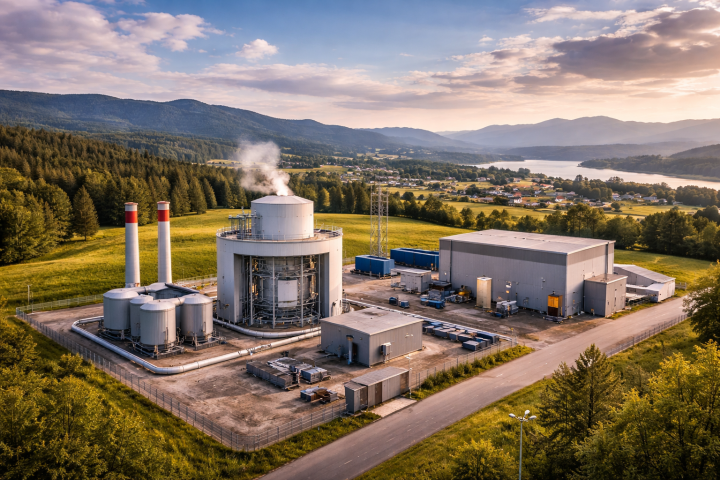
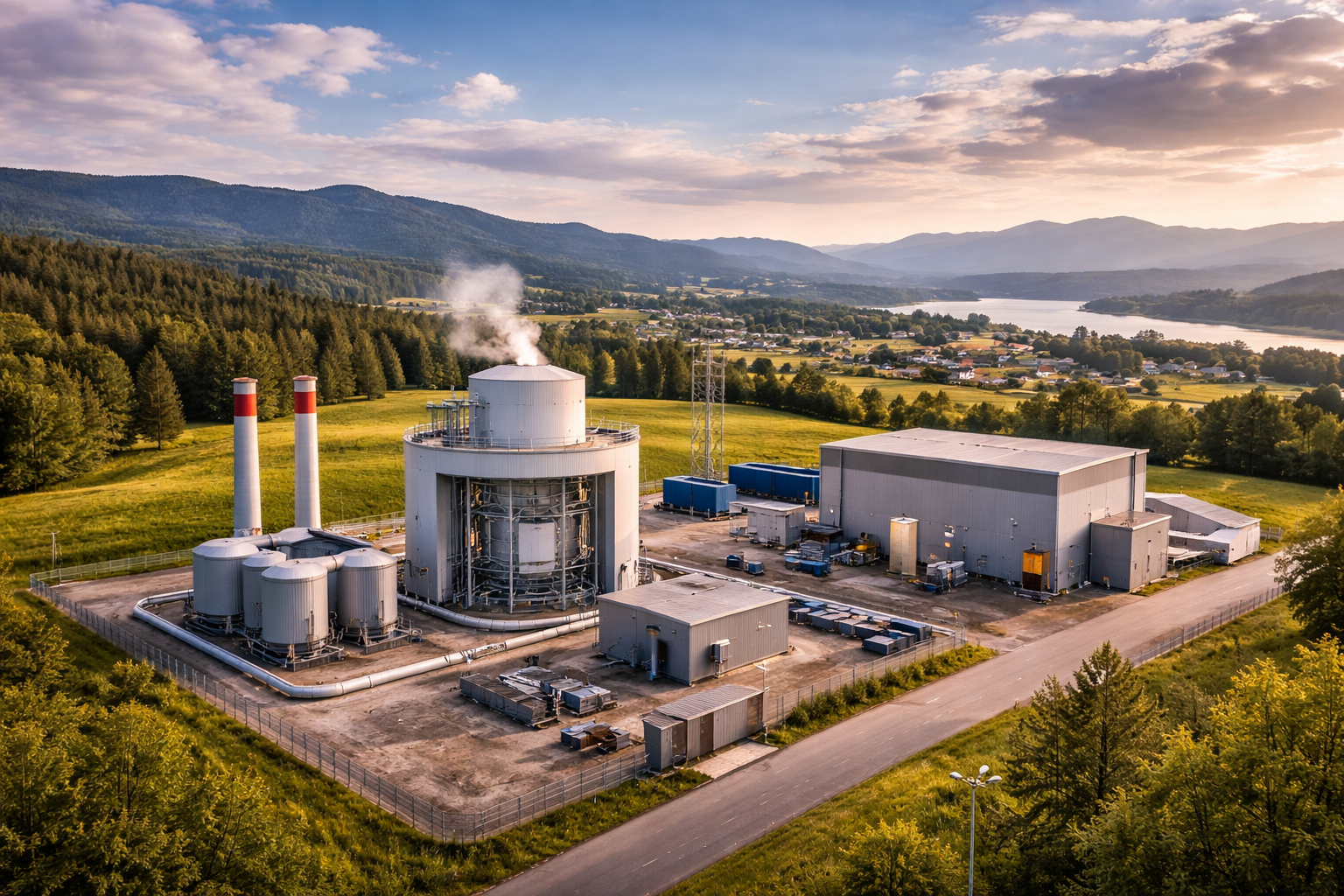
Small nuclear power plants, or SMRs, are not fundamentally new — they are compact versions of classic light-water reactors. Technologically, they largely repeat the operating principles of the giants that provided Germany with electricity until the final shutdown of nuclear plants in 2023, but with a significant difference in scale. In the expert community, any reactor whose capacity does not exceed 300 megawatts is considered small.
For comparison, traditional power units that have been decommissioned usually produced from 700 to 1,400 MW. The main idea of the developers lies in serial production: components for such stations are planned to be assembled in factories in almost finished form and delivered to the site like parts of a construction set. It is assumed that such modularity will make nuclear energy significantly cheaper through standardization.
Economic dead ends and price uncertainty
Despite the optimistic forecasts of manufacturers, the economic efficiency of mini-nuclear plants remains a major question. Historically, nuclear power followed the path of enlargement: building giant stations allowed for the concentration of infrastructure and safety systems on one site, reducing the cost of each kilowatt-hour generated. Small reactors go against this principle. Alexander Wimmers, who researches the economics of the nuclear industry at the Technical University of Berlin, notes a serious structural flaw in the new concept. For SMRs to truly become more profitable than traditional stations, they must be produced on an industrial scale — we are talking about building hundreds or even thousands of identical reactors.
Today, reality is far from these figures. Worldwide, only about 400 large nuclear power plants are in operation, and imagining a market for thousands of small modules is extremely difficult. No one understands how much energy from such a “pocket” station will eventually cost. Firstly, the industry is oversaturated with dozens of different concepts competing with each other. Secondly, outside of China, there is not yet a single fully completed and commissioned facility of this type. Moreover, history already knows examples where promising projects were closed halfway due to explosive, uncontrolled cost growth that made future energy literally “golden.”
Safety: less heat — fewer risks?
One of the main arguments of SMR supporters is their increased safety. The logic is simple: the lower the power, the less residual heat is generated during the operation of the core. Walter Tromm, representing the nuclear safety research program at the Karlsruhe Institute of Technology, explains: at a capacity of 300 MW, the reactor pressure vessel can be cooled in such a way that the risk of a core meltdown is reduced to zero. Under such conditions, a large-scale release of radioactive substances into the environment is considered practically impossible.
It is this factor that theoretically allows mini-nuclear plants to be located in close proximity to consumers — large cities or industrial clusters. In such a case, the station could perform a dual function: not only supply electricity to the grid but also provide residential quarters with cheap heat for heating systems, and factories with steam for production processes. This transforms a nuclear reactor from a frightening object behind barbed wire into an efficient element of urban municipal infrastructure.
The waste deadlock and hopes for “advanced technologies”
However, compact size does not solve the fundamental problem of nuclear power — the problem of radioactive waste. Conventional light-water SMRs produce spent fuel in the same, and sometimes greater, proportions relative to the generated energy as their large predecessors. This is why part of the scientific community pins its hopes on a second group of reactors operating on so-called Advanced Technology.
In these installations, instead of usual water, it is planned to use sodium, lead, or molten salts for cooling. Developers claim that such systems will allow for more efficient “burning” of fuel, producing waste with a much shorter half-life. However, Alexander Wimmers from TU Berlin is skeptical: the construction of such stations is a matter of a very distant future. In his view, the pursuit of SMRs, of which not a single one in Western countries is yet connected to the grid, diverts colossal financial resources and intellectual capital from more pressing tasks — expanding electrical grids and creating storage systems for wind and solar energy.
Nuclear in the shadow of renewable energy
Criticism of SMRs is often based on a comparison of their efficiency with sun and wind. Volker Quaschning, a professor at the Berlin Institute of Technology and Economics, reminds us: even when the last six nuclear stations were operating in Germany, their share in total energy consumption was a modest three percent. According to him, this three percent would not have helped the country in the conditions of an acute oil and gas crisis. For nuclear energy to once again play a significant role in the German economy, it would be necessary to erect from 50 to 100 new small reactors, which looks utopian in terms of timing and costs.
Summing up, it can be said that small modular reactors remain an attractive engineering concept capable of theoretically minimizing the risks of classic nuclear energy. However, the practical realization of these ideas is still in the realm of assumptions. The main question remains open: will mini-nuclear plants be able to win the tough price competition against renewable energy sources, which are becoming cheaper every year?
What small nuclear power plants represent
At the moment, in international law and technical regulation, there is no single, strictly fixed definition of an SMR. The very concept of Small Modular Reactor came from North America, where the emphasis was precisely on modular production. The Federal Office for the Safety of Nuclear Waste Management (BASE) and the Institute for Applied Ecology in Freiburg classify any installation with a capacity up to 300 megawatts as an SMR. These are serial products that are significantly smaller in dimensions than traditional power units.
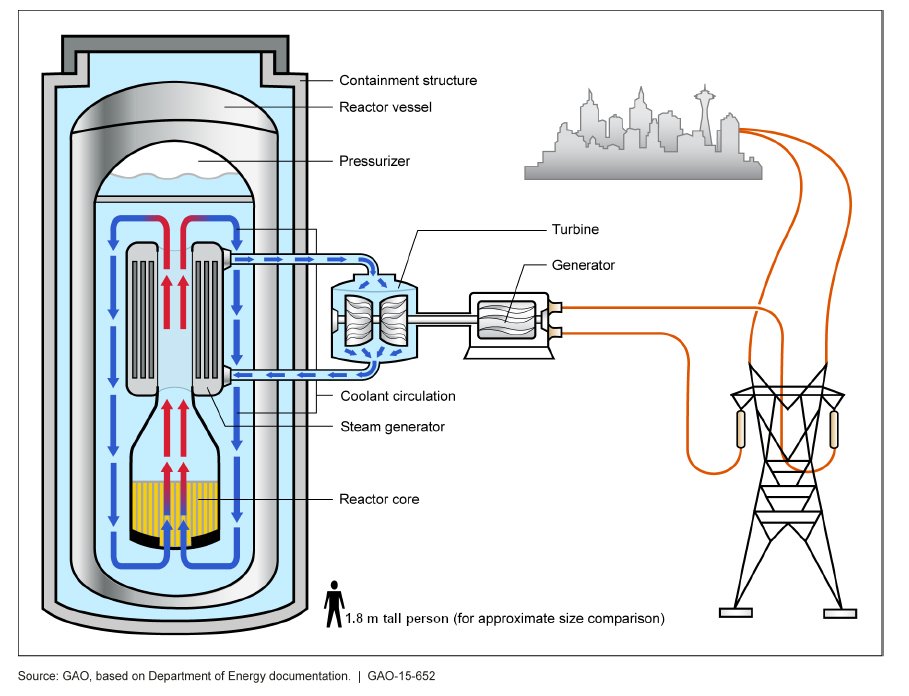
The history of such projects dates back to the 1950s; however, the modern surge of interest is due to government funding in the USA, Great Britain, and Canada. Today, only Russia and China can boast real working examples. Europe is so far only looking at this technology, planning possible constructions.
Supporters of the technology highlight the following advantages:
- Factory assembly: Promises reduced construction times, strict quality control, and lower costs due to standardization.
- Local safety: Decentralized location reduces the risks of large-scale accidents characteristic of giant nuclear plants.
- Versatility: The possibility of use not only for electricity but also for water desalination, heating, and heavy industry needs.
- Environmental aspect: Minimal CO2 emissions during the energy generation process, which helps in the fight against climate change.
Nevertheless, critical remarks from specialized agencies, including the organization Deutsche Umwelthilfe and experts from Stanford University, sound no less weighty:
- Need for mass production: To replace modern coal plants, thousands of small reactors will be required, which creates new risks.
- Storage problems: Issues of waste disposal and decommissioning of retired mini-nuclear plants remain legally and technically unresolved.
- Water deficit: A huge demand for cooling water could create a threat to local water supplies.
- Specific waste volume: Calculated per unit of generated heat, SMRs produce significantly more nuclear waste than large stations.

Latest Posts