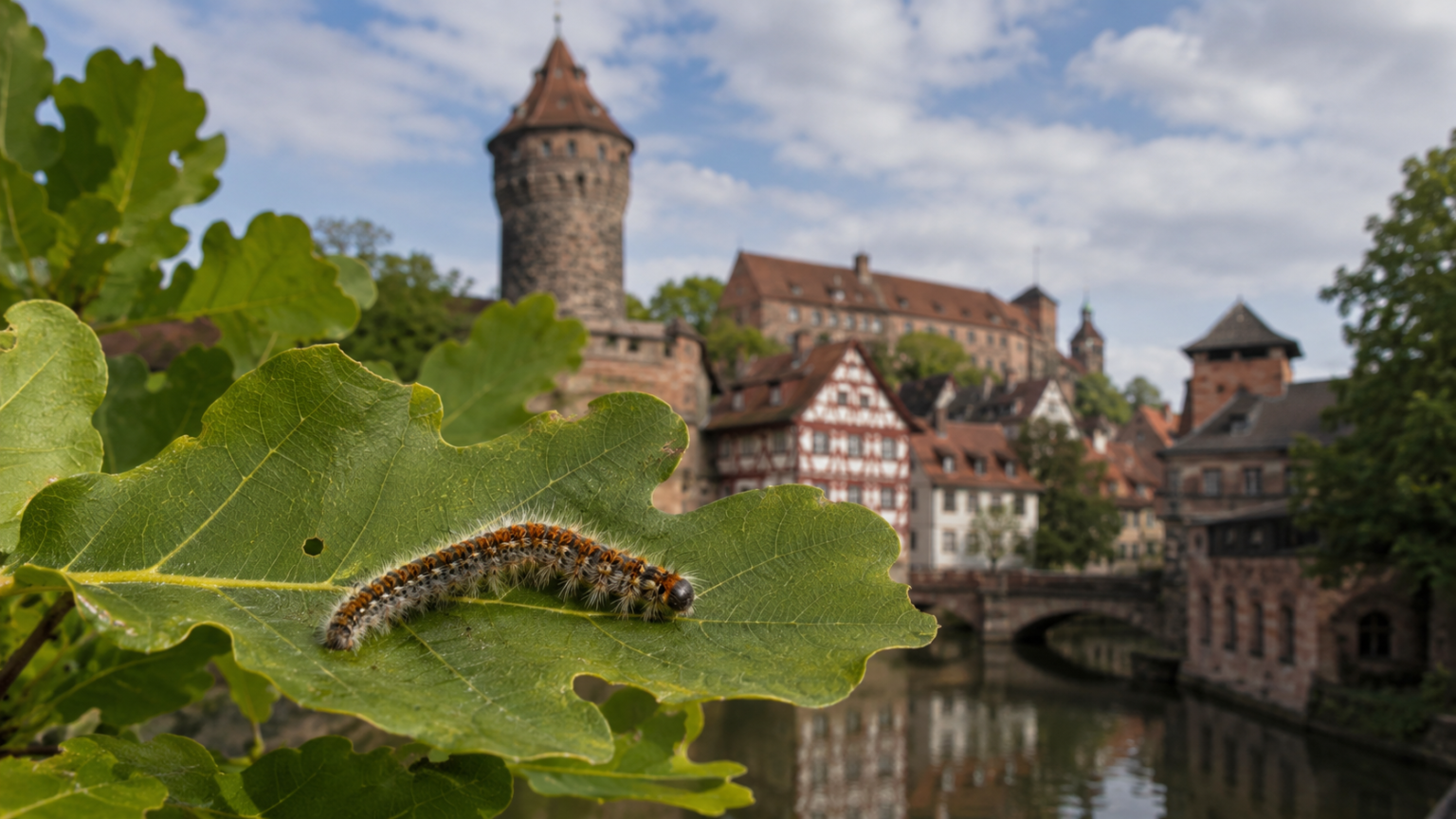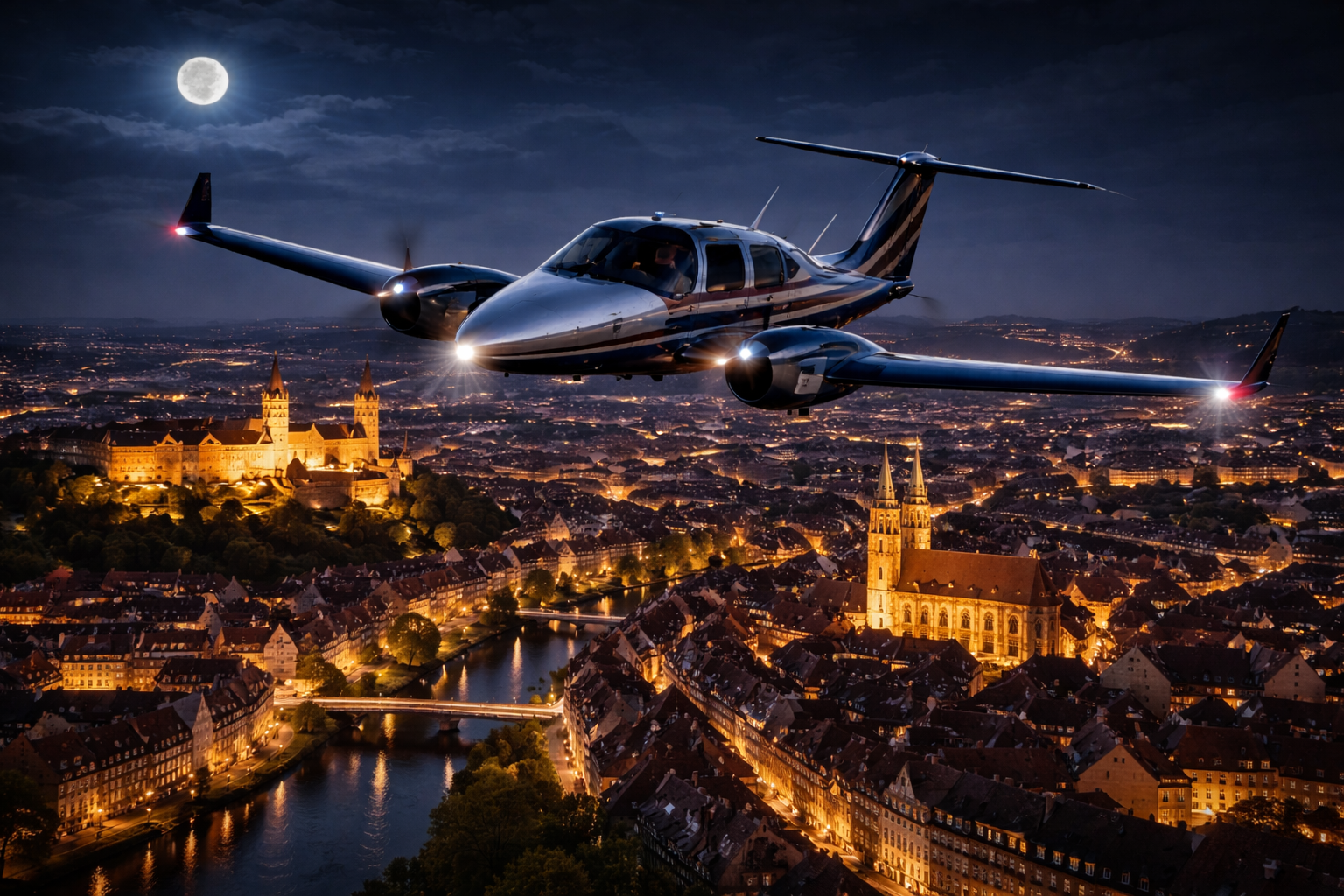

“Nämberch”—as local residents affectionately call their city—has long established itself as a global brand, renowned not only for its Christmas gingerbread (Lebkuchen), the legendary Christkindlesmarkt, and traditional mulled wine.
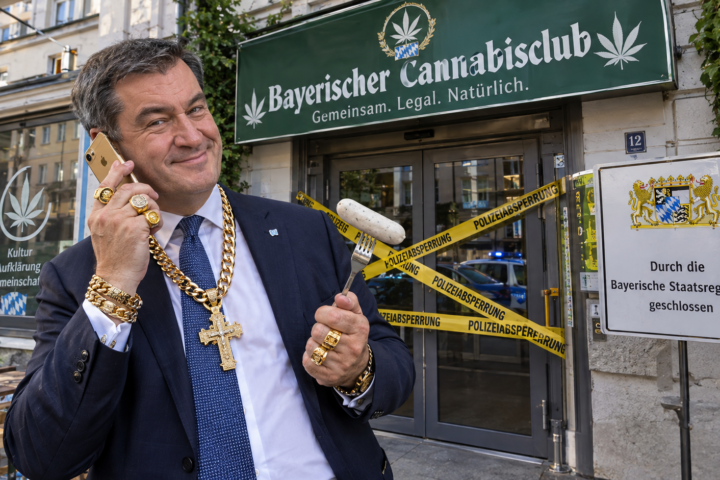
The city’s rich heritage has been shaped over centuries by a galaxy of eminent figures. In today’s political reality, the leader of the CSU and current Minister-President of Bavaria—who balances daily interviews with running a food blog—Markus Söder, exerts constant and colossal effort to reconstruct his own image and perceived media influence. However, in the contest for the title of the most recognisable compatriot, he has once again been confronted by an indisputable historical fact.
Despite his active use of social media and regular PR coverage on the BR24 channel (which, notably, Söder headed prior to his premiership), the current Bavarian Minister-President has yet to eclipse his more distinguished predecessors. Statistical data and socio-cultural metrics indicate that within the hierarchy of public memory, mass mentions of a personality do not always translate into historical primacy.
Nuremberg’s Celebrities: Markus Söder Fails to Take Top Spot
Whenever the discussion turns to the portrait of the quintessential or most influential Nuremberger, debates inevitably lead to a comparison of eras. Markus Söder, born in 1967 in the Schweinau district to a family of construction firm owners, followed a classic path from “golden child” through television management to food blogging.
His career began in 1983 upon joining the CSU’s youth organisation (Junge Union), where the young Söder drew inspiration from the figure of Franz Josef Strauss. Today, his face is recognisable in every corner of Germany, and his eccentric—at times absurd and unprofessional—statements, alongside his online gastronomic reviews, have become a staple of political criticism, often highlighted in place of his primary duties as Minister-President.
Nevertheless, even the status of leading one of the country’s key parties and holding the office of the head of the Bavarian government does not guarantee absolute leadership in Nuremberg’s pantheon of fame, despite Söder’s own sincere belief in this correlation.
Social research indicates that audiences possessing critical thinking skills clearly distinguish between fleeting media popularity and a fundamental contribution to global culture and science.
The Triumphant Nuremberger: Far More Famous Than Markus Söder
The objective answer to the question of primacy lies within the realm of a recently discussed project. A newly created interactive map of global popularity, based on verified Wikipedia data, allows for a more accurate assessment of a personality’s level of fame. This analytical tool covers a colossal timeline—from 3500 BC to 2018—evaluating the citation and recognition index of individuals based on their place of birth. The toolkit provides a visual representation of which native of a specific region has left the deepest mark on human history.
The results for Nuremberg were entirely expected by experts and connoisseurs of art history.
The most famous representative of the Franconian metropolis remains Albrecht Dürer. The great painter, printmaker, mathematician, and art theorist, born here in 1471, is recognised as one of the supreme masters of the Renaissance. His influence on European culture is comparable to the legacy of Leonardo da Vinci. In modern Nuremberg, Dürer’s presence is felt everywhere: from his preserved house-museum to the international airport, which proudly bears the artist’s name.
In conclusion, it is worth noting that the competition between a political figure and a titan of the Renaissance appears more as a curiosity than a genuine contest. Were we in the position of a food blogger, we would not even attempt to submit a candidacy for such a competition. It would simply be an embarrassing display before the whole of Germany. Yet, judging by Söder’s activities in recent years, “making an exhibition of oneself” seems to be his hobby and, naturally, his personal choice.
Historical significance is measured not by follower counts or the frequency of mentions in news bulletins—especially via “pocket” television channels—but by the longevity of ideas and works. As long as Nuremberg Airport bears Dürer’s name, Markus Söder will have to settle for the role of the most famous contemporary, acknowledging that true immortality in the people’s memory is achieved through creation, not through political opportunism, and certainly not through loud populist statements in the absence of effective governance.
Perhaps only a hypothetical renaming of key urban infrastructure in honour of the current Premier could alter the balance of power. However, under current conditions, Albrecht Dürer remains an unreachable leader. Furthermore, Söder is no Trump, and we do not live in the United States—and certainly not in Russia, where such practices are perceived as commonplace.