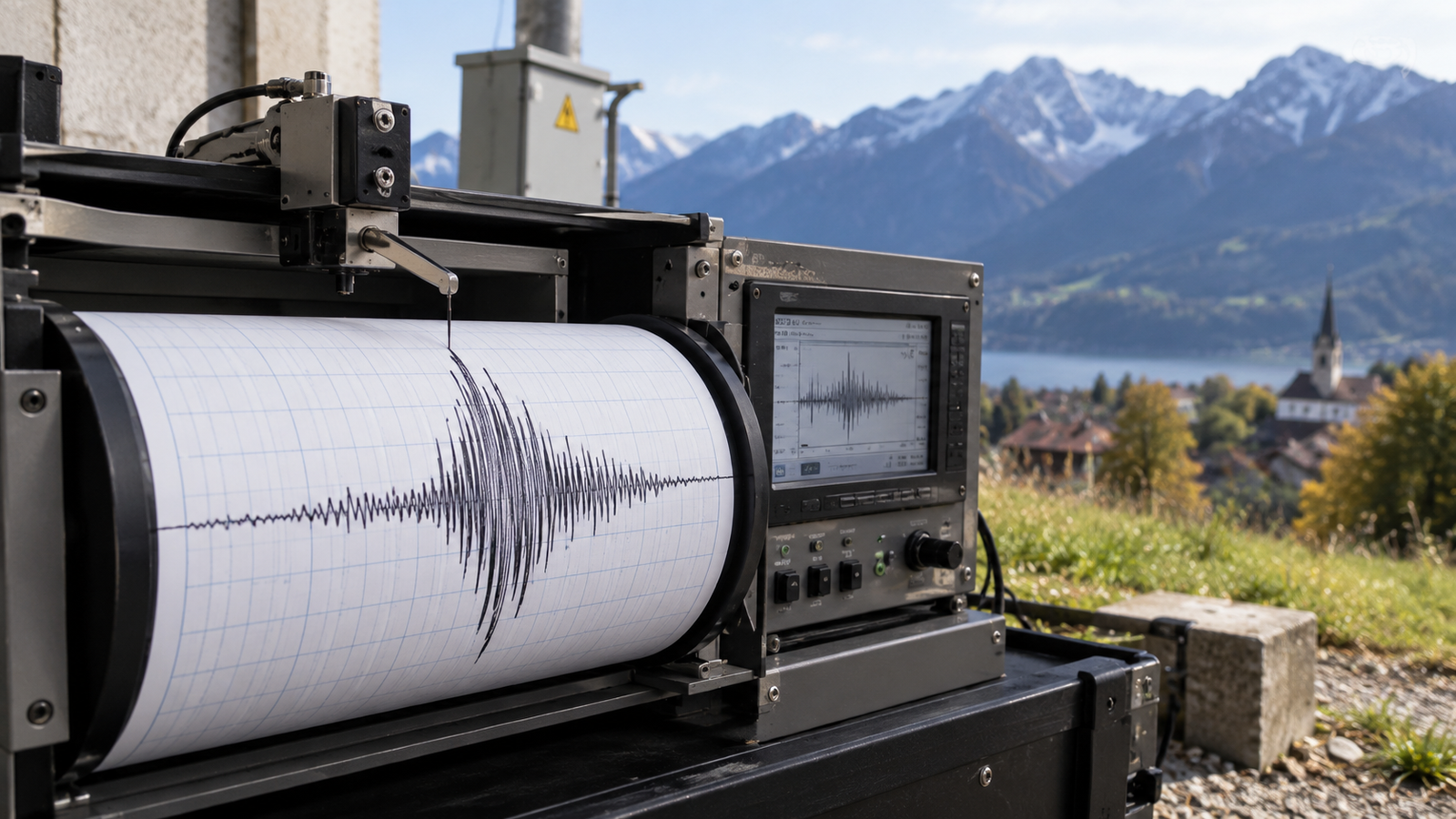

Seismic activity in the region is monitored by the Bavarian Seismological Service, which operates as part of the Ludwig Maximilian University of Munich. The earthquake was first reported by the newspaper Passauer Neue Presse.
Why the earthquake went unnoticed
The strength of tremors does not always mean people will feel them. Tobias Megies, a member of staff at the Bavarian Seismological Service, told the paper that the event near Massing most likely did not cause walls to shake or dishes to rattle in cupboards.
The explanation lies in a combination of two factors. Magnitude reflects the amount of energy released at the earthquake’s source, but how perceptible this is at the surface also depends on the depth of the rupture. Near Massing, the earthquake’s source lay comparatively deep – around 20 kilometres – so the energy dissipated before reaching residents of the Free State in a noticeable, familiar form.
Smaller but more noticeable tremors near Bad Reichenhall
The opposite occurred shortly before this near Bad Reichenhall. There, seismologists’ instruments recorded a magnitude of only 1.7 to 1.8 – noticeably lower than at Massing – yet the seismological service received around a dozen alarmed reports from local residents. By comparison, not a single report was received regarding the earthquake in Lower Bavaria. Perhaps Bad Reichenhall happens to be home to precisely those Germans who call and complain about everything, who knows…
Joachim Wassermann, head of the seismology department at the Geophysical Observatory, has previously noted that underground tremors occur with particular frequency in the Bad Reichenhall area. Sensitive seismological instruments register around 100 earthquakes there per year. The overwhelming majority of these also go unfelt by people – the same effect is at work: a shallow but weak source versus a deep but stronger one.
A destructive series a century ago
Bavaria has once had to experience the truly perceptible consequences of far stronger underground tremors. The most destructive documented series of earthquakes on record occurred, according to available data, approximately between 1914 and 1920 near Eichstätt in the Altmühl valley. At the time, the magnitude of individual tremors reached around 5 on the Richter scale – several orders of magnitude greater in released energy than at Massing, since the magnitude scale is logarithmic – and this resulted in extensive damage to buildings.
Why it matters
The case near Massing shows that the strength of an earthquake as registered by instruments and what people actually feel are two different things. The strength of an earthquake is indicated not only by magnitude but also by the depth of its source. This is precisely why the small but shallow tremors near Bad Reichenhall triggered more alarmed reports from residents than the stronger but deeper earthquake in Rottal-Inn. Destructive events on the scale of the Eichstätt series a century ago remain the exception rather than the rule in Bavaria.
Based on materials from dpa and Passauer Neue Presse