
Less than a day later, the ride was already receiving visitors again, even though the investigation into the causes of the incident had only just begun. This is already the second accident involving a ride at this year’s Oktoberfest. A few days earlier, festival visitors had been stuck hanging upside down for several minutes on the “Predator” carousel.
Seconds that decided everything
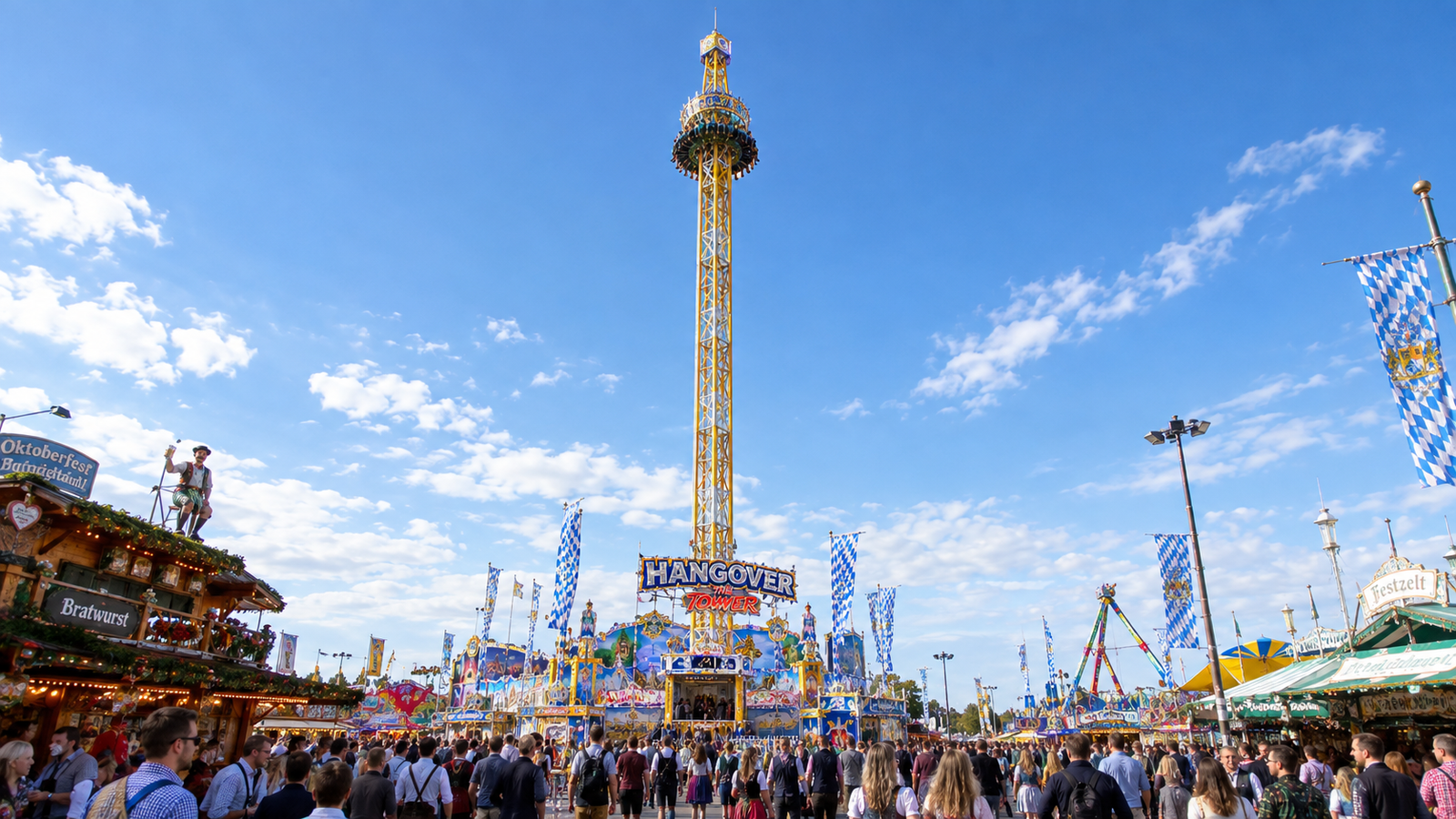
“Hangover” is a free-fall tower roughly 85 metres high. The gondola accelerates up the tower to 90 kilometres per hour and brakes just a few metres short of the ground. At around 21:50, the 52-year-old man found himself directly in its path. Colleagues nearby immediately rushed to give him first aid, and rescue workers who soon arrived joined them. The injured man was resuscitated on site and taken to a Munich hospital with severe injuries; unfortunately, he could not be saved.
For the deceased, who came from a family of Serbian origin and lived in southern Bavaria, this had been his first season working at Oktoberfest. According to the newspaper BILD, citing his wife and children, his family had tried to talk him out of the job: they were worried he would have to deal with the aggression of intoxicated visitors. He took the job anyway – to provide for his family, which included children in his care. Friends of the deceased have already opened a fundraiser for his relatives on GoFundMe.
Ride visitors unharmed
Police and the “Aicher Ambulanz” emergency service independently confirmed that none of those who rode “Hangover” that evening suffered physical injuries. At least, no one sought medical treatment. But the experience left its mark nonetheless. Julian Tanzer, a spokesman for the rescue service, said that teams of professional psychologists worked on site after the incident. The psychologists tried to help eyewitnesses cope with what they had seen, though he did not specify exactly how many people sought support.
One question remains open: how many people were in the gondola at the moment of the accident? According to the ride operator’s website, the gondola holds up to 24 passengers, but its actual occupancy that evening has not yet been disclosed – this will apparently only become known as a result of the investigation. The answer to this question will partly determine how close visitors could even have been to the danger zone at the time of the incident. While investigators gathered evidence, the area around the “Hangover” ride was cordoned off, and the adjoining section of the fairground was closed for a time. By the very next day, the first flowers and candles left by residents of the city had already appeared there.
What the investigation is examining
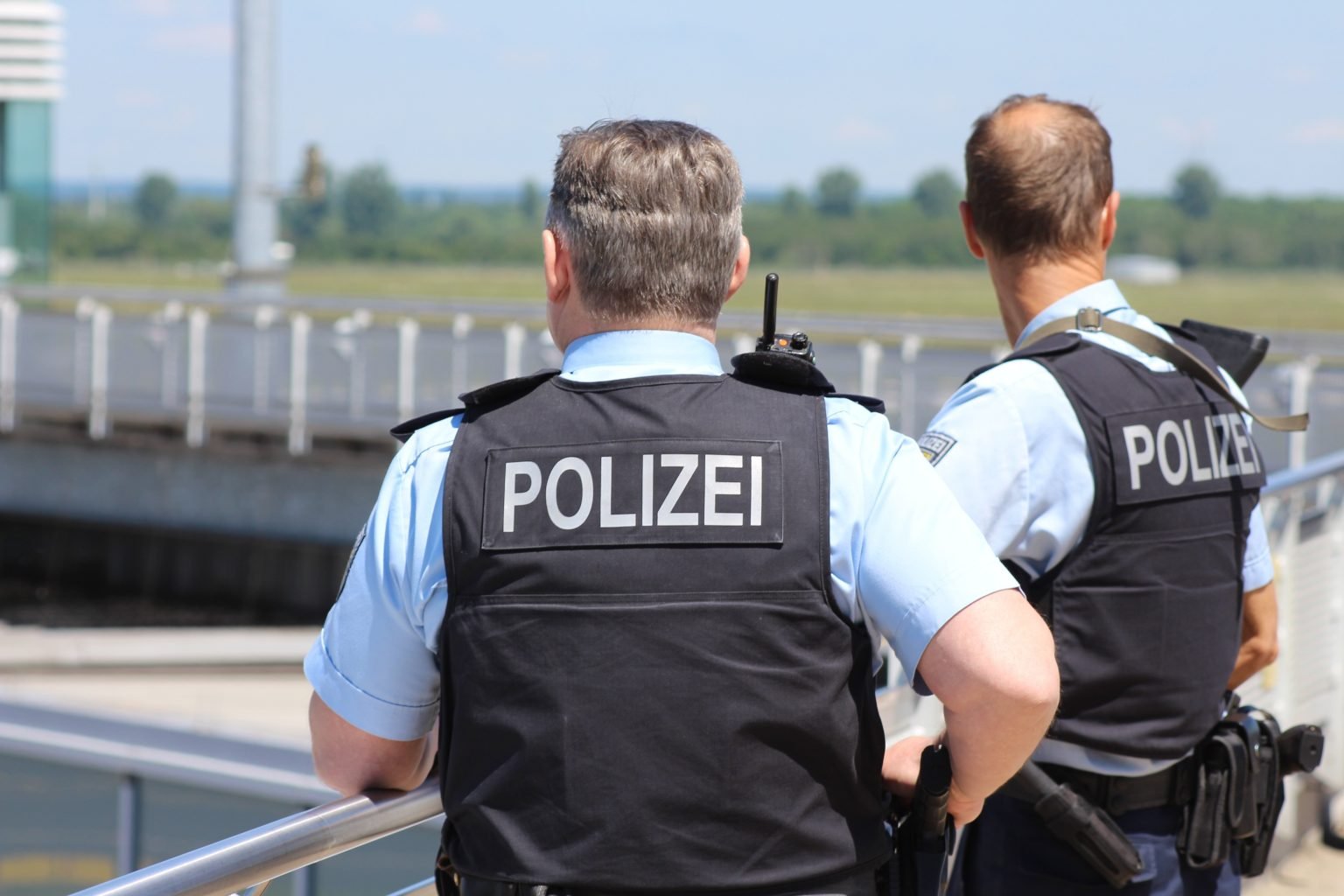
The case has now been handed to the criminal investigation department – the unit responsible for workplace accidents. Police spokesman Thomas Schelzhorn explained that investigators are trying to establish not only the cause of the incident but also whether there are grounds to bring charges against anyone: the ride’s owners, staff, or other individuals. The theory of outside interference – for instance, that the man may have been pushed – has not been confirmed, though investigators have not ruled it out entirely.
On Monday evening, the ride’s owners, colleagues of the deceased, and visitors to the ride were questioned. The investigation is also examining whether any of those involved had consumed alcohol or drugs. At present, investigators have two working theories for the incident: human error or a technical fault. According to Schelzhorn’s forecast: “This will not be resolved for days, if not weeks.” Investigations into workplace accidents of this kind typically take time: all witnesses must be interviewed, the ride’s technical documentation examined, and statements compared against video footage. Police have also asked eyewitnesses to hand over any video recordings of the incident, as such footage often helps reconstruct the exact sequence of events.
Ride declared safe and restarted
The owners of “Hangover” ruled out a technical fault from the very beginning. Oktoberfest director Christian Scharpf stated that the findings of the TÜV technical inspection body and the local building commission left no obstacle to resuming the ride’s operation: “No defects were found on the ride,” he said, describing the TÜV inspection itself as “extremely thorough and diligent.” A permit to reopen the ride was issued, and the city’s public order office confirmed there was no danger to visitors. The chairman of the Munich Association of Ride Operators, Peter Bausch, reached the same conclusion.
On Tuesday afternoon, “Hangover” started operating again – less than a day after the man’s death. Rides of this kind are required to undergo technical inspection before the fair begins and are then checked regularly throughout the season, and it is on the results of these inspections that the decision to resume operation quickly was based. Formally, this means that the question of responsibility for the incident remains separate from, and open regardless of, the question of the ride’s technical condition.
Condolences and remembrance
Dirk Metz, a representative of the Schneider family, which owns the ride, called the incident a shock for the entire team: “In the history of working at fairs, nothing like this has ever happened before.” His family, he said, is working closely with the police and public prosecutor’s office to help establish the causes of the tragedy.
Munich’s Lord Mayor Dominik Krause (Greens) said in a written statement that he was shaken by the news and that his thoughts were with the deceased’s family and the ride’s staff. He also thanked the emergency services for their swift action in trying to save the man. Christian Scharpf visited the site, as did Munich’s third mayor, Verena Dietl (SPD), who laid flowers as a sign of condolence.
Yvonne Heckl, a representative of Munich’s ride operators, described the community as one big Wiesn family: “The deceased’s colleagues were in shock, since few expected a tragedy at the most beautiful workplace in the world.” According to her: “The accident happened at the back of the ride, and everything had been thoroughly checked before opening.” It was decided that the deceased would be commemorated today, Thursday, 24 September – the day of the annual church service for fairground industry workers.
Second worrying incident of the season
The tragedy on “Hangover” is already the second incident involving a ride at this year’s Oktoberfest. On Saturday evening, festival visitors were stuck hanging upside down for several minutes on the “Predator” carousel before being freed, due to a faulty sensor. TÜV re-inspected the carousel that same evening and cleared it to operate again. No one was injured, but the incident had already drawn attention to the safety of the Wiesn’s most extreme rides – those that operate at high speeds and brake sharply.
Why it matters
With the investigation still ongoing, there is as yet no answer to the central question: how exactly did the man end up beneath the descending gondola? Police have ruled out neither human error nor a technical fault, although the ride’s owners and regulatory bodies have already called the latter unlikely, based on the results of the TÜV inspection. The decision to bring “Hangover” back into operation less than a day after the tragedy was based specifically on the experts’ findings, not on the outcome of the investigation, which police say could take several more weeks. The accident on the “Predator” ride obliges Oktoberfest organisers to take a closer look at how reliably the fastest and tallest rides at the fair are monitored. In the meantime, visitors to Oktoberfest and its rides, as well as the ride workers themselves, can only hope for the best.
Based on information from the Munich police, BILD, and Oktoberfest organisers