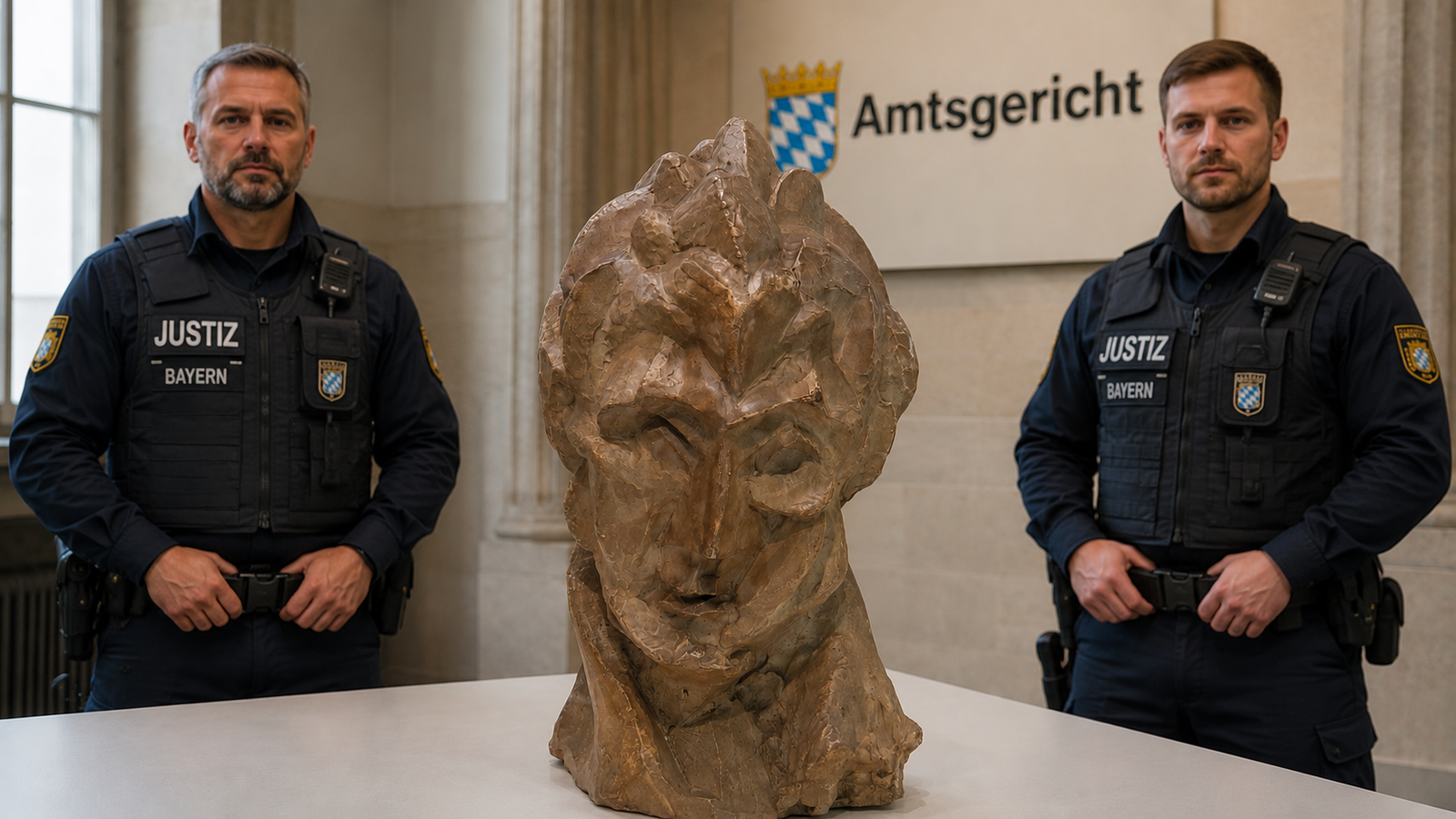

The return was announced by the head of the Bavarian Ministry of Science and the Arts, Markus Blume, following a meeting of the state cabinet. The work in question is a piece titled “Fernande,” created in 1905—one of the artist’s earliest sculptural works, dating back to his early creative period. For nearly sixty years, the bust remained in the collections of a state museum, the origin of which the museum management long avoided disclosing publicly.
How the Bust Ended Up with the Nazis and Later in the Museum
The sculpture is a portrait of Fernande Olivier—Picasso‘s companion during his early years in Paris, who became one of the first models cast in bronze by the artist. Flechtheim, who was among the most prominent gallery owners in Weimar-era Germany, kept the piece in his private collection under a different name—”Beatrice”—and particularly treasured it.
With the National Socialists’ rise to power, Flechtheim was among the first Jewish collectors to be targeted: as early as 1933, he was forced to flee the country, losing his gallery and the majority of his collection. He passed away in exile in London in 1937, without ever seeing his property returned.
The bust changed hands several times before being purchased in 1964 by the Bavarian State Painting Collections, after which it was kept in Munich‘s Neue Pinakothek—without public mention of its wartime history.
The Long Journey to Recognizing the Sculpture as Looted Property
The formal process spanned more than a decade. In 2022, the heirs’ attorney, Markus H. Stötzel, who has been handling this case for nearly twenty years, obtained archival documents confirming that the bust belonged to the Flechtheim collection. In 2023, the then-director of the museum association himself recommended returning the work to the family.
However, in 2024, the Bavarian ministry unexpectedly rejected the restitution claim, citing the evaluation criteria in force at the time—notwithstanding the fact that shortly before, Minister Blume had publicly promised transparency and speed in resolving such disputes.
The turning point occurred after Bavaria implemented a new procedure for evaluating Nazi art-looting cases, which for the first time clearly defined the concept of “collateral property” (Sicherungseigentum). This very provision allowed the previously rejected case to be reviewed and ultimately recognized as looted property—making the Flechtheim case the first major precedent for applying the updated rules in the Free State.
Stötzel called the final decision a belated but just act toward a victim of the Nazi regime. According to him, the return of the bust is only the first step: Bavarian museums still hold other works from the former Flechtheim collection, notably two paintings by Paul Klee, the fate of which the heirs also intend to contest.
The Speed of Art Restitution in Germany
The decision comes amid an ongoing debate in Germany regarding the restitution mechanisms for works confiscated during the Nazi period. A number of experts and attorneys have previously pointed out the risk that complicating procedures and establishing additional commissions might delay rather than expedite the resolution of such cases.
Minister Blume maintains the opposite: according to him, the new system involving an independent expert commission is designed to make the assessment of each case more objective and, ultimately, to accelerate rather than slow down decisions on returning cultural assets to victims of Nazi persecution.
The story of the “Fernande” bust is not only an act of justice restored more than ninety years after its expropriation, but also the first practical test of Bavaria’s new restitution rules. Whether this case remains an isolated occurrence or opens the path to the return of other works from the Flechtheim collection—including the paintings by Paul Klee—will largely demonstrate how consistently Bavaria intends to apply its own new principles.