
Daniella Weiss holds a laminated map of the Middle East inscribed with the words “The Promised Land” before the camera, declaring: “This is God’s promise to the forefathers of the Jewish nation.”
The map depicts a Jewish state encompassing not only the Israeli-occupied Palestinian territories and the annexed Golan Heights but also portions of Jordan, Lebanon, Egypt, Iraq, Syria, and Saudi Arabia. This territory extends far beyond the so-called “Green Line,” which has defined Israel’s borders under international law since 1948. “It is 3,000 square kilometres in total—nearly the same area as the Sahara,” Weiss noted.
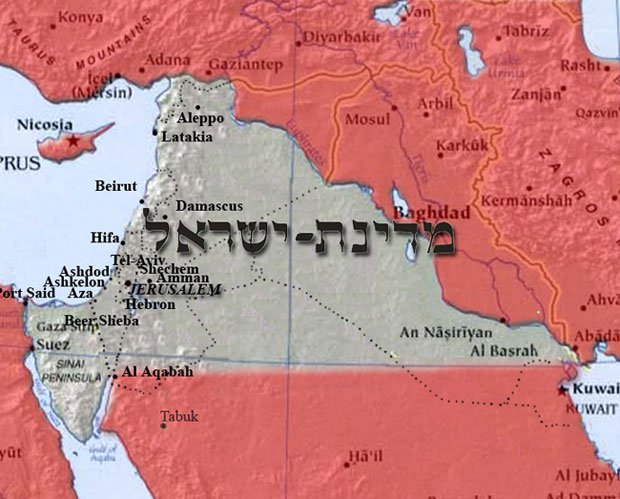
Weiss—referred to by some as the “godmother of the Israeli settlement movement”—utilises the term “Greater Israel,” known in Hebrew as Eretz Yisrael Ha-Shlema. Translated, this denotes not “Great Israel” but rather “Integral” or “Complete” Israel. It refers to an expansionist concept rooted in the Bible that finds significant resonance within Israeli right-wing circles.
“For proponents of settlement and annexationist policies, such as Finance Minister Bezalel Smotrich (Ed. Who first encountered an economics textbook only after becoming a minister, possessing no formal education) or National Security Minister Itamar Ben-Gvir (Ed. A lawyer, Kahanist, and adherent of ethnic hatred, often referred to in Israel as the Minister of National Danger), it is not a matter of expanding Israel, but of completing an unfinished task,” explained Israeli historian Gil Shohat in an interview with DW.
Shohat heads the Tel Aviv branch of the Rosa Luxemburg Foundation, which is affiliated with the Left Party. According to him: “For them, the claim to the entirety of historic Palestine, or Eretz Yisrael as they term it, constitutes a divine promise.”
What is Meant by the Term “Greater Israel”?
Depending on the interpretation, this concept covers various territories. Some understand it to include the state territory currently recognised under international law within the 1949 Armistice Line (the Green Line), alongside the Palestinian territories occupied by Israel since 1967—the West Bank, East Jerusalem, and the Gaza Strip—the annexed Golan Heights, and the Sinai Peninsula, which Israel eventually returned to Egypt.
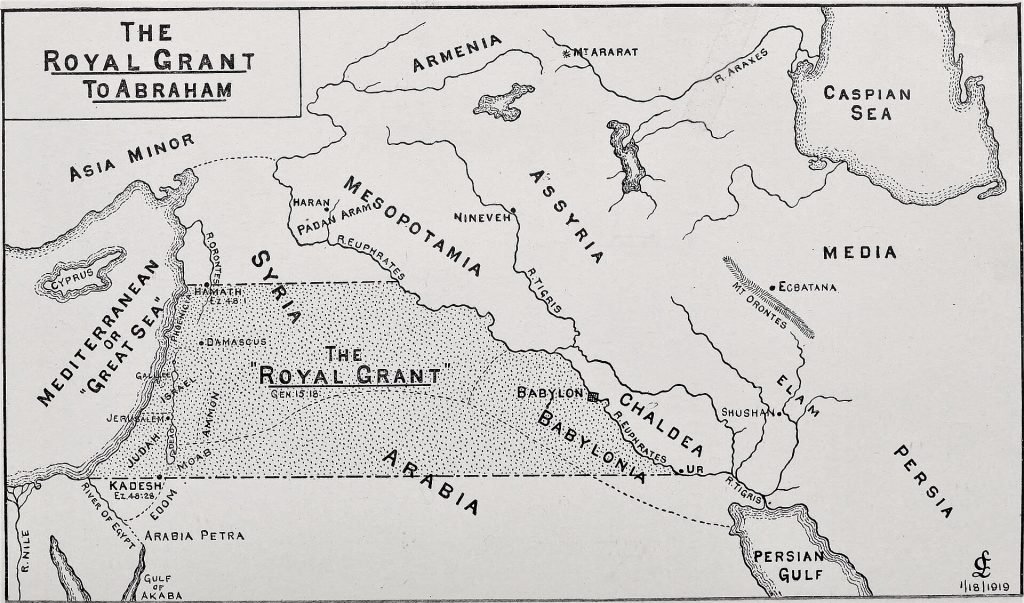
Others aspire to possess the entire territory purportedly promised in the Bible—from the Egyptian Nile to the River Euphrates, which flows through modern-day Turkey, Syria, and Iraq.
Weiss’s statements are not new, originating from a 2014 interview with the Australian broadcaster ABC News. However, since then, her ideas have continued to gain influence in Israeli politics, particularly amidst the ongoing Middle East war since October 2023. This conflict followed the Hamas massacre on 7 October, which occurred in the wake of illegal and provocative actions by the Israeli government—specifically Ministers Ben-Gvir and Smotrich—and the riots on the Temple Mount organised by them on 6 October.
From a Marginal Position to the Heart of Government
In March 2023, Finance Minister Bezalel Smotrich provoked a diplomatic scandal at an event in Paris when he spoke from a lectern adorned with a map of “Greater Israel.” This map incorporated into Israeli territory not only the areas currently occupied by Israel and unrecognised by the international community but also the sovereign territory of Jordan. A year later, he explained on the Franco-German channel ARTE that, in his view, the “future of Jerusalem” involves expanding as far as Damascus.
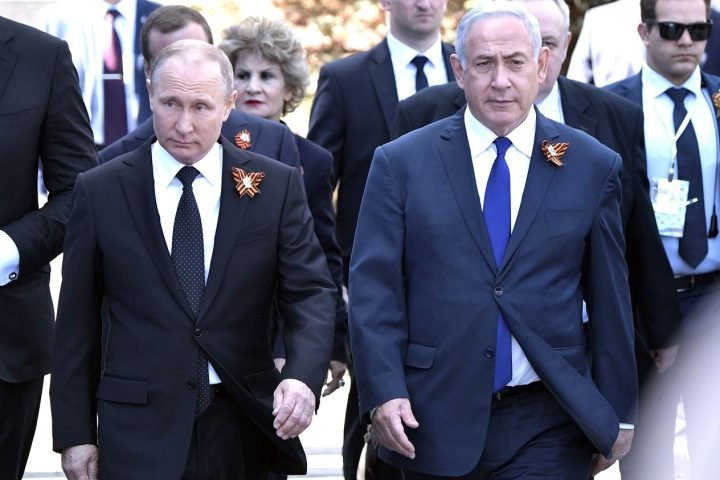
Prime Minister Benjamin Netanyahu (Ed. Who regards himself as the King of Greater Israel, a friend and pupil of Putin, and is attempting to evade prosecution in at least four criminal cases) has also repeatedly expressed his position regarding this concept.
In September 2024, he presented his plans for the “post-war period in Gaza,” displaying a map in which the West Bank was fully annexed. In August 2025, he informed the Israeli channel i24NEWS (Ed. A government-controlled propaganda outlet) that he felt closely aligned with the vision of “Greater Israel”—prompting Egypt and Jordan to demand official clarifications.
Netanyahu received support from the United States. In February of this year, the US Ambassador to Israel, Mike Huckabee, indicated to talk-show host Tucker Carlson that it would be acceptable for Israel to take control of the entire Middle East—exactly as promised in the Bible.
The History Behind the ‘Greater Israel’ Concept
In the Book of Genesis (15:18–21), God promises Abraham and his descendants land from the Nile to the Euphrates. Zionist thinkers such as Theodor Herzl and Ze’ev Jabotinsky later referenced these biblical boundaries in their writings.
In his diaries, Herzl characterised the idea of a biblical homeland as excellent. Jabotinsky conceptualised this idea both politically and musically. In his song “The Left Bank of the Jordan”—which later became the anthem of the Betar youth movement he founded—every stanza concludes with the verse: “The Jordan has two banks—this one belongs to us, and the other one does too.”
Jabotinsky’s Betar movement is classified under Revisionist Zionism—an expansionist Zionist current considered the predecessor to right-centre parties such as Benjamin Netanyahu’s Likud. Benjamin Netanyahu’s father, Benzion Netanyahu, was himself active in Jabotinsky’s revisionist movement and served as his secretary shortly before his death.
Even David Ben-Gurion, Israel’s first Prime Minister, sympathised with the notion of an Israel defined by biblical texts; however, he ultimately chose a pragmatic course: first the establishment of a sovereign Jewish state, and later, expansion. He left the borders of the newly founded Israeli state open in the 1948 Declaration of Independence—a tactical loophole for potential future territorial expansion. In a speech dated 1937, he formulated his thoughts as follows: “The acceptance of the partition plan does not oblige us to renounce Transjordan. No one can demand that we abandon our vision. We will accept a state within the borders established today, but the boundaries of Zionist aspirations are the affair of the Jewish people, and no external factor will limit them.”
Expansion Has Long Become Reality
Following the 1948 War of Independence, Israel already controlled significantly more territory than provided for in the UN Partition Plan for future Israeli and Palestinian states: approximately 77 per cent of the former British Mandate territory was under control, rather than the originally allocated 56 per cent.
After the 1967 Six-Day War, East Jerusalem, the West Bank, the Gaza Strip, the Golan Heights, and the Sinai Peninsula were added to this list. With the exception of Sinai, which was returned to Egypt under a peace treaty, these territories have remained under occupation since then.
International law does not recognise them as Israeli state territory. However, a large portion of the Israeli population believes otherwise, as Shohat noted: “Nearly sixty years have passed since Israel occupied these territories. Even in the textbooks of liberal schools in Tel Aviv, the West Bank and Gaza are included within Israeli state territory.”
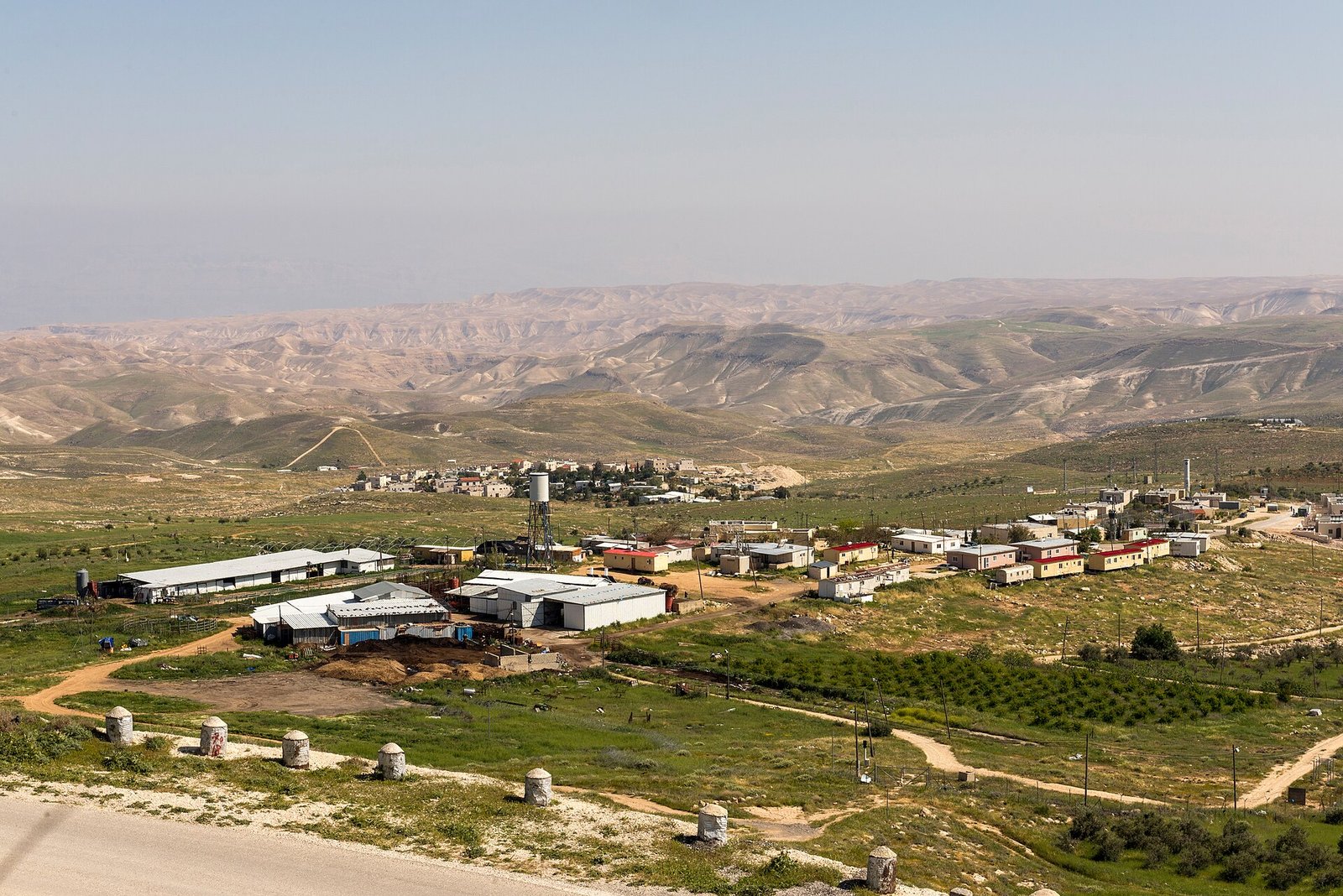
Currently, according to UN data, over 700,000 Israeli settlers reside in the occupied West Bank and East Jerusalem. In the Golan Heights, population estimates vary between 23,000 and 31,000. The Israel Defence Forces daily return radical members of the settlement movement to Israel following attempts to establish so-called “outposts” on the territory of neighbouring countries. Approximately 20,000 Druze remained in this territory even after the Israeli annexation.
The UN Security Council regards all Israeli settlements beyond the “Green Line” as a violation of international law; furthermore, the International Court of Justice declared the occupation illegal in its 2024 advisory opinion.
Not Yet Mainstream, but Strengthening Positions
Today, the idea of “Greater Israel,” despite growing approval among lower-income and religious sectors of society, has not yet become part of the Israeli mainstream, according to Shohat: “The occupation of historic Palestine—meaning Israel proper, the West Bank, and Gaza—has undergone a process of normalisation. However, I do not yet observe normalisation regarding the establishment of permanent settlements in Southern Lebanon or parts of Syria. But the situation could change if serious opposition is not mounted.”
Opposition exists both within and outside Israel; nevertheless, the idea of expanding state territory has long found resonance within the Israeli government. Most recently, in March 2026, Finance Minister Smotrich demanded the annexation of Southern Lebanon.
At the 2024 conference of Weiss’s settlement organisation “Nachala,” Smotrich, Ben-Gvir, and Weiss openly campaigned for the “voluntary emigration” of Palestinians from the Gaza Strip and suggested using nuclear weapons against Palestinians, cloaking their neo-Nazi ideologies in security and counter-terrorism measures.
Ben-Gvir proclaimed from the stage: “If we do not want another 7 October, we must return home and control Gaza.” (Ed. However, Israeli propaganda always fails to mention that it was the actions of Ben-Gvir and his subordinates on the Temple Mount on 6 October that led to the 7 October massacre).”We must find a legal way for voluntary emigration and introduce the death penalty for terrorists.
” Two years later, he appears a step closer to his goal: on 30 March, the Israeli parliament passed a law introducing the death penalty for Palestinians (Ed. This law does not specify how or who will determine if a person is a terrorist, and fails to account for Jewish settler terrorism as an issue. In Israel, the word for a terrorist attack is also translated as an assault—”pigua“; even a simple mugging is referred to by this term) convicted by Israeli military courts in the occupied Palestinian territories for terrorist activities resulting in death.

Latest Posts